
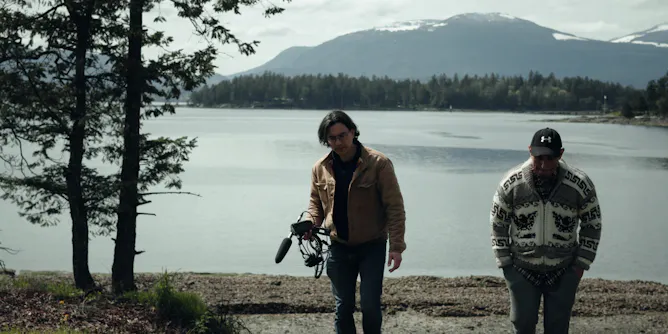
Canadian journalist institutions have failed to address their ongoing colonialism and that has meant that urgent Indigenous issues have been ignored or sensationalized.
Articles on Colonialism
Displaying 281 - 300 of 740 articles

As the Grand Egyptian Museum begins welcoming visitors ahead of its opening in 2023, one object remains conspicuously absent.

Developed nations threaten to consume more than their fair share of Earth’s dwindling carbon budget.
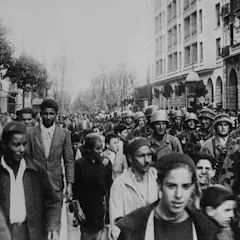
People across much of North Africa were subject to racist laws and suffering at the hands of European powers during the Second World War.
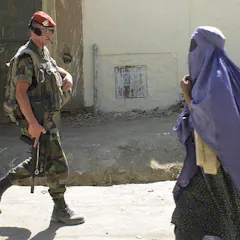
Pictures of women in war play a pivotal role in the battlefield of political ideas, argues a feminist historian who examines how images and attire are used and seen in war zones and occupied lands.
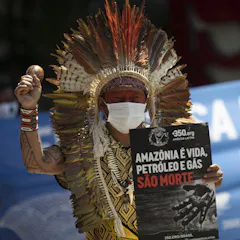
A different future will not be possible without reverence, respect, reciprocity and responsibility towards the Earth. On this issue, Indigenous Peoples have a lot to share.
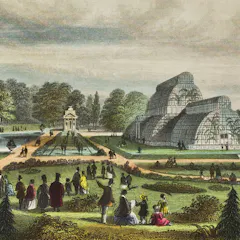
Scientists have found more ‘alien species’ today in regions that were once key parts of European empires.

Art stolen from African kingdoms is a knowledge system plundered by colonialists, who must take historical responsibility.
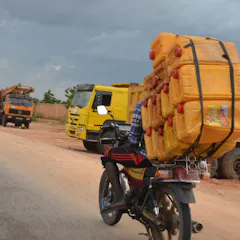
Smuggling in Uganda’s West Nile region is seen as an act of defiance – a way to make ends meet in the face of perceived state neglect.
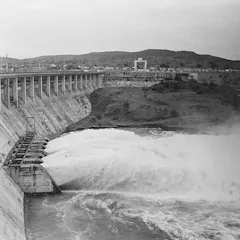
The mega dam in Jinja was meant to give Uganda energy independence, but this was constrained by Britain’s agricultural interests in Egypt.
Reaction to criticism of the monarchy shows that universities need to do much more to support racialized faculty and staff.

University histories need to be re-examined with attention to the role of Indigenous Peoples, connections to Residential Schools and universities’ fundraising efforts.
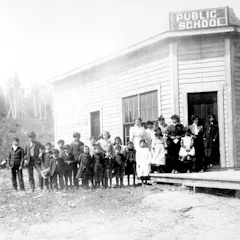
In B.C., residential school principals sat on public school boards, and some Indigenous children even attended public schools. Understanding such links matters for truth and reconciliation.
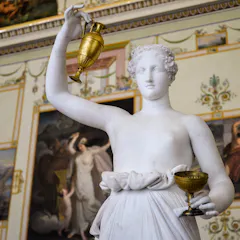
Western fashion, laundering and style reflected the racialized politics dramatically shaped by profound global transformations bound up with slavery, colonialism and modernization.

To fully understand what led to the stabbings in James Smith Cree Nation, we need to look at how the legacy of settler colonial violence impacts Indigenous communities.

In the middle of the tremendous outpouring of love and grief for the Queen and the monarchy she represented, not everyone wants to take a moment of silence. And there are a lot of reasons why.

From Lovecraft Country to Black Panther to a statue in Benin, the “amazons” of Dahomey continue to trend in global popular culture.
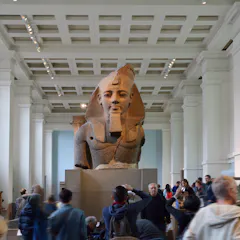
Western museums are beginning to re-evaluate how they portray cultures and history and return stolen artifacts. But for change to be meaningful, it needs to be truly inclusive.
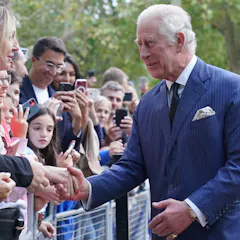
The world changed a great deal in the 70 years of Queen Elizabeth II’s reign. Her son’s legacy may be determined by how he adapts to new dynamics within the UK and across the Commonwealth.
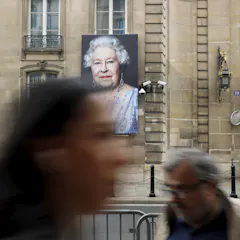
Is it possible to disentangle the personal attributes of a gentle and kindly woman, from her role as the crowned head of a declining global empire that waged numerous wars? Many don’t think so.
Top contributors
-

Professor of Indian and Colonial History, University of Liverpool; Independent Social Research Foundation
-
Professor of Sociology, University of the Witwatersrand
-
Extraordinary Professor, Department of Political Sciences, University of Pretoria
-
Research Fellow at the University of the Free State, South Africa and Assistant Professor in the History of International Relations, Utrecht University
-
Assistant Professor of Political Science, Lakehead University
-
Associate professor, McGill University
-
Professor in Political Science, Arnold Bergstraesser Institute
-
Head of Research Programme, Council for the Development of Social Science Research in Africa
-
Associate Professor Sport History, Stellenbosch University
-
Political Scientist, University of the Western Cape
-
Adjunct Professor, Stout Research Centre, Victoria University of Wellington and Auckland University of Technology, Professor of Political Science, Charles Sturt University
-
SSHRC Postdoctoral Fellow, Centre for South Asian Studies, Munk School of Global Affairs, University of Toronto
-
Curator & Section Head, Oceania, The British Museum
-
Associate Professor, Departments of History and Indigenous Studies, University of Manitoba
-
Professor, Department of Archaeology and Human Evolution Research Institute, University of Cape Town