

The countries, whose respective leaders recently won widely disputed elections, offer contrasting examples in how autocracies operate, evolve and change.
Articles on Post-colonialism
Displaying 1 - 20 of 86 articles

On 24 April 1950, 29 members of Dini ya Msambwa, an anti-colonial religion, were killed by British forces. The UK government refuses to acknowledge this massacre.
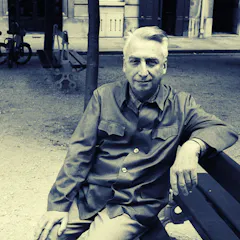
Roland Barthes’ notion that the author is dead has been incredibly influential, though it was not as original or revolutionary as it seemed.

The history of human origins research is intimately intertwined with the prevalent socio-political landscape.
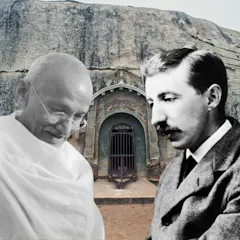
E.M. Forster’s motto was “only connect”. But what if the colonised and the coloniser cannot understand each other in any way?

Kaur’s acceptance speech focused on the plight of Palestinians, and this year’s Turner Prize exhibition speaks to issues surrounding cultural loss, colonial histories and racism.
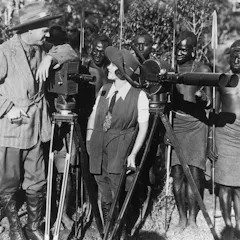
African news media have continued many of the damaging norms of how western media report on the continent. It’s time for a rethink.

The members of the Society for Ambience and Elegance (Sape) are impossible to overlook. Born in Central Africa at the beginning of the 20th century, the style is now found from Paris to Dubai.
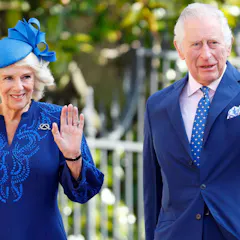
The visit will acknowledge the more painful aspects of the UK and Kenya’s colonial history.
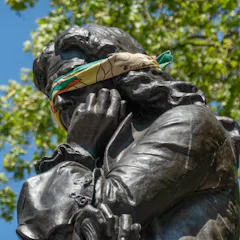
Retaining a statue or monument takes very little work – explaining it is a mammoth and contested task.
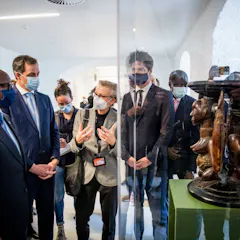
The restitution of looted objects from former colonies in Africa is an essential component of post-colonial reparation.

The government and some producers are pushing to industrialize the sugar cane-based spirit to boost its popularity around the world, while small farmers fear losing their livelihoods.
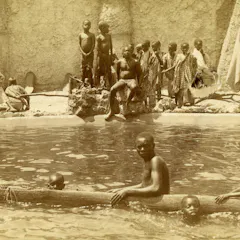
On paper, the lush and wealthy city of Geneva is one of the capitals of human rights. Yet, one historian’s work points to a darker history few one want to see.

Philip Miller and Amit Chaudhuri have reworked national anthems to reflect the impact of history on official music.

The Uluru Statement from the Heart calls for truth-telling as a crucial step towards reconciliation. What does this process involve, and what are the potential promises and pitfalls?

With over 200 publications to his name, his three most recent books give a sense of why he is so famous as a historian.
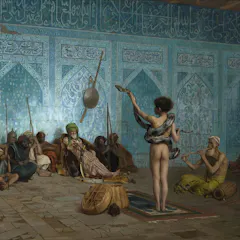
Edward Said’s seminal 1978 book, Orientalism, explores how often racist or romanticised stereotypes create a worldview that justifies Western colonialism and imperialism.

Football provides a way for unpopular elites to build political capital – but also creates space for citizens to voice dissent.
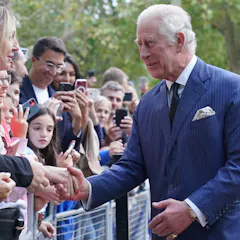
The world changed a great deal in the 70 years of Queen Elizabeth II’s reign. Her son’s legacy may be determined by how he adapts to new dynamics within the UK and across the Commonwealth.
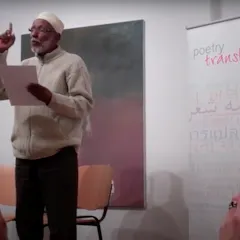
Poet, soldier and critic of postcolonial elites, Hadraawi was the greatest poet of his generation.
Top contributors
-

Emeritus Professor of African Linguistics, University of Leipzig
-
Professor of English Language Teaching and Literacy Development, Rhodes University
-
Senior Lecturer, Literary and Cultural Studies, Monash University
-
Associate Professor Sport History, Stellenbosch University
-
South African visual artist and senior lecturer of Art History and Visual Culture at Rhodes University, Rhodes University
-
Professor of Indian and Colonial History, University of Liverpool; Independent Social Research Foundation
-
Senior Lecturer in American History & Director of Liberal Arts, University of Exeter
-
Distinguished Professor, Department of Curriculum, Teaching and Learning, Ontario Institute for Studies in Education, University of Toronto
-
Digital Research Infrastructure Consultant, University of Cape Town
-
Formerly Reader, Birmingham Law School
-
Assistant Lecturer, Geography Department, The University of the West Indies: St. Augustine Campus
-
Lecturer: History; Humanities, University of Pretoria
-
Director of History & Policy at the Institute of Historical Research and Professor of British and Commonwealth History, School of Advanced Study, University of London
-
Professor of Philosophy of Science, Durham University
-
Professor of the Politics of Development, University of Oxford