

More efforts are needed to restore railways in Nigeria. It was a mainstay of the country’s economy in years gone by.
Articles on Colonialism
Displaying 201 - 220 of 740 articles

This adaptation is set in Bengal in 1899, where rumours that the British Empire’s plans for partition have spread.
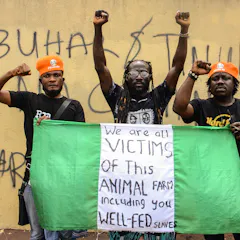
Colonialism set Nigeria up for failure as a united country. But successive governments since independence have a lot to answer for too.
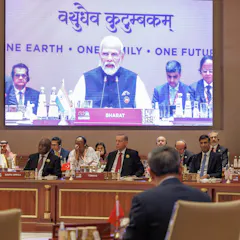
The government’s use of the Hindi word for ‘India’ revives debates over whether Hindi should be the national language – and reopens some old wounds.
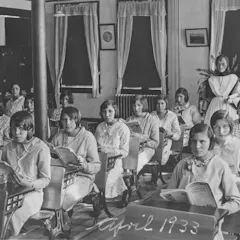
Survivors of multiple colonial school systems need their voices to be heard. An exhibit examines how colonial schooling policies over a century and a half influenced the Blood People.

Acronyms like BIPOC can highlight the similar ways racism impacts different people. However, they can also gloss over the distinct experiences of communities.
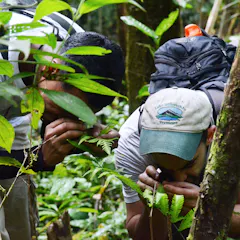
Botanizing is the practice of observing and appreciating plant life. Two plant scientists explain how it benefits people and the planet.

A focus on relationships is relatively new. But if museums are to remain relevant, trusted institutions they need to move beyond traditional models of authority.
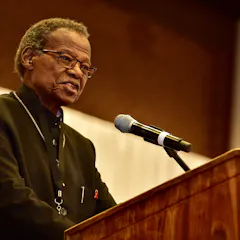
If Mangosuthu Buthelezi had not opposed the apartheid state’s plans for an ‘independent’ Zulu kingdom, South Africa’s history would have unfolded very differently.
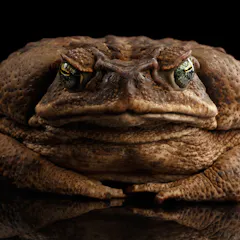
Modern ecosystems are very different to how they were just a few centuries ago.

Ghanaians measure the quality of education by examination scores.
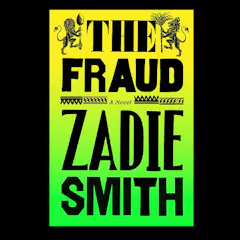
This well-researched book brings to life the odd case of Sir Roger Tichborne and those around him.

In the Global South, a group of writers are rejecting the norms of science fiction and commenting on the future in a way that embraces Indigenous culture.

Some Latin American players expressed concern about the colonial role their player character will play in the story.

Whistleblower allegations that the government possesses UFOs may not be backed up by public physical evidence, but some argue that listening for extraterrestrial life is the first phase of contact.
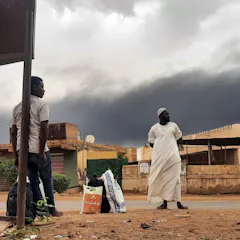
The interplay between diversity and urban planning in Sudan has created vibrant cityscapes, but also led to segregation and division.
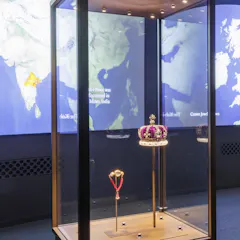
This display marks the first time the Tower of London has explained the origins of the Koh-i-noor diamond, which is now presented as a ‘symbol of conquest’.

Kenya’s inability to move past ethnic ideology has made it difficult to develop alternative bases for political organisation.

Three Indigenous studies scholars draw from colonial histories and explain why listening for alien life can have ethical ramifications.

More than being the social problem they are often made out to be, gangs are an indication of larger problems present in their societies.
Top contributors
-

Professor of Indian and Colonial History, University of Liverpool; Independent Social Research Foundation
-
Professor of Sociology, University of the Witwatersrand
-
Extraordinary Professor, Department of Political Sciences, University of Pretoria
-
Research Fellow at the University of the Free State, South Africa and Assistant Professor in the History of International Relations, Utrecht University
-
Assistant Professor of Political Science, Lakehead University
-
Associate professor, McGill University
-
Professor in Political Science, Arnold Bergstraesser Institute
-
Head of Research Programme, Council for the Development of Social Science Research in Africa
-
Associate Professor Sport History, Stellenbosch University
-
Political Scientist, University of the Western Cape
-
Adjunct Professor, Stout Research Centre, Victoria University of Wellington and Auckland University of Technology, Professor of Political Science, Charles Sturt University
-
SSHRC Postdoctoral Fellow, Centre for South Asian Studies, Munk School of Global Affairs, University of Toronto
-
Curator & Section Head, Oceania, The British Museum
-
Associate Professor, Departments of History and Indigenous Studies, University of Manitoba
-
Professor, Department of Archaeology and Human Evolution Research Institute, University of Cape Town