
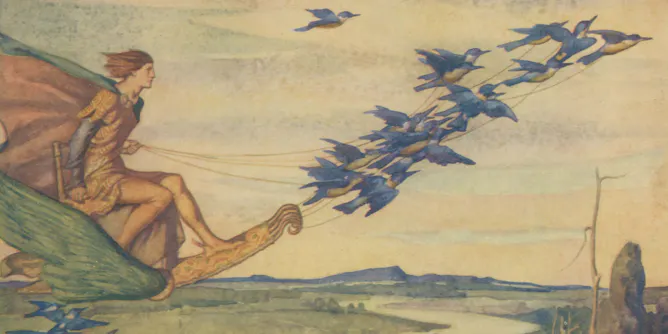
From mythical Moth people, who kidnapped children, to threatening desert fairies in loincloths, early Australian fairy tales helped sanitise white settlement, expressing colonial fears.
Articles on Colonialism
Displaying 321 - 340 of 740 articles
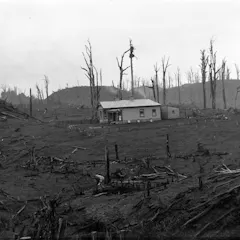
Nineteenth-century European settlement is often depicted as a triumphal ‘taming of nature’. But does that collective memory impede more honest appraisals of the environmental risks we face today?

Pride Toronto has the opportunity to change its relationship with Indigenous and racialized people.
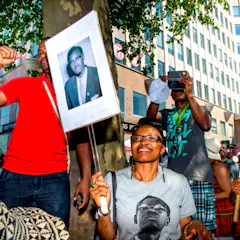
Lumumba’s death triggered students and created a generation of activists that pushed for total liberation from exploitation and oppression.

Internal affairs of the bloc may dominate the summit which seeks to address a wide range of international issues.
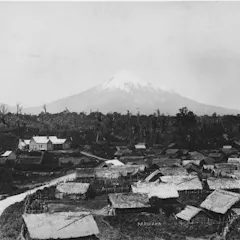
While tracing his own family’s journey from Ireland to Aotearoa New Zealand, Richard Shaw encountered how much ‘selective amnesia’ about the colonial past still shapes our lives today.

For relations with the DRC to truly improve, the Belgian state must acknowledge its historical responsibility more strongly.

Industry seeks to capitalize on regenerative agriculture, but standards that focus only on carbon or other select environmental metrics will undermine its transformative potential

Louisa Lim’s ‘haunting testimonial’ to Hong Kong reveals a politically engaged and dynamic civil society beneath the surface of an unrelenting reign of terror.

Music has often been used as a political tool to urge Kenyans to forget the sins of colonial and post-colonial regimes.

Peacekeeping missions grab the headlines when they’re associated with tragedy and death – but that isn’t their full story.
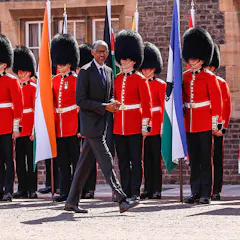
Summit provides opportunity to showcase modernity of Kigali and government achievements.
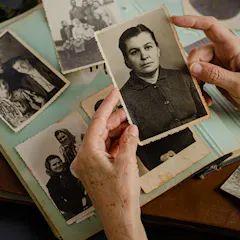
Understanding how our ancestors may have benefited from industrialisation and colonialism could help us become more climate-friendly citizens.
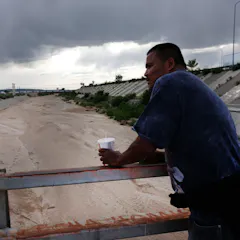
An Anglican Aboriginal pastor who attended the COP26 climate conference shares his perspective on Indigenous knowledge in dealing with climate change.
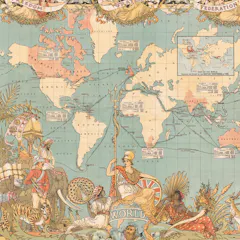
From the tax we pay to the wine we drink, many policies in Britain today have their roots in imperialism.

Incorporating lessons from Ryerson University’s renaming process could help Canadian institutions address colonization.

When a patriarchal society is combined with a history of colonialism, women in that country are at heightened risk of gender-based violence.
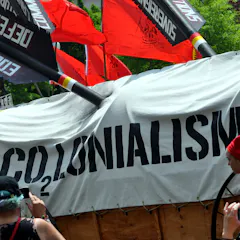
The IPCC’s latest climate report discusses how colonialism has shaped climate, a breakthrough for the climate justice movement.

While marketing has made diamond rings a symbol of heteronormative happy endings, women from the Northwest Territories tell a different story about their experiences with the diamond mines.
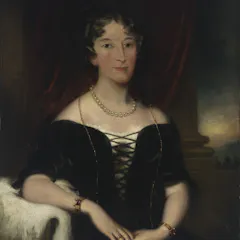
Kate Grenville suggests we read Elizabeth Macarthur’s letters as ‘a wonderful piece of fiction, sustained over sixty years’. They were exercises in doubleness, concealment, and delicious irony.
Top contributors
-

Professor of Indian and Colonial History, University of Liverpool; Independent Social Research Foundation
-
Professor of Sociology, University of the Witwatersrand
-
Extraordinary Professor, Department of Political Sciences, University of Pretoria
-
Research Fellow at the University of the Free State, South Africa and Assistant Professor in the History of International Relations, Utrecht University
-
Assistant Professor of Political Science, Lakehead University
-
Associate professor, McGill University
-
Professor in Political Science, Arnold Bergstraesser Institute
-
Head of Research Programme, Council for the Development of Social Science Research in Africa
-
Associate Professor Sport History, Stellenbosch University
-
Political Scientist, University of the Western Cape
-
Adjunct Professor, Stout Research Centre, Victoria University of Wellington and Auckland University of Technology, Professor of Political Science, Charles Sturt University
-
SSHRC Postdoctoral Fellow, Centre for South Asian Studies, Munk School of Global Affairs, University of Toronto
-
Curator & Section Head, Oceania, The British Museum
-
Associate Professor, Departments of History and Indigenous Studies, University of Manitoba
-
Professor, Department of Archaeology and Human Evolution Research Institute, University of Cape Town