
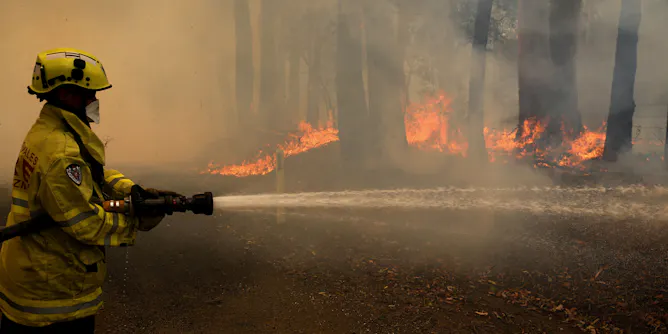
Michelle Grattan and Professor Geoff Crisp discuss this week in politics.
Articles on Climate policy
Displaying 181 - 200 of 396 articles
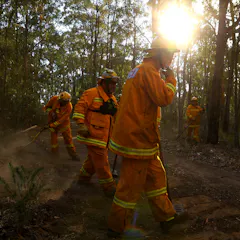
Emergency Leaders for Climate Action have a simple message: we’re in “a new age of unprecedented bushfire danger” due to climate change. But Morrison refuses to acknowledge it as a central issue.
The mass protests shine a spotlight on the tension between policies that raise energy prices and day-to-day energy affordability.
The costs, and the pain, of climate change only increase the longer we wait to act.

Vehicle emissions and industrial facilities are contributing to climate change, but many conservatives don’t believe it.
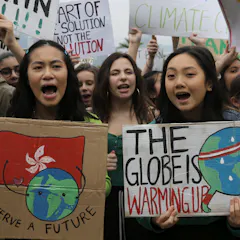
Economic and political assessments of climate change have for years helped justify inaction. Now, young environmentalists worldwide are shifting the debate to focus on values, ethics and justice.
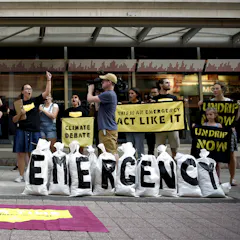
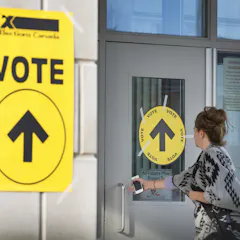
Climate change could take centre stage during Canada’s federal election.
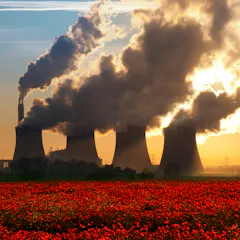
The Committee on Climate Change criticises slow progress, but has little to say about how to reconfigure government to make climate action a priority.
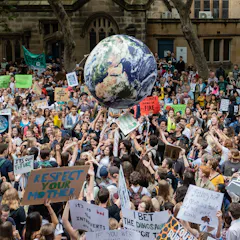
Citizens’ assemblies could be vital in kick-starting the tough steps needed to safeguard a healthy world – but the detail for how they will work will be important.
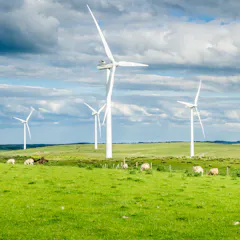
The bold pronouncements of 2019 must mean something through the 2020s and beyond.

Voters disagree on importance of climate change, universally dislike current energy and environment policy.
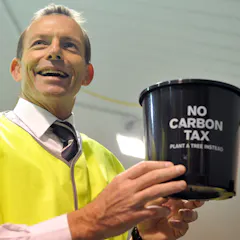
We’ve been here before. In fact we’ve been going round in circles on climate policy for decades, while the temperature (of the debate, as well as the planet) climbs ever higher.

Environmental taxes encourage consumers to conserve energy or switch to less carbon-intensive fuels.
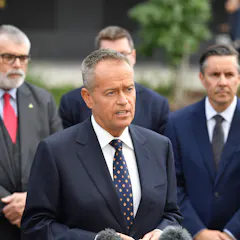
Labor has ditched its reliance on a single economy-wide climate policy, in favour of a range of different measures that will all help drive down emissions. But some crucial issues remain unaddressed.
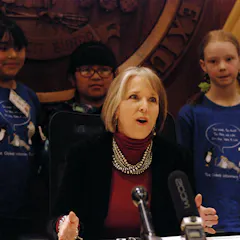
States are folding the social and economic costs of burning fossil fuels into their electricity policies, giving utilities a financial incentive to reduce greenhouse emissions.
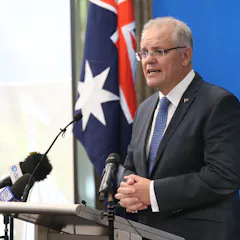
Scott Morrison’s pledge to spend billions on a Climate Solutions Fund is a thinly veiled rehash of the widely criticised Emissions Reduction Fund, which had much of its work undone by fine print.
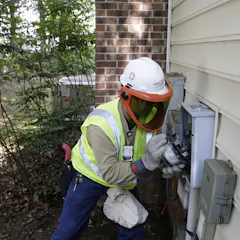
It’s often more effective, cheaper and less controversial than other efforts to confront climate change.

These technologies could turn into a powerful tool for fighting global warming, and they have the potential to address historical climate injustices.

There are ways to reduce the risk of protests like France’s yellow vests movement.
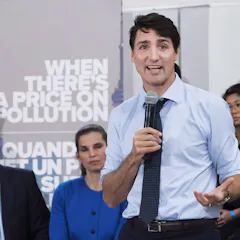
Canada’s top-down approach to designing its climate policy has failed. It needs to find ways to engage with individuals.
Top contributors
-

Professorial Fellow, University of Canberra
-
Former Visiting Fellow, SPRU, University of Sussex Business School, University of Sussex
-
Professor, Crawford School of Public Policy and Director, Centre for Climate and Energy Policy, Australian National University
-
Senior Fellow in Energy and Climate Change, Grattan Institute
-
Professor of International Relations, The University of Queensland
-
Research Associate, Institute for Climate Risk and Response, UNSW
-
Associate Professor, The University of Western Australia
-
Adjunct professor, Environment and Sustainability, University of Saskatchewan
-
Honorary Fellow, The University of Melbourne
-
Professor in Organisation & Sustainability, University of Exeter
-
Professor of Political Science, School of Regulation and Global Governance, Australian National University
-
Senior Research Fellow and Associate Professor, Melbourne Climate Futures initiative, The University of Melbourne
-
Professor of Economics, The University of Queensland
-
Senior Industry Fellow, Environment and Planning, RMIT University
-
Head of Atmospheric, Oceanic and Planetary Physics, University of Oxford