

We are turning ever more nature into a product we buy and sell.
Articles on Climate finance
Displaying 41 - 60 of 135 articles

At the 2024 global UN climate change summit, COP29, African countries failed to secure the US$1.3 trillion in climate finance that they need every year to adapt to climate change disasters.

Credibility of the UN’s framework convention on climate change can be restored when countries take responsibility for their actions and deliver money they promise.

The annual UN climate conference ended with a weaker deal than many countries hoped for, and with calls to overhaul the climate talks for the future.
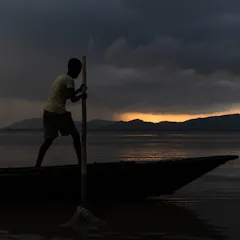
The costs of an unequal global system are not reflected in the new finance goal.

Missing money, Saudi wrecking, methane pledges and more.
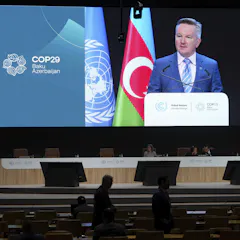
Australia and Pacific nations won’t know until June next year if they’re hosting the COP31 climate talks. But with tens of thousands of people potentially coming, they need to start planning now.
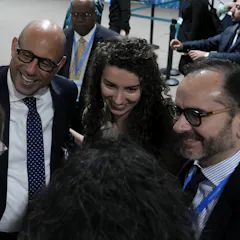
Expectations were low for the latest UN climate summit. But climate law expert Jacqueline Peel – who was at the talks – explains what progress was made.
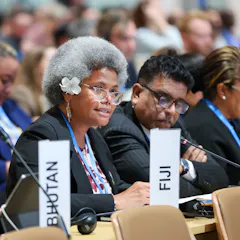
The real beneficiaries of climate finance for small island nations are private contractors brought in to build resilient infrastructure. There are now calls for a fairer money dispersal system.
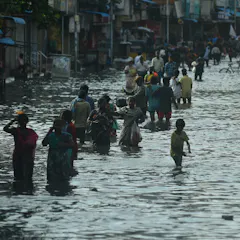
Loss and damage funding could preserve cultural heritage or soothe mental anguish post-disasters.
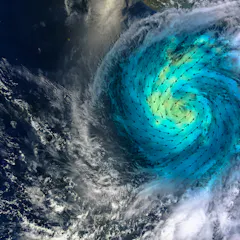
Extreme weather is already costing vulnerable island nations US$141 billion each year. How should rich nations contribute and who should pay the most?
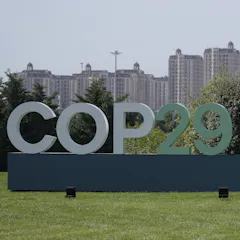
The central focus of COP29 negotiations is on a bigger target for climate finance – the money rich nations provide poor nations to help with their energy transition and climate resilience.
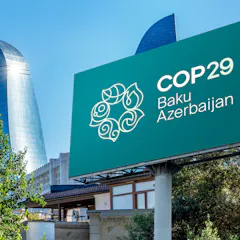
A finance deal at Baku that delivers meaningful climate action for developing countries seems a long way off.
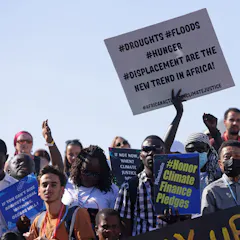
African countries need to unite and negotiate strongly at COP29 for more climate change adaptation grants and fewer loans that only leave the continent paying back debt.
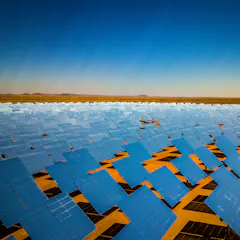
Africa could be headed for a green growth scenario, where it curbs greenhouse gas emissions and grows economies through local manufacturing of green energy equipment.

Kenya, Ethiopia, Djibouti, South Sudan and Uganda are investigating whether deep groundwater bores could support drought stricken communities. Could a networked approach help?

Katherine Browne and Margaret Angula talk to The Conversation Weekly podcast about a UN pilot in Namibia that’s pioneering community-led climate adaptation.
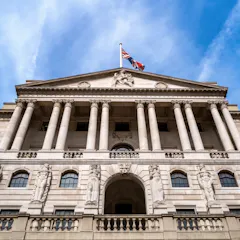
A focus on economic stability in the near-term makes the climate crisis worse in the long-term.

The UN climate conference brought some progress. A former UN official who has been involved in international climate policy for years explains what has to happen now for that progress to pay off.
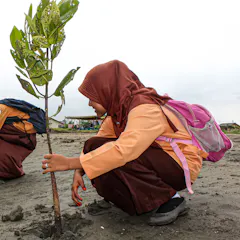
Even with rapid reductions in emissions, we will still need to adapt to a harsher climate.
Top contributors
-

Professor of Practice in Climate Policy, University of Oxford
-
Professor of Political Science, UCL
-
Professor of Law, The University of Melbourne
-
Professor of International Relations, The University of Queensland
-
Professor of Earth System Science, UCL
-
PhD Candidate in Climate Justice Policy, University of Warwick
-
Research Fellow, Oxford Net Zero, Institute for Science, Innovation and Society (InSIS), University of Oxford
-
Environment + Energy Editor and Host of the Climate Fight podcast series, The Conversation
-
Senior Lecturer in Climate Justice, University of Bristol
-
Research Associate, Institute for Climate Risk and Response, UNSW
-
Director, Columbia Center on Sustainable Investment, Columbia University
-
Senior Lecturer in Social Sciences and Public Policy, Auckland University of Technology
-
Research fellow, Australian National University
-
Lecturer in International Development, UCL
-
Professor of Infrastructure Engineering and International Development, UCL