
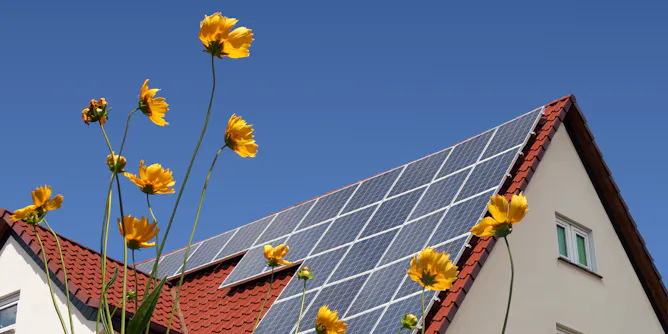
Addressing climate change involves many industries and sectors, including housing. Net-zero housing requires collaboration from all levels of government and the building sector.
Articles on Climate action
Displaying 61 - 80 of 266 articles

Three years ago, Ontario’s Doug Ford won an overwhelming majority government on the basis of the ballots of less than 18 per cent of the province’s eligible voters. Are voters still disengaged?

Regardless of Donald Trump’s embrace of fossil fuels, the writing is on the wall. It’s not a matter of if the world moves away from them dramatically, but when.
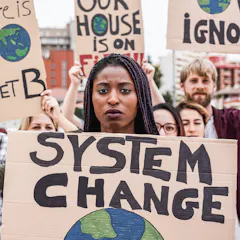
Shifting the blame for the climate crisis onto individuals hides the larger issue. True progress demands systemic accountability from governments and corporations.

None of us act in isolation – and our choices have more influence than we think.
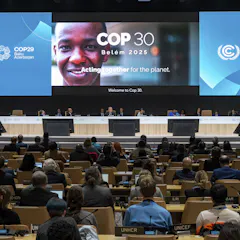
With the US out of the tent, the rest of the world can get on with climate action without Trump’s corrosive influence.
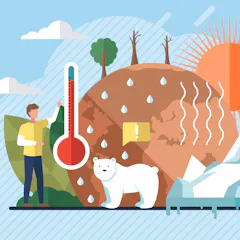
How collaborative climate workshops can be a creative and accessible way to begin collective conversations about environmental solutions.
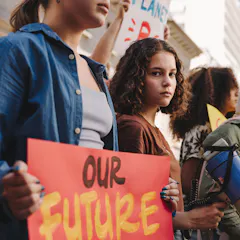
Almost half of us are now angry about climate change. But who we’re angry at can change whether we turn anger into action – or despair

Games can help us to imagine a better world with family and friends, and to highlight the collective actions that are most needed to tackle climate change.

New research examining how net-zero announcements from the US, UK, and China affected global financial markets could help forecast what the future may hold, if the US pulls back on its commitments.

Insulating attics, replacing windows and adding heat pumps can save money and reduce emissions − if residents can afford the upgrades. Carbon-offset purchases by local companies could help.

Efforts to tackle the climate crisis – both in Australia and globally – are much bigger than one man. Here are ten reasons to remain hopeful.
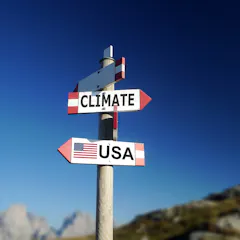
What will a Trump Presidency mean for climate policy, in the US, Australia and elsewhere? Buckle up, it’s not pretty.

Personal action on climate still has a place – but it works far better with institutional backing

Reversals by British Columbia’s NDP and Conservative leaders may give the impression that the parties’ positions on climate have converged. But the contrasts are stark as election day looms.

Creating sustainable jobs that are regionally accessible, locally meaningful and economically desirable is the next big hurdle for Canadian policymakers aiming for a net-zero energy economy.
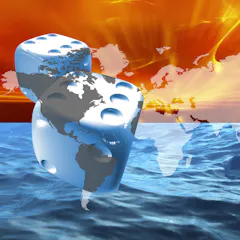
Students found the topic of climate change less boring when they studied it using a numbers estimation game.
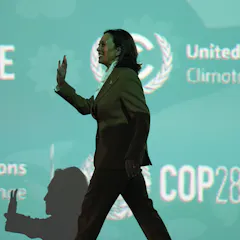
In Kamala Harris’s recent appearances, environmental issues have been mentioned only briefly and she seems to be avoiding diving into specifics. The ambiguity is more than likely intentional.
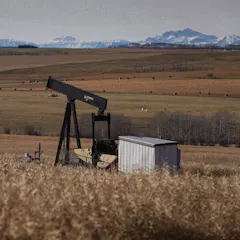
The customary energy life cycle includes exploration, development, extraction, processing, transmission and sometimes reclamation. An additional stage is needed: recycling.
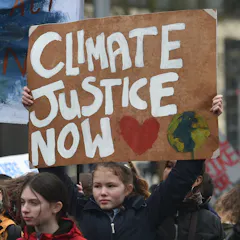
The ecological transition can sometimes work to the detriment of marginalized communities. Any approach to climate action must take issues of equity and justice into account.
Top contributors
-

Research Associate, Institute for Climate Risk and Response, UNSW
-
Senior Fellow, Centre for Free Expression, Toronto Metropolitan University; York University, Canada
-
Senior Research Fellow in Climate Science Communication, Climate Futures Program, University of Tasmania, University of Tasmania
-
Professor, Environmental and Urban Change, York University, Canada
-
Chair of Energy and Climate Governance, University of Manchester
-
Former Visiting Fellow, SPRU, University of Sussex Business School, University of Sussex
-
Lecturer, Environmental Psychology, University of Bath
-
Professor, Institute for Marine and Antarctic Studies and Director of the Centre for Marine Socioecology, UTAS, University of Tasmania
-
ARC Future Fellow and Associate Professor in Climate Science, ARC Centre of Excellence for 21st Century Weather, The University of Melbourne
-
Lecturer and Research Fellow, School of Geography, Planning, and Spatial Sciences. Coordinator, Education for Sustainability Tasmania, University of Tasmania
-
Climateworks Centre CEO, Monash University
-
Professor, Département de droit, Université du Québec en Outaouais (UQO)
-
Professor of Cognitive Psychology and Director of the Institute for Climate Risk and Response, UNSW
-
Professor of Earth System Science, UCL
-
Marine Social Scientist, The University of Queensland