

Ancient Greek philosophers despised the Sophists’ rhetoric because it searched for relative truth, not absolutes. But learning how to do that thoughtfully can help constructive debates.
Articles on Classics
Displaying 21 - 40 of 74 articles
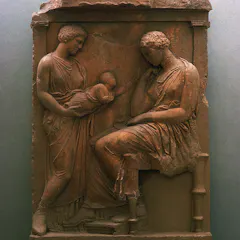
Greek epic poetry often uses mothers and wives to humanize its heroes, reminding listeners of the meaning of sacrifice.
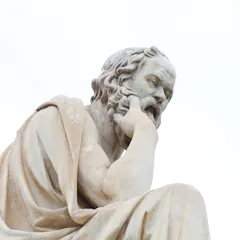
Athens was deeply polarized over big-picture questions, and Socrates was never hesitant to question both sides’ assumptions – or his own.
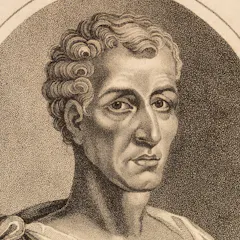
Lucian’s work provides insight into the second-century Roman world, which fostered multilingualism and multiculturalism.
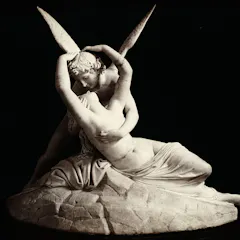
Ancient Greece and Rome may have handed down the image of rosy-cheeked Cupids, but their myths about him explore the messier – sometimes scarier – sides of love.
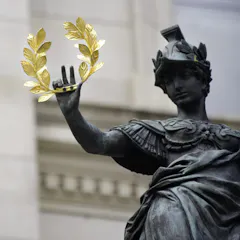
Just in time for this year’s Nobel Prize announcements, here’s how the symbolism of a plant associated with the god Apollo lives on in modern-day laureates.
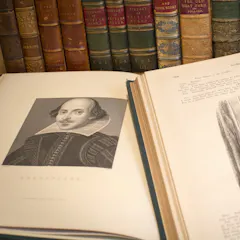
An English professor takes a critical look at why today’s students are assigned the same books that were assigned decades ago – and why American school curricula are so difficult to change.

The possibilities of ‘more human than human’ artificial intelligence and the dangers of playing God and are not new – they’re the subjects of one of the world’s first science-fiction novels.

This brainy feminist romp of a novel, loved by Rachel Cusk and Maria Semple, is often compared to Brideshead Revisited. But Carol Lefevre says it’s more like a sexy, sweary version of Nancy Mitford in 1960s London.

The classical tradition has long excluded anyone who wasn’t white. But a succession of Black female artists have attempted to broaden these ossified boundaries.
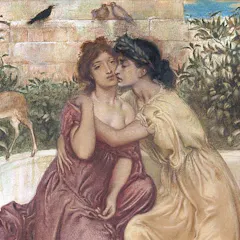
In 2014, reports of a new discovery of Sappho’s poems were remarkable. New research argues the papyrus had a fabricated backstory.
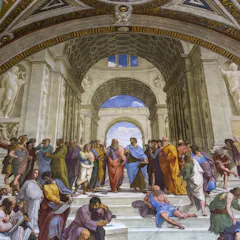
Ancient Greek philosophers including Plato likened civic leaders to doctors, creating a healthy society through balance and moderation. Those ideas feed into what we expect from leaders today.
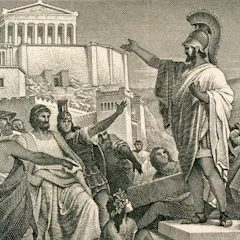
Thucydides’ description of the plague that struck Athens in 430 BC is one of the great passages of Greek literature. It focusses on the social response, both of those who died and those who survived.

The British prime minister is fond of a common form of political rhetoric especially loved by the Romans: the promise of a ‘new age’.

A new look at ancient texts allows for a pivotal perspective on the role of a certain Greek woman.

Tapping into ancient knowledge can help us feel connected to our ancestors – but that doesn’t mean we should take their advice.

A major exhibition of treasures from ancient Rome presents a distinctly old-fashioned tale of the empire’s rise and expansion, which is out of step with contemporary scholarly thinking.

Beer is the most consumed beverages in the world with a long history. What does the ancient art of brewing tell us about culture and tastes?
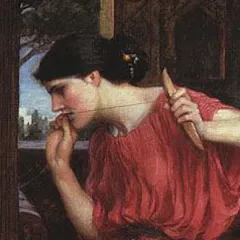
It may seem incredible that some 2,500 years since the Homeric epics, women are still silenced in public. But the myths of Archaic Greece resonate today in disturbing ways.

Why grown-ups still need fairy tales
The Conversation, CC BY22.8 MB (download)
We consciously and unconsciously tell fairy tales today, despite advances in logic and science. It’s as if there is something ingrained in us that compels us to see the world through this lens.
Top contributors
-

Lecturer in Classical Studies, The Open University
-
Emeritus Professor of Classics, La Trobe University
-
Senior Lecturer in Classical Studies, The Open University
-
Lecturer in Classics and Ancient History, The University of Western Australia
-
Paul Eliadis Chair of Classics and Ancient History, The University of Queensland
-
Assistant Professor of Writing, USC Dornsife College of Letters, Arts and Sciences
-
Professor of Classical Studies, Brandeis University
-
Professor of Classics and Head of the Centre for Classical Studies, Australian National University
-
Visiting Research Fellow, The Open University
-
Professor of Greek Culture, University of Leeds
-
Honorary Professor of Classics and Ancient History, School of Historical and Philosophical Inquiry, The University of Queensland
-
Senior Lecturer in History, The Open University
-
Professor of Education and Sociology, American University
-
Assistant Professor of Classics, University of Cambridge
-
Reader in Classical Studies, The Open University