

Melbourne Museum’s major exhibition tells us as much about how we look at this complicated culture as the culture itself.
Articles on Ancient Rome
Displaying 1 - 20 of 197 articles
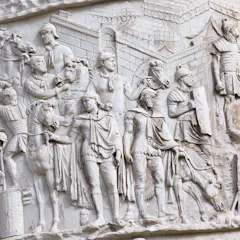
It’s an attractively neat idea. But when it came to paying Roman soldiers, coins did the job admirably.

Uncertainty over whether the seat of the papacy would remain in the city explains why Rome was a late developer when it came to palace-building, lagging behind Florence and Venice.
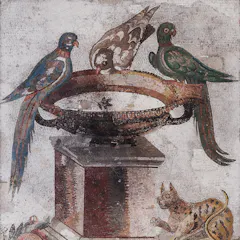
Greek and Roman writers were already asking how birds became sick, what signs to look for, and what could be done when disease appeared in them.

Harris is a superb storyteller, and Agrippa is a compelling read.

Authorities in Greek and Roman times tried hard to put limits on gambling. They weren’t particularly successful.

The ancients ate mountains of bread and cheese, but you’d never know from today’s version of the Mediterranean diet.
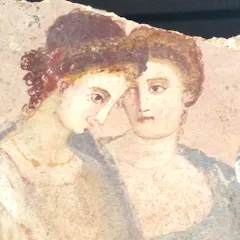
Lesbians were misrepresented and parodied by men in ancient Roman texts. Yet these depictions can reveal a lot if we read between the lines.

The US dollar is said to benefit from ‘exorbitant privilege’ in international trade. But history shows that may not last.
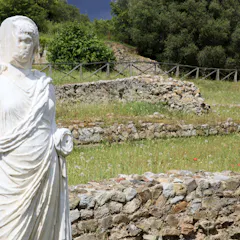
Many historians assumed ancient Roman farm women were housekeepers. A closer look suggests female managers oversaw wine production and other profitable processes.

Plutarch’s practical ethics propose two ways we can live happier, more serene lives.

New research shows northwest African communities actively shaped connections and exchange between many cultures.
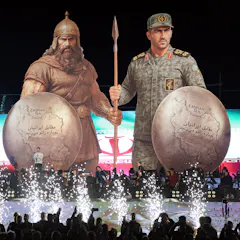
After dozens of wars between the two ancient empires of Rome and Persia, peace deals often failed to solve problems – and sometimes made the situation worse.

Among the Romans, fathers had complete legal control over their sons and daughters. This included the right to inflict capital punishment.

For both Roman gladiators and modern-day mixed martial arts participants, physical contests become moral dramas about sacrifice and human limits. That has led today’s fighters to right-wing politics.

Ancient furnace workers experimented with heating the ends of glass tubes to rework them. One day, someone blew into that tube and changed history.
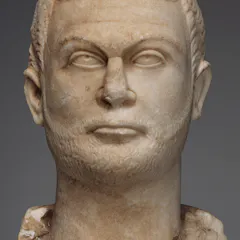
Most Roman emperors died on the job. So when the emperor Diocletian decided to abdicate and retire in March 305 CE, it was a highly unusual development.
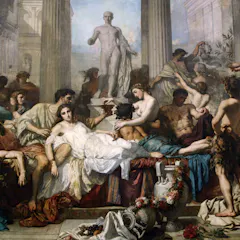
Some have suggested rampant extramarital sex in elite Roman circles led to demand for silphium outstripping supply.
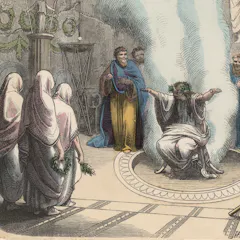
The ancient Greeks and Romans invaded Persia multiple times. The risks were high, the logistics complicated, and wars were a lot easier to start than end.

Some wondered, centuries ahead of their time, if lightning had something to do with air and clouds.
Top contributors
-

Lecturer in Classics and Ancient History, The University of Western Australia
-
Associate Professor in Ancient History, Macquarie University
-
Professor of Classics and Head of the Centre for Classical Studies, Australian National University
-
Assistant Professor of Classics, University of Cambridge
-
Head, Public Engagement, Chau Chak Wing Museum, University of Sydney
-
Honorary Professor of Classics and Ancient History, School of Historical and Philosophical Inquiry, The University of Queensland
-
Lecturer in Archaeology and Classical Studies, Adelaide University ; School of Advanced Study, University of London
-
Professor of Classics and the Director of Peace and Conflict Studies, College of the Holy Cross
-
Honorary Fellow, School of Historical and Philosophical Studies, The University of Melbourne
-
Gale Research Fellow in Ancient Glass and Material Culture, Macquarie University
-
Professeur d'histoire ancienne, Université de Lorraine
-
Lecturer, Classics, University of Glasgow
-
PhD Candidate in Classics and Archaeology, The University of Melbourne
-
Lecturer in Ancient History, Cardiff University
-
Emeritus Professor of Roman Archaeology, University of Birmingham