
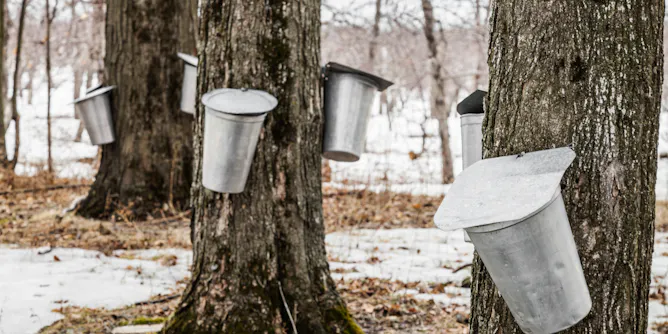
Apart from being a jewel of Canada’s culinary heritage, maple syrup has a complex chemical constitution.
Articles on Chemistry
Displaying 181 - 200 of 446 articles
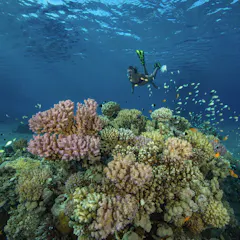
Researchers have long suspected that an ingredient in sunscreen called oxybenzone was harming corals, but no one knew how. A new study shows how corals turn oxybenzone into a sunlight-activated toxin.

While technological advancements have quickened the drug discovery process, some chemical compounds remain a common thorn in a researcher’s side.
It’s totally fine to eat chocolate with a white film on the surface. But what is it, how did it get there, and how can it be avoided?

The story of the groundbreaking history behind your flatscreen TVs, mobiles and tablets – and the ingenious scientist who made it possible.
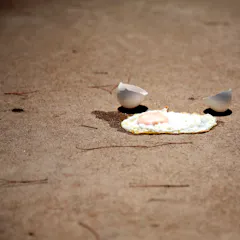
It’s too hot for bare feet, but that doesn’t mean you can cook a fry-up on the path outside your house. A frying pan is a much better tool for the job, because it conducts heat far more efficiently.

In Beijing’s climate, you could coat a Sydney apartment in a few inches of snow with the same energy the air conditioning would use in an hour.
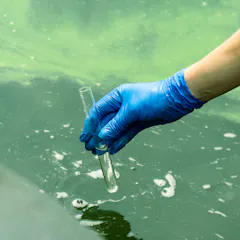
Getting involved in citizen science projects can be a great way to have a positive impact on the world.
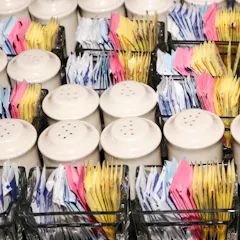
Just because something is sweet doesn’t necessarily mean it is sugary. There are a number of molecules that taste sweet. To understand how and why takes a little bit of chemistry.
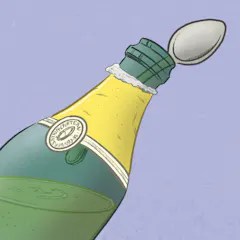
From my years researching wine chemistry and wine oxidation, I know making every attempt to minimise contact between wine and oxygen is vital. Sealing the bottle is essential.

The ability to store information is central to learning and the field of artificial intelligence. Researchers have shown how a unique material shows basic learning properties similar to that of slugs.

Hidden underneath the bright colors and celebratory nature of fireworks is a combination of ancient chemistry and modern pyrotechnical recipes.

How the innovation of 19th century chemist, Baron von Liebig, led to the first fertilizer, gravy, and mirrored Christmas baubles.

Burning leaded gasoline releases toxic lead into the environment, and for 100 years people around the world have been dealing with the health effects. How did a century of toxic fuel come to be?
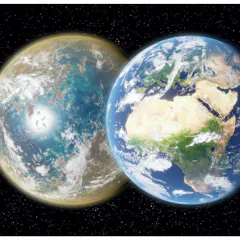
Life doesn’t just need water and oxygen to thrive, it also needs iron.
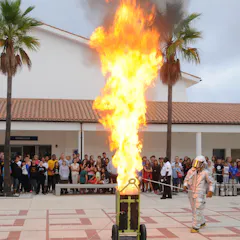
Deep-fried turkeys are delicious, but making one can be dangerous. The scientific reason for fiery Thanksgiving mishaps? A difference in the densities of ice, water and oil.
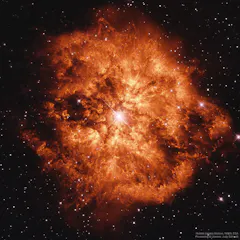
Tracing the cosmic origin of toothpaste, scientists got a glimpse into the surprising chemistry of early galaxies.
Listen to The Conversation Weekly as we delve into the achievements behind three of the latest Nobel prizes.
Dave MacMillon and Ben List both developed simple catalysts that make precise chemical reactions much faster and more efficient.
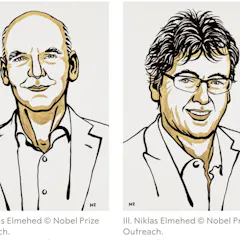
The discovery has boosted the pharmaceutical industry and made research greener and cheaper.
Top contributors
-

Professor of Science Communication and Chemistry, University of Hull
-
Senior Lecturer in Chemistry, University of Birmingham
-
Associate Professor in Chemistry and Associate Head Learning and Teaching, University of Tasmania
-
Associate Professor of Chemistry, University of Richmond
-
Assistant Professor of Chemistry, Trinity University
-
Honorary Associate Professor, University of Leicester
-
Senior Lecturer in Chemistry, Swinburne University of Technology
-
Associate Professor of Chemistry, University of Richmond
-
Postdoctoral research associate, University of Oxford
-
Professor of Chemistry, UNSW
-
CBRN defence scientist, Charles Darwin University
-
Materials Chemist and Science Communicator, University of Sheffield
-
Professor (Food Science & Human Nutrition), Singapore Institute of Technology
-
Associate professor, Monash University
-
Professor, The University of Queensland