
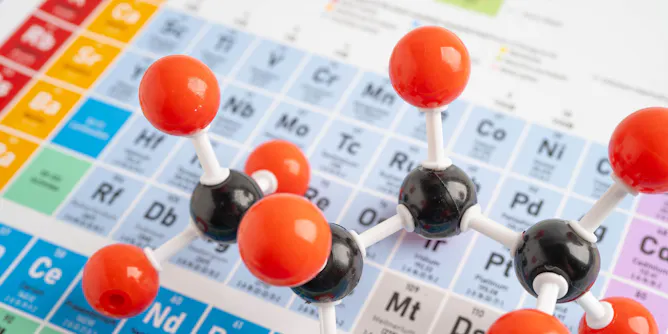
Listen to the The Conversation’s Curious Kids podcast to hear biochemist Mark Lorch explain how scientists are trying to make new elements for the periodic table.
Articles on Periodic table
Displaying 1 - 20 of 29 articles
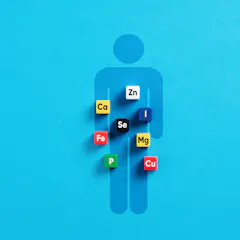
Calcium, potassium, arsenic. What the periodic table tells us about life, death and dental work.
Scientists have been searching Earth’s surface for superheavy elements too difficult to make in the lab, but now, many are looking to the skies instead.
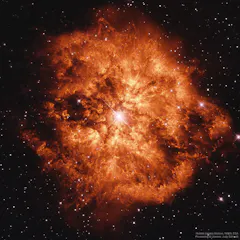
Tracing the cosmic origin of toothpaste, scientists got a glimpse into the surprising chemistry of early galaxies.

The element was discovered in the fallout of a thermonuclear blast.
New research suggests ordering the elements by atomic radius and ability to attract electrons.
The laws and principles of chemistry seem pretty set in stone. But as a chemist explains, the field is always evolving, including such fundamental principles as what is a chemical bond.

We need phosphorus for life, as well as for fertiliser to help plants grow, but raw supplies are limited.
New research shows how chemical elements mix in the universe. Without this process, you wouldn’t be here.
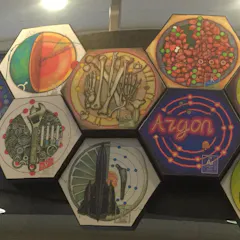
From heavy metal to lighter than air gas, these elements and others from the Periodic Table are transformed into artworks that go on display from today.
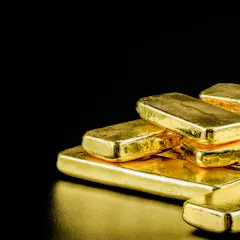
Gold is one of 12 confirmed elements on the periodic table whose discoverer is unknown.
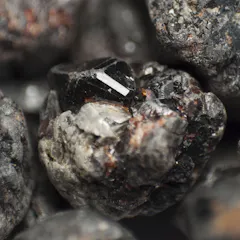
On its own it’s just tin. But mix it with other elements and it turns into a material that helped shape the ancient world.

How do you return Aboriginal remains to their place of origin when you have no record of where they came from? Look to a chemical element that’s laid down in teeth as people grow up.
2019 is the International Year of the Periodic Table. The person who typically gets credit for its creation is Dimitri Mendeleev. But there were many more chemists who should be recognized.
Wishing you a Happy International Year of the Periodic Table of Chemical Elements on the occasion of its 150th birthday in 2019!
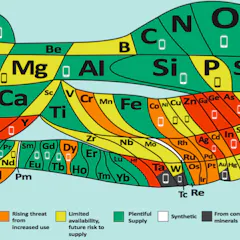
Exactly 150 years after Mendeleev’s classic formulation, it’s time for one for the resource-hungry 21st century.
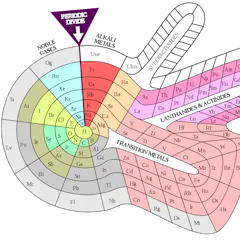
There have been some rather wacky looking suggestions for arranging the chemical elements.
Alongside their famous dangers, radioactive materials have many beneficial uses. With as many more predicted as have already been discovered, nuclear physicists are searching for more isotopes.
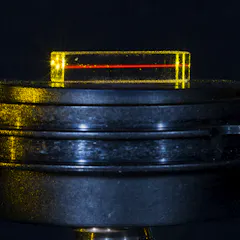
Rare earth elements aren’t actually that rare - but they certainly are useful. Erbium is used right now in the internet’s optical fibre network, and could one day be applied in quantum networks.
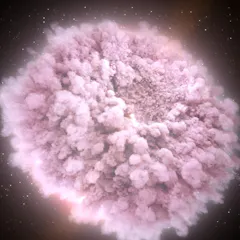
Until the recent observation of merging neutron stars, how the heaviest elements come to be was a mystery. But their fingerprints are all over this cosmic collision.
Top contributors
-

Professor of Science Communication and Chemistry, University of Hull
-
Professor, The University of Queensland
-
Professor of Astrophysics and Royal Society University Research Fellow, University of Hertfordshire
-
Professor of Physics, Syracuse University
-
Team Leader, CSIRO
-
Doctoral Candidate in Responsible Mining, University of Exeter
-
Associate professor, Monash University
-
Research Fellow, Laser Physics Centre, Australian National University
-
Professor of Astronomy, Harvard University
-
Senior Programme Manager Pact Mines to Markets, University of Exeter
-
Director, Heavy Ion Accelerator Facility, Australian National University
-
Professor of Nuclear Physics, Michigan State University
-
Professor of Chemistry, University of Bristol
-
Archaeologist, Griffith University
-
Associate Professor of Chemistry, Marist College