
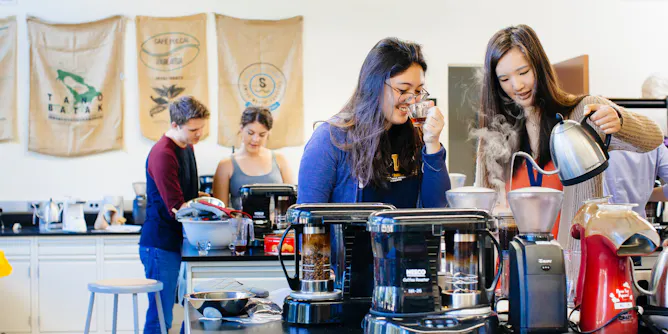
In an engineering course at UC Davis, students learn all the nuances that go into brewing ‘a truly excellent cup of coffee.’
Articles on Chemistry
Displaying 141 - 160 of 446 articles

While chlorine plays a role in making your hair appear green, there’s actually another main culprit – copper.
The bourbon industry has been booming in recent years, but what sets all the different types of bourbon apart?
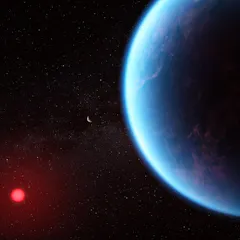
The results are intriguing, but analysing the atmospheres of exoplanets is no easy task.
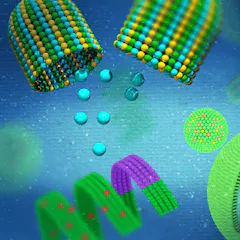
Nanoparticles have contributed to profound medical advances like the COVID-19 vaccine, but without oversight, they pose ethical and environmental issues.
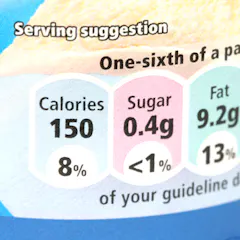
There are two main methods used to calculate the energy content in food and drinks.
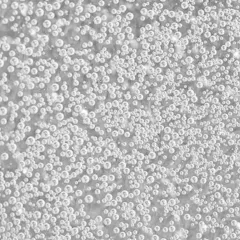
Ever wonder how soda manufacturers get the bubbles and fizz inside the can? A chemist explains some of the science behind the carbonation process. Hint − it involves carbon.

A chemist explains how the structure of your hair follicles, your genetic code and environmental factors like humidity influence how hair behaves on a day-to-day basis.
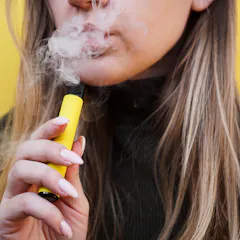
It’s not just the ingredients we should be concerned about. The devices themselves release chemicals that end up in our blood and urine.

Remember building model molecules with balls and sticks in chemistry class? You have J. Robert Oppenheimer to thank for that, as a quantum chemist explains.
PFAS can be filtered, but getting rid of the chemicals is a monumental challenge. A biochemist and soil scientist explain.
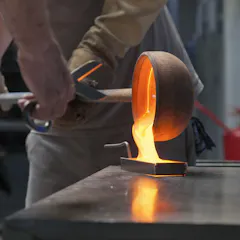
Two glass researchers explain how glass is made, the unique properties of glass and how those properties have allowed it to be a useful material to humans for thousands of years.
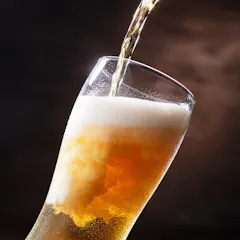
What’s the difference between gluten-free and gluten-reduced? And why does the country of production make a difference?
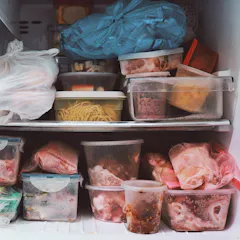
Do your ice taste funny? Is there ‘freezer burn’ on your meat? This is why your freezer probably isn’t as clean as you think – but it only takes a few simple steps to fix it.
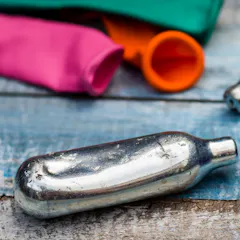
People are becoming more aware of the health risks of laughing gas, but fewer people realise it’s a potent greenhouse gas.

Remember: the presence of something does not automatically mean it is harmful. It is the dose that makes the poison.
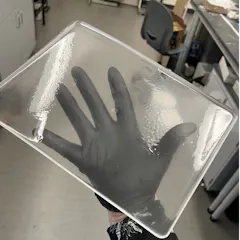
Researchers have developed a method for producing strong plastic materials by tweaking the chemical structure of superglue.
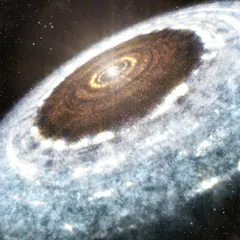
Astronomers have long known where water is first formed in the universe and how it ends up on planets, asteroids and comets. A recent discovery has finally answered what happens in between.

Technology will be a key part of solving the global water scarcity crisis.
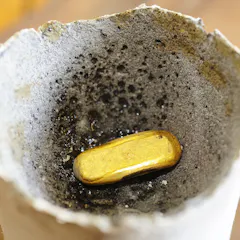
From Archimedes’ principle to mass spectrometry, there are plenty of ways to test the purity of gold.
Top contributors
-

Professor of Science Communication and Chemistry, University of Hull
-
Senior Lecturer in Chemistry, University of Birmingham
-
Associate Professor in Chemistry and Associate Head Learning and Teaching, University of Tasmania
-
Associate Professor of Chemistry, University of Richmond
-
Assistant Professor of Chemistry, Trinity University
-
Honorary Associate Professor, University of Leicester
-
Senior Lecturer in Chemistry, Swinburne University of Technology
-
Associate Professor of Chemistry, University of Richmond
-
Postdoctoral research associate, University of Oxford
-
Professor of Chemistry, UNSW
-
CBRN defence scientist, Charles Darwin University
-
Materials Chemist and Science Communicator, University of Sheffield
-
Professor (Food Science & Human Nutrition), Singapore Institute of Technology
-
Associate professor, Monash University
-
Professor, The University of Queensland