

Emmanuelle Charpentier and Jennifer Doudna share the Nobel prize for chemistry for their CRISPR/Cas9 tool to rewrite the blueprint of life.
Articles on Chemistry
Displaying 221 - 240 of 448 articles

You might think the more oxygen you breathe in the better. But too much oxygen can make you sick.

Considering what we know about the key ingredients for life’s formation on Earth, here are three explanations for how this process may have occurred on our sister planet.
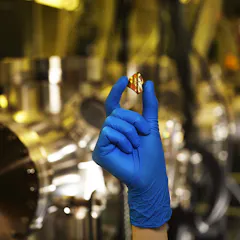
Halide perovskites are cheap, versatile and remarkably efficient as both solar cells and light emitters.

Bricks turn out to be useful for storing electricity thanks to their porousness and red pigment.

For combustion to occur, oxygen must be present. Ammonium nitrate prills provide a much more concentrated supply of oxygen than the air around us.

EVs will have lower sticker prices than gas vehicles when batteries are cheaper. Getting there comes down to knowing where to cut costs.
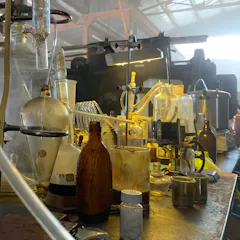
A history of the drug crystal meth.

Pepper spray uses a chemical called capsaicin. It’s the same compound that makes chillies hot, but in a more intense, weaponised form.

The chemical weapon, tear gas, was used in Washington DC, Los Angeles, Orlando and several other cities to control crowds protesting the death of George Floyd. But what is it? Does it cause harm?
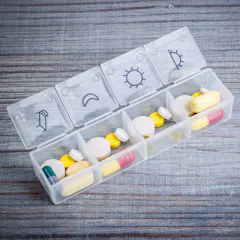
New manufacturing processes will revolutionise the way we take our medicines.
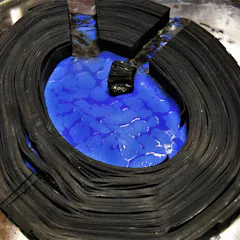
Archives need to take action now.
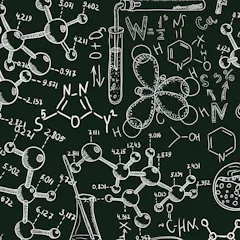
The laws and principles of chemistry seem pretty set in stone. But as a chemist explains, the field is always evolving, including such fundamental principles as what is a chemical bond.

Home economics isn’t dead: We need it now more than ever. Founded by a pioneering chemist, it’s about the insight that a change in one part of a system affects all the other parts.

A fetus needs oxygen long before its lungs work and it’s exposed to the air. Some ingenious biochemistry explains how the mother’s blood delivers it.
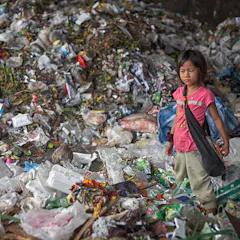
Even recycled plastics still end up in landfill with our current system.

A simple chemical reaction turns the red pigment of beets into a new, nontoxic blue dye.

Three foods and some cool stuff you should know about them.
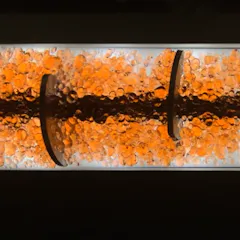
Electronic waste is accumulating and is a resource to be exploited. Microfluidic devices allow the development of recycling, including the recycling of rare earths – a precious resource.
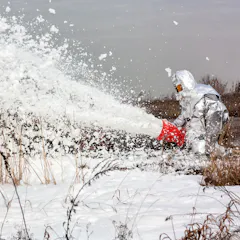
Researchers continue to find PFAS-contaminated sites and waterways. Perhaps it is time to consider wider bans on these persistent chemicals.
Top contributors
-

Professor of Science Communication and Chemistry, University of Hull
-
Senior Lecturer in Chemistry, University of Birmingham
-
Associate Professor in Chemistry and Associate Head Learning and Teaching, University of Tasmania
-
Associate Professor of Chemistry, University of Richmond
-
Assistant Professor of Chemistry, Trinity University
-
Honorary Associate Professor, University of Leicester
-
Senior Lecturer in Chemistry, Swinburne University of Technology
-
Associate Professor of Chemistry, University of Richmond
-
Postdoctoral research associate, University of Oxford
-
Professor of Chemistry, UNSW
-
CBRN defence scientist, Charles Darwin University
-
Materials Chemist and Science Communicator, University of Sheffield
-
Professor (Food Science & Human Nutrition), Singapore Institute of Technology
-
Associate professor, Monash University
-
Professor, The University of Queensland