
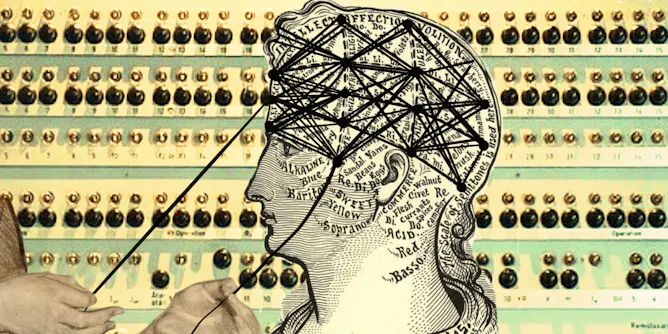
The Turing test has been popularised as the ultimate indicator of machine intelligence. But the truth is more complicated.
Articles on ChatGPT
Displaying 101 - 120 of 347 articles

Generative AI tools look backwards, where governments are supposed to look forwards.

Silicon Valley is no longer a counter-cultural world of startups in garages

Studio Ghibli’s founder Hayao Miyazaki has been critical of AI previously. Now, ChatGPT is generating images in his world-famous animation style.

From clay tablets to electronic tablets, technology has played an influential role in shaping human knowledge for centuries.

Understanding its limitations can help you decide when the human touch might be better.

When AI systems try to bridge gaps in their training data, the results can be wildly off the mark: fabrications and non sequiturs researchers call hallucinations.
How can the science community minimise the risks but maximise the benefits of AI?

AI chat logs are the latest digital frontier for FOI – but the battle for real transparency is far from won.
Participants in a study were willing to spend just as much time and money on an AI-generated story as one they were told was written by a human.
Nearly 20 years after it was launched, machine translation is still a long way from replacing translators.

Peer review ensures the findings of research are trustworthy. But what happens when it’s performed by an AI model?
The idea that AI ‘learns’ like humans do is one of many misconceptions about the technology.

Chinese AI companies have grown rapidly, despite several technological and political challenges. So what’s their secret?
If educators want to make valid inferences about what students know and can do, assessments like drafts, works-in-progress and repeated observations of student learning are needed.
The technology is always on call and is quite competent. But it lacks the contemplation and attention to detail that yield great works of art.

Some people ask generative AI health questions that would usually require clinical advice, such as whether to go to hospital for certain symptoms.

OpenAI has rolled out a new feature on ChatGPT that can produce reports at the level of a ‘research analyst’. But it doesn’t mean we can replace human thinking.

The upside to this war of words? More competition is boosting consumer choice, including with OpenAI’s release over the weekend of a new AI model, o3-mini.
Only by considering conditions specific to post-secondary education today can educators reimagine more engaged and critical learning.
Top contributors
-

Director of Sydney Executive Plus, Business School, University of Sydney
-
Professor of Information Technology and Organisation, University of Sydney
-
Lecturer in Business Analytics, University of Sydney
-
Associate Professor of Visual Communication & Digital Media, RMIT University
-
Professor and Associate Director of the Centre for Change and Complexity in Learning (C3L), Education Futures, Adelaide University
-
Professor of Information Systems, Michigan State University
-
Senior Lecturer in Business Information Systems, University of Sydney
-
Senior Lecturer in Computing and Information Systems, Cardiff Metropolitan University
-
Professor of Community Information, University of Michigan
-
Professor of Philosophy and Director of Applied Ethics Center, UMass Boston
-
Associate Professor of Linguistics and Director of Language Lab, The University of Western Australia
-
Senior Research Fellow, Human-AI Decision Making, The University of Queensland
-
Research Assistant Professor of Industrial & Systems Engineering, University of Southern California
-
Senior Lecturer, School of Engineering, Australian National University
-
Assistant Professor, Oregon State University