

Here are the trends on the cusp of transforming the online world.
Articles on ChatGPT
Displaying 321 - 340 of 347 articles

Confident chatbots could undermine trust and romance - but probably won’t. They may even enhance online dating.

Many view ChatGPT as a death sentence for homework. But beyond all the alarm, could it be the software offers students unprecedented chances to hone their language awareness skills?

There won’t be an easy tech fix for the questions about authorship raised by ChatGPT and other text generators.
Could Google’s undisputed dominance as a search engine come under threat from AI?

Research about both social and technical aspects of work can guide critical thinking about when and how business leaders and MBA students might use generative AI.
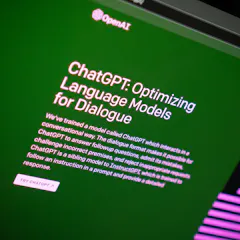
With a rapidly expanding ‘edtech’ market, it’s easy for teachers and parents to be confused about what’s on offer, how to use it and whether it will help students learn.
Google botched its Bard launch, but that’s not why investors dumped shares in the company.
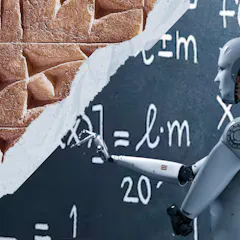
ChatGPT threatens to change writing as we know it. But the Mesopotamians, who lived 4,000 years ago in modern-day Iraq, went through this kind of seismic change before us, when they invented writing.
When you ask ChatGPT to generate content, the default output is in the voice, style and language of white English-speaking men, who have long dominated many writing-intensive sectors.

Will it give Microsoft a chance to overtake Google in the search space?
ChatGPT is fuelled by our intimate online histories. It’s trained on 300 billion words, yet users have no way of knowing which of their data it contains.

Answers are all the rage in the information age. However, to become wise we will need to learn to formulate better questions.
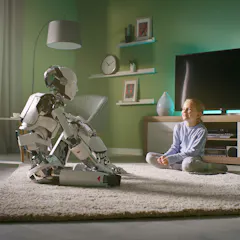
ChatGPT and other AI chatbots seem remarkably good at conversations. But you can’t believe anything they say. Sometimes, though, reality isn’t the point.

Academic authorship was never straightforward. Now ChatGPT is making it even more complicated.

ChatGPT is a sophisticated AI program that generates text from vast databases. But it doesn’t understand the information it produces, which also can’t be verified through scientific means.

The rise of AI chatbots provides an opportunity to expand the ways we do philosophy and research, and how we engage in intellectual discourse.

While ChatGPT has the potential to enhance marketing effectiveness, it can’t replace human creativity or form meaningful connections with customers like humans can.

People who have used AI to help with writing report a loss of pride and ownership in what they produce.

We need to embrace the use of AI in higher education because the positives can far outweigh the negatives.
Top contributors
-

Director of Sydney Executive Plus, Business School, University of Sydney
-
Professor of Information Technology and Organisation, University of Sydney
-
Lecturer in Business Analytics, University of Sydney
-
Associate Professor of Visual Communication & Digital Media, RMIT University
-
Professor and Associate Director of the Centre for Change and Complexity in Learning (C3L), Education Futures, Adelaide University
-
Professor of Information Systems, Michigan State University
-
Senior Lecturer in Business Information Systems, University of Sydney
-
Senior Lecturer in Computing and Information Systems, Cardiff Metropolitan University
-
Professor of Community Information, University of Michigan
-
Professor of Philosophy and Director of Applied Ethics Center, UMass Boston
-
Associate Professor of Linguistics and Director of Language Lab, The University of Western Australia
-
Senior Research Fellow, Human-AI Decision Making, The University of Queensland
-
Research Assistant Professor of Industrial & Systems Engineering, University of Southern California
-
Senior Lecturer, School of Engineering, Australian National University
-
Assistant Professor, Oregon State University