
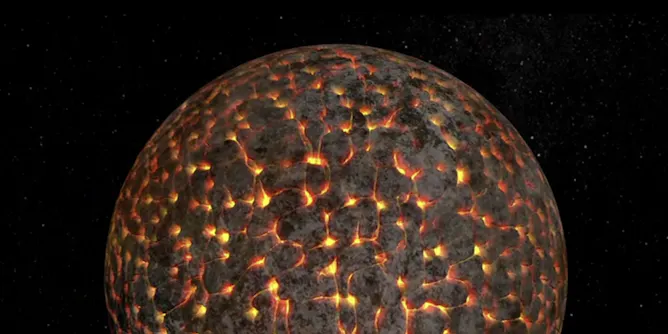
The new study seems to confirm that molten magma covered the Moon’s surface shortly after its formation.
Articles on Chandrayaan-3
Displaying all articles

Japan’s space agency is landing its first lunar probe this week. This makes the Moon an increasingly busy target for spacefaring nations – with conflicting political stances among them.
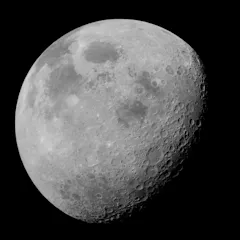
Some dark craters on the Moon are never exposed to light − ice could be hiding in these permanently shadowed regions, and India’s Chandrayaan-3 mission marked a big step toward finding it.
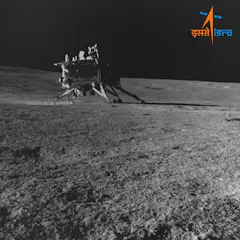
India’s Chandrayaan-3 rover has found sulfur on the Moon’s surface at higher concentrations than previously seen. Sulfur, a useful resource, could pave the way for future Moon bases.
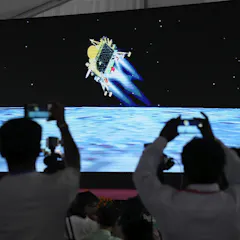
India became the first country to land near the south pole of the Moon, a notoriously difficult achievement that also marks them as the fourth country to land on the Moon.
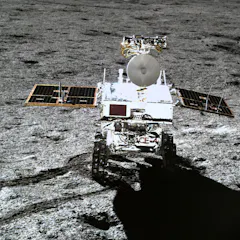
China has made significant advances in space exploration on its own steam. It doesn’t need a partnership with Russia.

The Indian spacecraft could lay the ground for future missions with astronauts, and even for lunar bases.
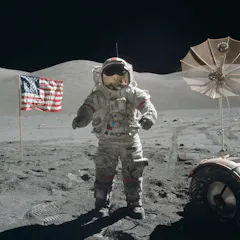
Several current programs aim at sending humans back to the Moon. What would be the purpose, and what are the real prospects?
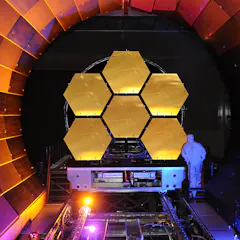
India may land on the Moon this coming year, while Nasa will launch its new, powerful rocket farther into space than any other human rated spacecraft.

Companies and space agencies alike will have to compete for very few useful sites on the Moon.
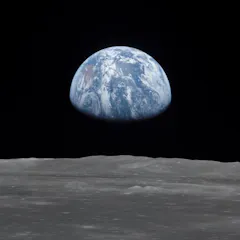
No human has been to the moon since 1972. But India, China and Russia would like to change that, and soon.
Top contributors
-

Professor of Astrophysics, Macquarie University
-
Senior Lecturer in Physics, Nottingham Trent University
-
Postdoctoral research associate, University of Oxford
-
Research Professor of Physics, Washington University in St. Louis
-
Emeritus Fellow, Australian National University
-
Associate Professor, Australian National University
-
Associate Professor of International Affairs, Georgia Institute of Technology
-
Teaching Associate in Philosophy, School of History, Philosophy and Digital Humanities, University of Sheffield
-
Associate Fellow, Université Paris Cité
-
Assistant Professor of Astrophysical and Planetary Sciences, University of Colorado Boulder
-
Royal Society University Research Fellow, Department of Earth and Environmental Sciences, University of Manchester
-
Professeur de physique et science de la soutenabilité, Université Paris Cité