

Including a positive way to think about tipping points.
Articles on Cellular agriculture
Displaying all articles
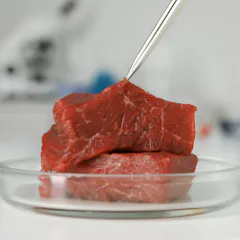
Stopping the production of lab-grown food will be bad news for the environment.

Cellular and microbial agriculture can make the same amount of food on a fraction of the land.
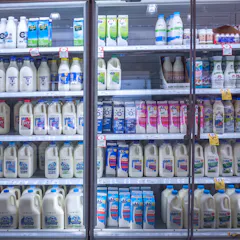
Synthetic milk offers dairy milk without the concerns such as methane emissions or animal welfare. But is it the whey forward?

Technological changes on the horizon will likely disrupt the dairy industry as we know it — plans to mitigate the risks this transition poses to farmer livelihoods and animal welfare should start now.
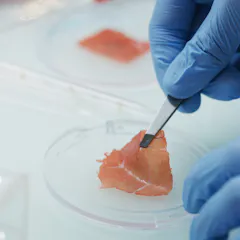
Technological advancements in food production have created new ways to meet the growing demand for protein. Canada’s investment in this industry may create jobs and reduce carbon emissions.

Using ‘cellular agriculture’, scientists want to produce genuine human breastmilk as an alternative to infant formula.
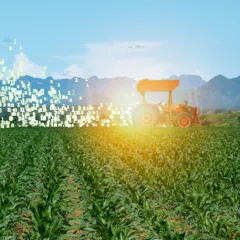
Year round local food production is within our grasp, and will slash agriculture’s climate impact — but only if we embrace agricultural technology.
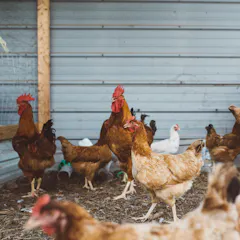
Singapore has approved ‘chicken bites’ containing meat grown in vitro. But not all animal advocates are happy about this.
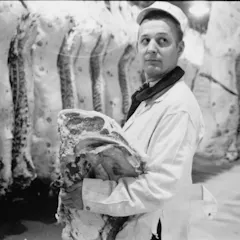
It’s relatively easy to grow a bunch of animal cells to turn into a burger. But to grow a steak made of cultured meat is a trickier task. Bioengineers must create organized, three-dimensional tissues.
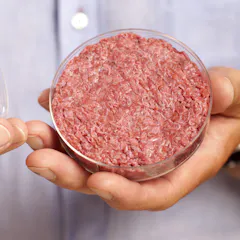
Surveys suggest fewer than half of Americans are looking forward to lab-grown meat. A moral psychologist examines common objections and why for the most part they’re not logical.
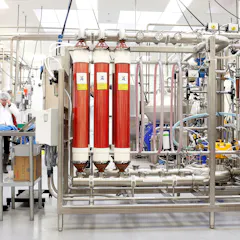
Despite many claims, nobody knows for sure how the environmental footprint of lab-grown meat compares to livestock. An animal scientist says the issue is not black and white.
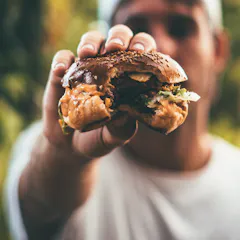
Cultured meat comes from cells in a lab, not muscles in an animal. While regulatory and technological aspects are being worked out, less is known about whether people are up for eating this stuff.

Based on a seductive story of providing food with zero consequences, cellular agriculture promises to get rid of the ethical, environmental and health costs of animal husbandry. But is that realistic?
Top contributors
-

Director, Food and Agriculture Institute, University of The Fraser Valley
-
Director of the Arrell Food Institute and Professor in the Dept. of Geography, Environment and Geomatics, University of Guelph
-
Associate Director, Food and Agriculture Institute, University of The Fraser Valley
-
Researcher, Department of Animal Science, University of California, Davis
-
Director of SymbioticA;The Centre of Excellence in Biological Arts, Professor in Contestable Design, The University of Western Australia
-
Professor of Advanced Technology Transitions, Arizona State University
-
Postdoctoral Researcher in Fisheries Science, University of Strathclyde
-
PhD Candidate at the Leverhulme Center for Anthropocene Biodiversity, University of York
-
Assistant Professor, Trent School of the Environment, Trent University
-
Professor, Leverhulme Centre for Anthropocene Biodiversity, University of York
-
Honorary Fellow, The University of Melbourne
-
PhD Candidate, Political Science, University of Victoria
-
PhD Graduate Researcher, The University of Melbourne
-
Postdoctoral research fellow, L’Université d’Ottawa/University of Ottawa
-
Professor, Food Economics, University of Guelph