

In most wealthy nations all workers are entitled to annual leave. But that’s not the case in Australia – and the Albanese government’s reforms still won’t change that.
Articles on Casual workers
Displaying 1 - 20 of 21 articles

Casual and gig workers make up a big part of the workforce and the federal government is taking steps to provide them with greater protections.
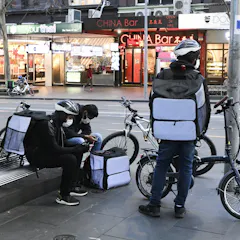
In an Australian first, Western Australia has formally recognised the psychological and social stress of insecure work.
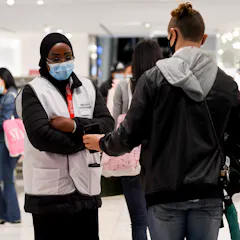
Our research suggests the majority of retail workers – and casual workers even moreso – are being forced to take unpaid leave for COVID-related reasons.

Changes to National Employment Standards have done little for casual staff hoping for conversion to ongoing positions. A comprehensive review of university work and employment is long overdue.
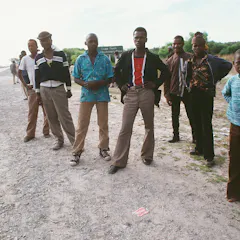
Relying solely on job placement as an indicator of successful intervention misses out on outcomes that are equally important, or more so, amid high structural unemployment.

The practice of ‘casual’ employment has become a means to foster insecurity and low power, depriving many workers of leave under the guise of an alleged need for flexibility.

The Victorian government has announced a pilot program to provide sick and carer’s leave for casual workers.
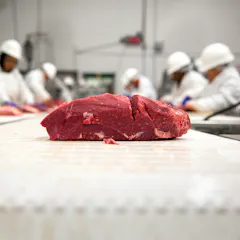
The COVID-19 pandemic has highlighted the dangers of unhealthy workplaces and disempowered workers.

The failure to anticipate the consequence of workers having no paid sick leave is one of the greatest flaws in Australia’s response to the COVID-19 pandemic.

Victorian Premier Daniel Andrews has voiced frustration at workers who don’t stay home despite having COVID-19 symptoms. But the problem is linked to growing workforce casualisation and use of labour hire.

The Federal Court of Australia has rejected the notion workers can be employed as ‘permanent casuals’.

Almost 37% of Australian workers do not have paid sick leave. We need to fix this if we want people not to turn up to work when sick during the coronavirus pandemic.

Even before COVID-19, 22% of international students often went without food or necessities and almost half depended on paid work to cover the rent. With many of their jobs gone, they’re now desperate.

A new analysis shows an economic downturn due to COVID-19 will dramatically increase rental stress for people with insecure or casual work.
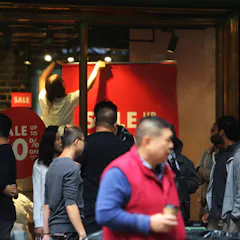
Most workers are still employees, not casuals or gig workers. So what has changed to increase the insecurity of workers?
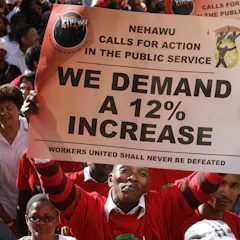
Proposed changes to South Africa’s labour laws would make it almost impossible to strike and render the planned national minimum wage unenforceable.

Australia’s cash economy is hard to document, but can be followed through the fortunes of young workers.

The Australian Industry Group (Ai Group) said that casual employment has not increased in Australia for the past 18 years. Is that right?

The Marikana massacre of 2012 triggered strikes across South Africa and political realignment. But could this, and the formation of the United Front to rival the ANC, have long-term significance?
Top contributors
-

Laurie Carmichael Distinguished Research Fellow at the Centre for Future Work, Melbourne; and Professor Emeritus, Griffith Business School, Griffith University
-
Professor, Curtin University
-
Professorial Fellow, The University of Melbourne
-
Professor of Sociology, University of the Witwatersrand
-
Honorary Senior Fellow, Melbourne Centre for the Study of Higher Education, The University of Melbourne
-
Distinguished Reserach Professor, Southern Centre for Inequality Studies, University of the Witwatersrand
-
Professor of Gender, Work and Employment Relations, ARC Future Fellow, Business School, co-Director Women, Work and Leadership Research Group, University of Sydney
-
Honorary Fellow, LH Martin Institute, The University of Melbourne
-
Postdoctoral Fellow, Queen's University, Ontario
-
Professor of Work and Regulation, Queensland University of Technology
-
Senior lecturer, University of Edinburgh
-
Professor, Crawford School of Public Policy, Australian National University
-
Professor, Crawford School of Public Policy, Australian National University
-
Professor of Human Resource Management, RMIT University
-
Research Fellow, The University of Melbourne