

A recent ruling suggests that if used well, AI offers an opportunity to improve access to justice. Courts and tribunals will have to perform a careful balancing act.
Articles on Casual work
Displaying 1 - 20 of 29 articles

Job hunting can be stressful but the process can be eased by following some simple steps that land you a suitable, properly remunerated gig.

People with secure work and a regular income are more likely to start a family than those working in casual jobs with irregular hours.
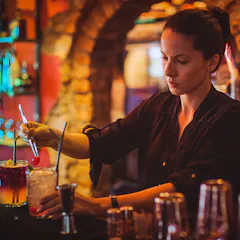
Rising costs and the change in the nature of work has led to more people holding more than one job.

In most wealthy nations all workers are entitled to annual leave. But that’s not the case in Australia – and the Albanese government’s reforms still won’t change that.
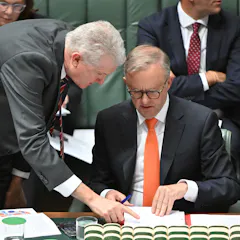
There is effectively a class of Australian workers who don’t get holiday and sick pay, no matter how long or regularly they work, simply because their employer deemed them “casual” when they began.

Many formal sector jobs are increasingly precarious and poorly paid, meaning that formal work is not an avenue to greater social equality for many people.

The supply crisis in the meat processing industry was entirely predictable. Employers and the government should have seen it coming.

Casual staff often miss out on professional development and feel isolated and invisible. Team teaching helps support these staff while improving the continuity and quality of university teaching.
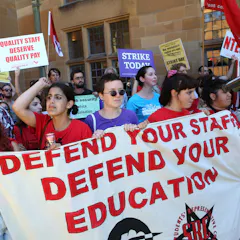
Universities have legitimate reasons for employing some staff on casual contracts, but the impacts of the COVID pandemic have brought long-standing problems to a head. Now is the time to act on these.
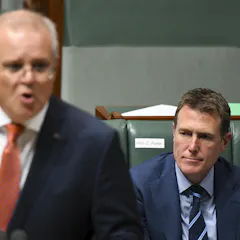
The Morrison Government has picked up its weapons again, with an industrial relations bill that will tip the scales further against employees.
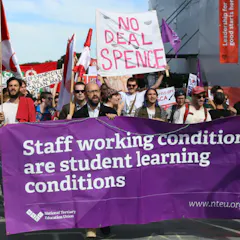
More than a dozen Australian universities have been publicly accused of underpaying staff. Some have paid millions in backpay after audits. And a big factor in wage theft is the rise of casualisation.

Even before COVID-19, 22% of international students often went without food or necessities and almost half depended on paid work to cover the rent. With many of their jobs gone, they’re now desperate.

While small businesses will be partially cushioned by government support measures, there’s no support for the most vulnerable workers.

A new analysis shows an economic downturn due to COVID-19 will dramatically increase rental stress for people with insecure or casual work.
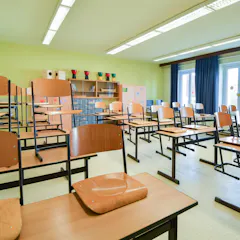
If schools and childcare centres shut without the necessary support, Australia may permanently lose valuable teachers and early childhood educators.

Labor will not win an election by cozying up to coal or weakening its climate target. Instead, it must find the common ground uniting workers in the cities and the regions - job insecurity.

As political and legal fights over casual work crank up, it’s worth busting some myths, such as the idea that it is becoming more common.
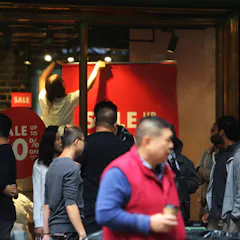
Most workers are still employees, not casuals or gig workers. So what has changed to increase the insecurity of workers?
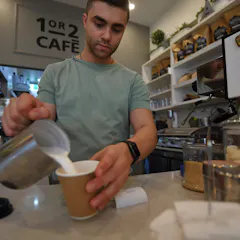
The costs of casual work are now outweighing the slim benefits in wages (and even those are not as much as they used to be).
Top contributors
-

Professorial Fellow, The University of Melbourne
-
Research Associate, School of Social Sciences, Monash University
-
Laurie Carmichael Distinguished Research Fellow at the Centre for Future Work, Melbourne; and Professor Emeritus, Griffith Business School, Griffith University
-
Research Assistant, Industrial Relations, The University of Melbourne
-
Associate Professor in Political Economy, University of Sydney
-
Associate Professor in Managing People and Organisations, University of Sydney
-
Professor in Human Resource Management and Employee Relations, Swinburne University of Technology
-
Professor of Economics, The University of Melbourne
-
Research Fellow, The University of Melbourne
-
Professorial Associate in the Centre for Public Policy, The University of Melbourne
-
Associate Professor UTS Centre for Business and Social Innovation, University of Technology Sydney
-
Professor of Policy and Society, Department of Government and International Relations, University of Sydney
-
Lecturer in Cultural Studies in Health
-
Postdoctoral research fellow, Macquarie University
-
TR Ashworth Professor in Sociology, The University of Melbourne