

South Africa’s national lockdown will amplify the needs of children with special education needs and disability.
Articles on Caregiving
Displaying 101 - 120 of 128 articles

Now that the pandemic has made migrant workers visible in Canada, as well as the true value of the work they do, it’s time to dramatically improve their working conditions.

A scholar of the American safety net explains how, through her own brother, she’s getting a personal window into what it means to face COVID-19 as a worker in the gig economy.

Some older adults are struggling to practise social distancing during the global pandemic, even though they’re at high risk. Here’s how to help them.

Men who work in female-dominated fields tend to get more prestige and higher wages.

The number of children with complex medical issues is growing, thanks in large part to medical advances. But these kids and their caregivers need a lot of support.
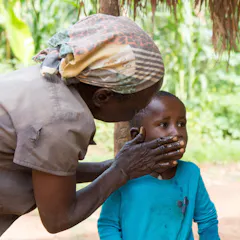
Care facilities are often considered a last resort in South Africa. Personal care is assumed to be provided by family and household members.
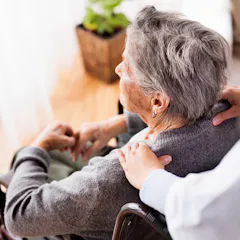
Technological solutions may help to relieve the burden of care for family, service providers and caregivers working with the elderly.

As the population ages, a crisis could be in the making, with a severe shortage of caregivers for seniors over 80. Technology could provide some solutions.
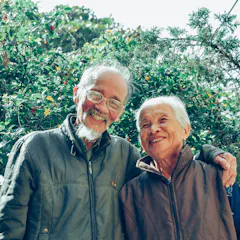
Some carers actually thrive in the face of dementia, here’s why.
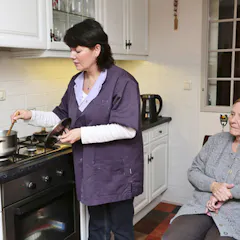
November is National Family Caregivers Month; did they get your attention? If not, you are not alone. Family caregivers are overlooked by the health care system, and they are burning out. Here’s why.

Informal caregivers play a vital role in medical tourism yet find themselves unprotected as “shadow workers” in a multi-billion dollar industry.
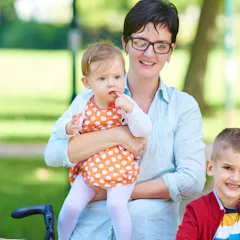
This penalty can amount to more than 15 percent of a mom’s paycheck. Ramping up paid maternity leave and high-quality child care would probably help narrow the gap.
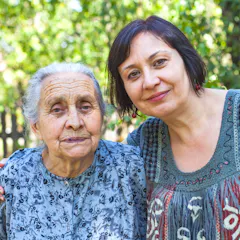
Informal caregivers contribute $25 million to the Canadian economy in unpaid labour, receiving virtually no financial support or emotional respite. More web-based interventions could help.

The demographics, which include declining numbers of adult children free to step up and potentially fewer immigrants, suggest that this big problem society faces will get bigger.

With people living longer lives and dementia on the rise, it’s time to consider whether it’s verboten for spouses acting as full-time caregivers to seek love and comfort outside their marriages.
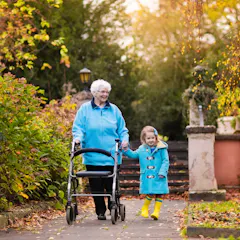
Millions of American children are being cared for by grandparents. To honor Grandparents Day we ask: What are the social and health impacts of this often unexpected turn of events?

Robots have the potential to help support a growing population that wants to age in their own homes. But those helpful machines won’t be the humanoid butlers of science fiction.

A recent study finds that friends ought not let friends with dementia be lonely. The surprising part? Why staying friends is good for the friend without dementia as well as for the one who has it.

The number of adults living with cancer is expected to triple in size by 2030. How can we prepare for this public health challenge?
Top contributors
-

Doctoral Candidate, Aging, Health and Well-being, University of Waterloo
-
Professor of Sociology, University of Cape Town
-
Assistant Professor, Faculty of Health Sciences, Simon Fraser University
-
SARChI: Human Capabilities, Social Cohesion and the Family, University of the Western Cape
-
Professor, Faculty of Science, McMaster University
-
Associate Professor, Arthur Labatt Family School of Nursing, Faculty of Health Sciences, Western University
-
Professor, Department of Anthropology, University of Toronto
-
Research fellow, Stellenbosch University
-
Professor, Canada Research Chair in Determinants of Child Development, Owerko Centre at the Alberta Children’s Hospital Research Institute, University of Calgary
-
Gerontologist, University of Waterloo
-
Professor of Sociology, University of Lincoln
-
Professor and Canada Research Chair in Person Centred Interventions for Older Adults with Multimorbidity and their Caregivers, School of Nursing, McMaster University
-
Professor and Co-Director, Research on Aging, Policies and Practice, University of Alberta
-
Professor of Public Administration and Policy, American University School of Public Affairs
-
Professor of Sociology and Founding Director of The Future of Work Lab, Podcast at MissPerceived, The University of Melbourne