

Mindfulness, through focused attention meditation, can help overcome repetitive negative thinking, thus improving mental and physical health.
Articles on Caregiving
Displaying 61 - 80 of 128 articles

With child and adolescent mental health problems on the rise, here is a step-by-step guide for caregivers for recognizing signs of mental distress and responding with support and resources.

Republicans are pressing for policy changes based on a misconception that hardly anyone who gets help buying groceries with Supplemental Nutrition Assistance Program benefits is employed.

Three factors that can speed up adoption of clinical research discoveries are context, tailoring resources and efficient knowledge sharing.
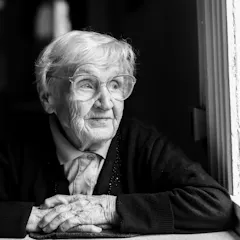
New research affords a rare window into the circumstances and needs of a potentially very vulnerable group that until now has remained largely invisible: people with dementia who have no close kin.

The way a parent or caregiver responds in this situation is extremely important.

Mindfulness, one of the most common forms of meditation, is a skill that must be cultivated and practiced. With some training and discipline, it can help anyone live more fully in the moment.

A professor of child development explains why it’s OK – recommended, in fact – to respond to an infant’s every cry, sob and whimper.

Reflection Rooms support people making sense of experiences related to dying and death. They provide an immersive space to read stories written by others and write and share their own stories.

Given the clear importance of language skills for lifelong outcomes, it is critical to set children up early for language success.

The lack of sexuality education, and common myths and misconceptions about the sexuality of people with intellectual disability can lead to caregivers being reluctant ‘jailers’.
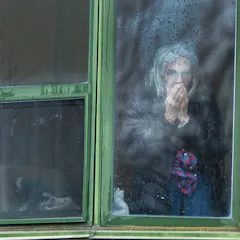
Family caregivers of residents in longterm care homes experienced a collective trauma as they were kept away from their loved ones during the pandemic. This isolation has long-ranging impacts.
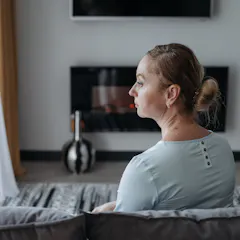
Family and friends provide nearly all the care needed by stroke patients after they leave hospital. Caregiving can be rewarding, but it can also be overwhelming and take a toll on caregivers’ health.
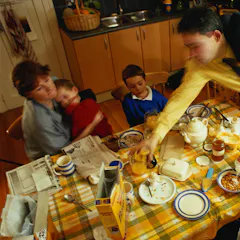
Women have found innovative and powerful ways to cope during the pandemic – largely because official policy has failed them. That must change.

It’s time to complete the picture and recognize public expenditures on supports for family caregivers as social investments in the well-being of individuals, families and communities

With advances in technology, robots and artificial intelligence have increasingly more sophisticated encounters with humans.
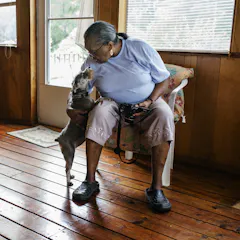
Human beings evolved to nurture – and that drive can extend to children who aren’t your own and even to members of other species.
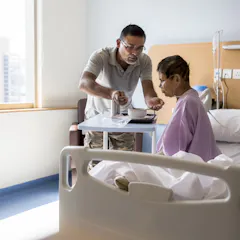
Some older patients forego the food provided at their health care facility because it isn’t aligned with their religious and cultural preferences.

New research shows that though we are good at making healthy choices for those we care for, we are often subsequently less good at taking care of ourselves.

Estimates suggest that every 12 seconds, a child somewhere in the world loses a caregiver to the coronavirus pandemic.
Top contributors
-

Doctoral Candidate, Aging, Health and Well-being, University of Waterloo
-
Professor of Sociology, University of Cape Town
-
Assistant Professor, Faculty of Health Sciences, Simon Fraser University
-
SARChI: Human Capabilities, Social Cohesion and the Family, University of the Western Cape
-
Professor, Faculty of Science, McMaster University
-
Associate Professor, Arthur Labatt Family School of Nursing, Faculty of Health Sciences, Western University
-
Professor, Department of Anthropology, University of Toronto
-
Research fellow, Stellenbosch University
-
Professor, Canada Research Chair in Determinants of Child Development, Owerko Centre at the Alberta Children’s Hospital Research Institute, University of Calgary
-
Gerontologist, University of Waterloo
-
Professor of Sociology, University of Lincoln
-
Professor and Canada Research Chair in Person Centred Interventions for Older Adults with Multimorbidity and their Caregivers, School of Nursing, McMaster University
-
Professor and Co-Director, Research on Aging, Policies and Practice, University of Alberta
-
Professor of Public Administration and Policy, American University School of Public Affairs
-
Professor of Sociology and Founding Director of The Future of Work Lab, Podcast at MissPerceived, The University of Melbourne