

New Zealand is considering a plan to tax methane from cows. But while cows and cars both emit greenhouse gases, they don’t have the same impact over time.
Articles on Carbon emissions
Displaying 101 - 120 of 543 articles

As we modernise Australia’s power grid, we should look to superconducting cables to save energy, cut emissions and future-proof the system
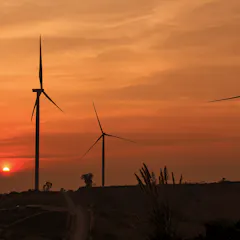
The cost of sustainability is no longer a deal breaker for some business owners, but more can be done to encourage decarbonisation efforts.

The UK space launch failed but it succeeded in releasing hazardous pollutants to multiple layers of the atmosphere.
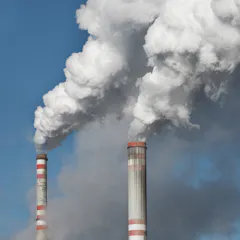
The UK is focusing on carbon capture and storage technologies but the future is uncertain.
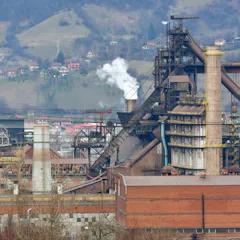
Already lacking the means to decarbonise their industry or turn to greener alternatives, poor countries could also be deprived of revenues from exports to Europe.
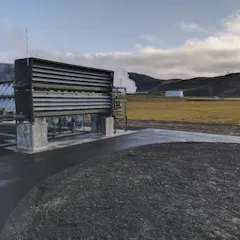
New research suggests it will be next to impossible to limit global warming to safe levels without relying on technologies to directly remove carbon from the air.
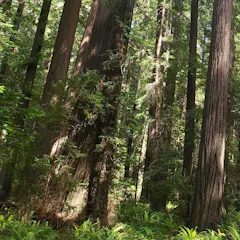
Millions of dollars have gone into California’s forest carbon offset program – with little new carbon storage to show for it, a new study suggests.

Tangible solutions would reduce livestock methane emissions, while also improving productivity and livelihoods.

Despite claims that lowering speed limits will harm the economy, evidence suggests journey times are hardly affected. And beyond reducing the road toll, there are health and climate benefits, too.
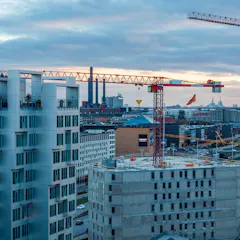
Constructing and running buildings accounts for roughly a third of global energy use and emissions. So it’s alarming that a report to COP27 shows the sector is veering off course for net zero by 2050.
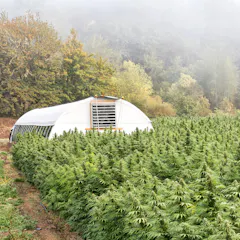
A new study emphasises the huge potential and environmental benefits of hemp production and provides a road map to develop the nascent industry across the UK.

Sponsorship from fossil-fuel companies is worth millions to Australian sport. But growing opposition from the public and athletes themselves may force sports to rethink these deals.

The energy-intensive process of producing cement and concrete contributes significantly to global warming while depleting resources. Much more sustainable alternatives are being developed.
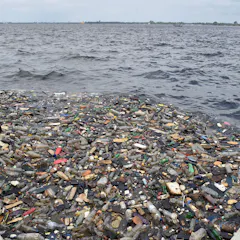
The oceans bordering West African countries are in grave danger from pollution; checking further degradation is crucial for human survival.

Vast amounts of digital data is stored on computer servers and never used.

The key to reducing green hydrogen costs in the future lies mainly in technological improvements.

The culpability for Pakistan’s catastrophic floods rests with the government and wealthy polluter countries.
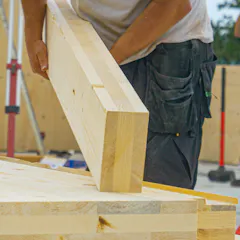
Engineered wood is a sustainable alternative to cement and steel in construction.

Cruise liners are back and demand is reportedly strong. But given their environmental impact and relatively low economic benefit, how sustainable is this kind of tourism?
Top contributors
-

Chief Research Scientist, CSIRO Environment; Executive Director, Global Carbon Project, CSIRO
-
Professor, Crawford School of Public Policy and Director, Centre for Climate and Energy Policy, Australian National University
-
Royal Society Research Professor of Climate Change Science, University of East Anglia
-
Senior Researcher, Center for International Climate and Environment Research - Oslo
-
Climateworks Centre CEO, Monash University
-
Senior Lecturer, Griffith Business School, Griffith University
-
Senior Researcher, Center for International Climate and Environment Research - Oslo
-
Senior Research Associate, Renewable Energy & Energy Systems Analyst, UNSW
-
Professor, Department of Earth System Science, and Chair of the Global Carbon Project, Stanford University
-
Professor, School of Economics, The University of Queensland
-
Senior Fellow in Energy and Climate Change, Grattan Institute
-
Associate Professor, The University of Western Australia
-
Senior Research Fellow, School of Geography, Earth and Atmospheric Sciences, The University of Melbourne
-
Honorary Fellow, The University of Melbourne
-
Professorial Fellow, University of Canberra