

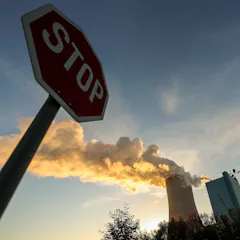
Removing carbon from the atmosphere raises political questions that should be addressed by democratic institutions.
Articles on Carbon emissions
Displaying 141 - 160 of 543 articles

When it comes to ring roads, Birmingham has a poor track record. Can the city’s new transport plan buck that trend and benefit both its inhabitants and the environment?
Watch a panel discussion on Thursday 18 November as climate change experts react to COP26.

Most of the $2,000 per year increase in income by 2050 is due to the success of a new hydrogen industry.

Embodied emissions in buildings could be a hidden setback for carbon reduction targets.

Embodied carbon - carbon produced during a building’s construction - urgently needs reducing, and reusing buildings could help.
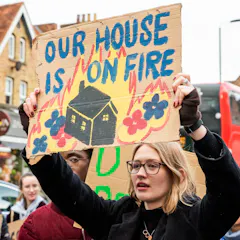
Experts explain the latest evidence on eco-anxiety in The Conversation Weekly.
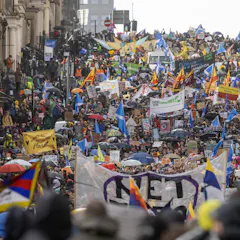
We cannot claim that inducing others to reduce emissions gives us a moral license to emit in their place.

Military emissions reporting is only voluntary. And what we cannot see, they will not cut.
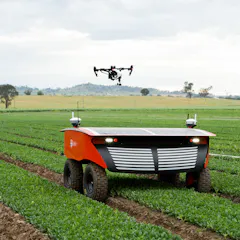
Universities have long been developing research, talent and technology that, with the right mix of industry and government support, will allow Australia to emerge as a green export and R&D leader.

Global leaders at COP26 need to understand what is at stake for each nation and build trust to achieve a successful outcome.

The pledge to end deforestation holds great potential, but Canada has some work ahead if it is to make meaningful progress on the new goal and stop ongoing forest and carbon loss.

If we want to reduce carbon emissions and preserve planetary ecosystems, we need to protect our soils.

New research has found that low-rise urban environments are more space and carbon efficient than high-rise buildings which have a drastically higher carbon impact.

A steadily-tightening emissions car ceiling of the kind common in other countries could save drivers money and do the bulk of the work needed to reach Australia’s first emissions target.

Offsetting may be controversial, but we need it to reduce emissions. Here’s how it can be done with integrity.
Disclosure requirements work, forcing companies to own up to their customers and investors.
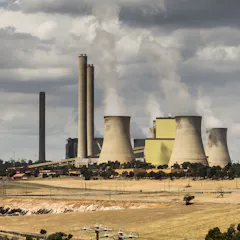
Major coal generators say the proposal will help shore up energy supplies. But opponents say it will pay coal plants for simply existing and delay the clean energy transition.

Australia’s usual approach to big international negotiations is to hold out, before reluctantly making “concessions”. It’s the wrong approach for trade, and the wrong approach for climate change.

At the bottom of our carbon fears is a big black problem.
Top contributors
-

Chief Research Scientist, CSIRO Environment; Executive Director, Global Carbon Project, CSIRO
-
Professor, Crawford School of Public Policy and Director, Centre for Climate and Energy Policy, Australian National University
-
Royal Society Research Professor of Climate Change Science, University of East Anglia
-
Senior Researcher, Center for International Climate and Environment Research - Oslo
-
Climateworks Centre CEO, Monash University
-
Senior Lecturer, Griffith Business School, Griffith University
-
Senior Researcher, Center for International Climate and Environment Research - Oslo
-
Senior Research Associate, Renewable Energy & Energy Systems Analyst, UNSW
-
Professor, Department of Earth System Science, and Chair of the Global Carbon Project, Stanford University
-
Professor, School of Economics, The University of Queensland
-
Senior Fellow in Energy and Climate Change, Grattan Institute
-
Associate Professor, The University of Western Australia
-
Senior Research Fellow, School of Geography, Earth and Atmospheric Sciences, The University of Melbourne
-
Honorary Fellow, The University of Melbourne
-
Professorial Fellow, University of Canberra