

Kevin Keegan’s cancer diagnosis and a surprising statistical quirk. What car crashes, shark attacks and workplace safety have in common.
Articles on Car accidents
Displaying 1 - 20 of 52 articles

Hitting a large animal at speed can be catastrophic and the risks vary by time of day, season and location.
We tend to adapt quickly to rain. But a growing body of research shows we also need to be more careful when it comes to travel and commuting during extreme heat.

If larger vehicles make us feel safer inside them, do they also make us take more risks behind the wheel?

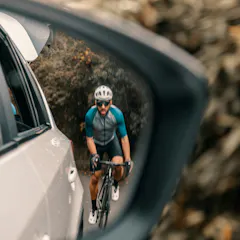
Should cyclists be allowed to treat stop signs as yield signs? This rule from Idaho is divisive, but the scientific data is surprising.

The summer months can be especially deadly for teenage drivers. Training, road restrictions and adult guidance can help teen drivers stay safe during the summer and beyond.
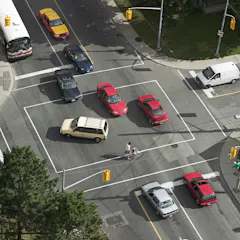
Even though research supports the change, most cities have been slow to ban left turns at even the most congested intersections.
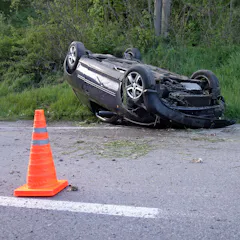
More than 1,300 people died on Australia’s roads in the last year. New modelling identifies the people and regions most at risk of future tragedies unless there’s a more targeted approach to road safety.

Higher speed limits are coming. But the case against them isn’t based on road safety alone – claims of increased economic efficiency are not supported by the evidence, either.

One thing we can do to reduce this transport inequity is make it easier for First Nations people to get their driver’s licence. This also brings individuals and communities many other benefits.

A traffic engineer argues that, contrary to his profession’s view, ‘human error’ is not the main cause of deaths in car crashes in the US.
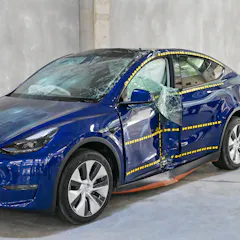
EV fires make headlines, but they don’t tell the full story of EV safety. The real threat isn’t combustion, it’s weight.
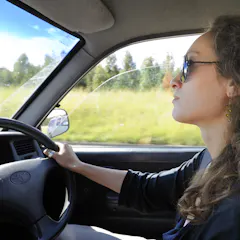
Australian road deaths have risen to levels not seen in nearly a decade. If the current trend continues, meeting the ‘Vision Zero’ target by 2050 appears impossible.

Consumers need to be aware that none of the vehicles on the market today are actually self-driving — vehicles still require active supervision from a human driver.
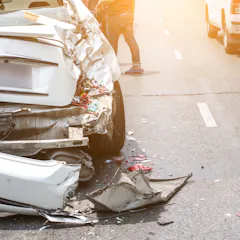
More Nigerians should be encouraged to have health insurance to reduce the burden of treating facial injuries.

The risk of dying changes over the course of a lifetime. Very high at birth, it falls and then gradually rises again… except for a peak after adolescence. Why such a statistical anomaly?

Dusk is a dangerous time of day for hitting wildlife on the road, and the one-hour time change means more drivers are out while deer are at their most active and visibility is dropping.
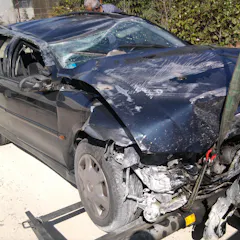
Current methods of road carnage prevention in Ghana have proved unsuccessful .

Avoiding hitting deer on the road is as much about when you drive as where. An animal behavior expert explains why.
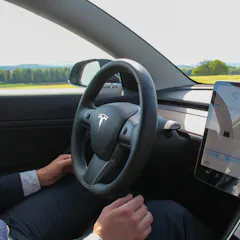
An autonomous vehicle expert explains how Tesla’s Autopilot works, what prompted US authorities to investigate the system and what changes might be in store for the company.
Top contributors
-

Associate Professor and Principal Fellow in Urban Risk and Resilience, The University of Melbourne
-
Professor of Biology, Clarkson University
-
Senior Research Associate, University of Oxford
-
Associate Professor, Human Systems Labs, University of Windsor
-
Professor of Civil Engineering, Penn State
-
Professor of Advanced Technology Transitions, Arizona State University
-
Professor of Orthopaedic Surgery, UNSW
-
Laurent Chambaud is a Friend of The Conversation.
Médecin de santé publique, École des hautes études en santé publique (EHESP)
-
Associate Director for Research, School for the Future of Innovation in Society, Arizona State University
-
Lecturer and Consultant in Oral and Maxillofacial Surgery, Obafemi Awolowo University
-
Behavioral Research Assistant, Connecticut Transportation Safety Research Center, University of Connecticut
-
Professor of Civil and Environmental Engineering, University of Tennessee
-
Docteur, spécialiste des méthodes de prévision (mortalité, longévité, etc.), Ined (Institut national d'études démographiques)
-
General Surgery Resident, University of Michigan
-
Professor of Mechanical and Aerospace and Electrical and Computer Engineering and Director, Center for Automotive Research, The Ohio State University