

Philadelphia has more fatal traffic accidents than other big US cities, and they’re concentrated in poor neighborhoods.
Articles on Motor vehicles
Displaying 1 - 20 of 38 articles
Bigger cars mean bigger costs for everyone else. It’s only fair those costs are reflected in how car rego is priced.
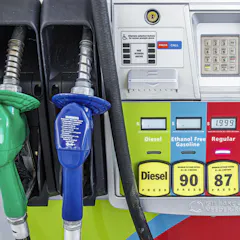
Both gasoline and diesel fuel are refined from crude oil, but they are good for different things and can’t be used interchangeably.

Corporate-controlled, political infotainment makes up the bulk of AM radio programming. But there was a time when these stations were more attuned to the needs of the community.

Polyurethane foams are the world’s sixth-most-produced plastic yet among the least recycled materials.

At least five people were killed and many more were injured after an SUV crashed into a Christmas parade. A terrorism expert explains how vehicles have been weaponized.

An exhibition of 100 motorcycles celebrates them as revved up works of art, worthy of our desire.

Brand loyalty is a two-way street.
Uber’s first safety report revealed 107 deaths and nearly 6,000 sexual assaults over two years. But the rideshare service may still be safer than the alternatives.

Surprise findings have revealed that Australia’s cars are getting less fuel efficient. This is bad news for the hip-pockets of motorists - and for the climate.
Do high fuel economy requirements make the US auto fleet less safe? The Trump administration says yes and is moving to freeze these standards, but auto experts and US car makers disagree.
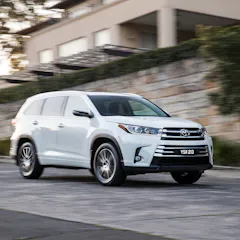
Perceptions about safety might be one of the reasons more and more people are buying SUVs. The evidence from crash data, though, is troubling – particularly for other road users.
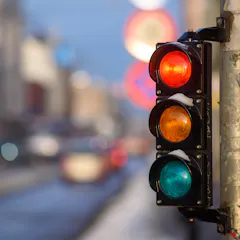
Hundreds of US cities have red light cameras to try to catch traffic violations and prevent accidents. But research shows that the cameras may encourage other types of accidents.

New research is spotlighting personal care products, such as shampoos and skin lotions, as a significant source of chemicals that contribute to urban air pollution.
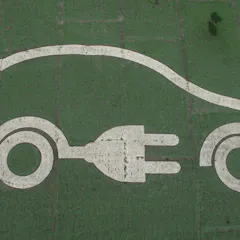
Warnings that a tide of electric vehicles will cut Australia’s tax income put the cart well before the (low-emissions) horse.

Road safety campaigns targeting mobile phone use among drivers should emphasise how perceived social pressure is not an acceptable excuse for engaging in the behaviour.

While other countries race into the distance, Australia is still on the starting grid when it comes to electric cars. Why so slow? Because we don’t have a proper recharging network.
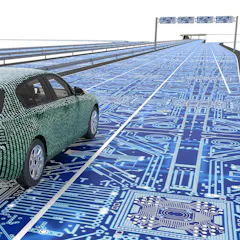
If all the elements in the transportation system are going to talk to each other, the people at the companies and government agencies that make those items need to talk to each other too.
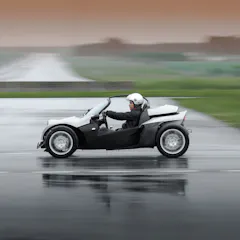
Australia needs to ‘embrace uncertainty’ on the future of transport, with flexible, holistically focused policy.
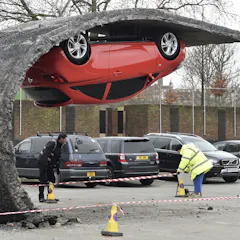
The Australian market is awash with highly polluting cars. But there are a couple of key resources to help you find the best vehicle that fits your needs.
Top contributors
-

Senior Research Fellow, Monash University Accident Research Centre, Monash University
-
Senior Lecturer, Griffith Business School, Griffith University
-
Senior Lecturer in Product Design, Nottingham Trent University
-
Research officer, Murdoch University
-
Honorary Fellow, The University of Queensland
-
Emeritus Professor of Psychology, Adelaide Institute for Sleep Health, Flinders University
-
Emeritus Professor Department of Mechanical Engineering, Monash University
-
Research Associate, Institute of Coding, Coventry University
-
Assoc. Professor of Environmental Science, Murdoch University
-
Professor, Crawford School of Public Policy, Australian National University
-
Professor and Associate Dean (Environment and Sustainability in Faculty of Science), The University of Melbourne
-
Associate professor, Stockholm University
-
Associate Professor (Research), Monash University Accident Research Centre, Monash University
-
Professor of Civil Engineering; Director of University of Florida Transportation Institute, University of Florida
-
Associate Professor, UniSA Business, Adelaide University