

The fact that relative food prices differ so markedly and so systematically provides a very strong rationale for nutrition-focused food policies.
Articles on Calories
Displaying 41 - 60 of 60 articles

A small body of research has started to explore how fitness trackers and calorie counting apps might be linked to disordered eating and exercise.

Most Americans underestimate how many calories nutritionists recommend they consume each day, which means maybe you can probably have one more treat without feeling guilty.

Although nutritious, inexpensive food options do exist for low-income Canadians, whether those foods are easily accessible or feasible has long evaded both nutrition researchers and politicians.

Eating celery, grapefruit and cucumber to lose weight is not a bad idea, just don’t think that you’re consuming negative calories.

The U.S. is vehemently opposed to Canada’s intention to put labels on unhealthy processed foods. Here’s why Canada should continue to stand its ground during NAFTA renegotiations.

Time to put calories on the menu.

We turn to doctors to treat cancer, addiction and high blood pressure. And, they have a lot of training and tools to help us. Why is that not so with obesity?
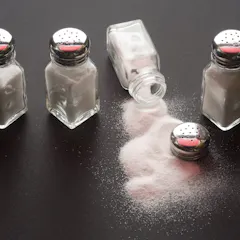
Evidence suggests that most Americans wildly underestimate the amount of sodium in their food.

It’s time to bust some diet myths and talk about the science behind weight loss
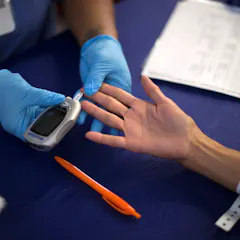
Being able to buy processed “food-like” products is often seen as a mark of personal and material success. Little attention is paid to having a healthy diet.

Just don’t say you can’t do anything about it.

It turns out most of us under-report how many calories we consume – but it’s not entirely our fault.

Try starting with 12,000 kcals a day.
The potential health benefits of energy-burning brown and beige fat might be not the effect on weight, but rather on blood sugar and cholesterol.

Whether it’s a coffee in hand as we walk through the office door, or a way to beat the 3pm slump, many of us rely on our local barista to get us through our working day.

A gram of alcohol has almost as many calories as the equivalent weight in fat. But most people who drink aren’t aware of the extra fuel they’re getting from alcohol.

Obesity researchers have been in a tug of war about obesity for decades now. So what does the evidence show about the latest offensive in the obesity wars?
The energy imbalance gap is how many calories you consume versus how many you burn. Understanding how it differs among different populations could lead to better policies to target obesity.
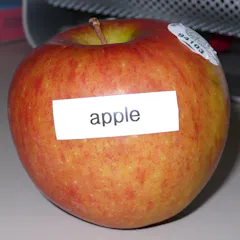
Food labels seem to provide all the information a thoughtful consumer needs, so counting calories should be simple. But things get tricky because food labels tell only half the story. A calorie is a measure…
Top contributors
-

Professor of Engineering Practice, Purdue University
-
Clinical Trials Director, Department of Endocrinology, RPA Hospital, University of Sydney
-
Associate Professor of Food Science, Nutrition & Health Promotion, Mississippi State University
-
Assistant Professor, Faculty of Health Sciences and Medicine, Bond University
-
Associate Professor of Nutrition, University of Surrey
-
Visiting Fellow in Human Evolutionary Biology, Harvard University
-
Postdoctoral Researcher, University of Newcastle
-
Personal Chair in Nutrition, The Rowett Institute, University of Aberdeen
-
Professor Nutrition and Dietetics, University of Newcastle
-
Senior Lecturer in Exercise Physiology Across the Lifespan, Deakin University
-
Senior Lecturer in Sport, Health & Exercise Science, University of Stirling
-
Professor of Chronobiology and Integrative Physiology, University of Surrey
-
Research & Teaching Academic, The University of Queensland
-
Director of Cancer Programs, Cancer Council NSW; PhD Candidate in Nutrition & Dietetics, University of Sydney
-
Professor, University of Exeter