
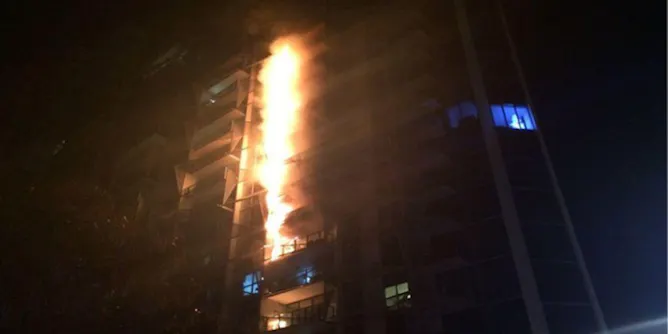
The 2014 Lacrosse fire was costly, but no lives were lost, unlike the 2017 Grenfell Tower fire that claimed 72 lives. Years later, more work is needed in four key areas to ensure buildings are safe.
Articles on Building regulations
Displaying 1 - 20 of 34 articles
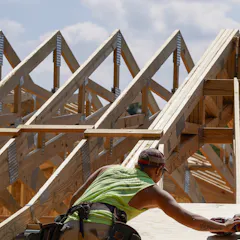
In interviews with residents and builders after disasters from Hawaii to Colorado to Puerto Rico, an engineer and policy specialist found people often overestimating the cost of building back better.

Housing minister Chris Bishop says removing minimum dwelling size rules will deliver homes that are “bigger than a car”. But tiny houses might be a short-term solution that causes long-term issues.
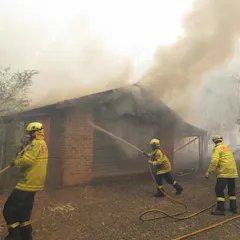
Buildings can be engineered to resist bushfires, but we can’t engineer the many aspects of human behaviour and decision-making that will still put lives at risk.

An AI model shows that building collapses in Lagos are location specific, and soil testing can help to check them.
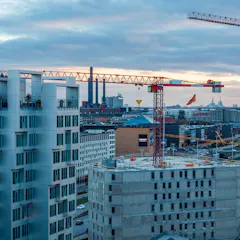
Constructing and running buildings accounts for roughly a third of global energy use and emissions. So it’s alarming that a report to COP27 shows the sector is veering off course for net zero by 2050.
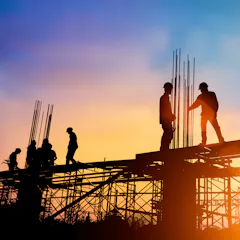
A suite of proposed changes to energy efficiency section of the National Construction Code are a good step forward. However, a lot more can be done.

If building regulations required cheap fixes such as ensuring chimneys and parapets were structurally attached to the building, we could save lives during earthquakes.

New regulations, training systems and research are underway but there’s much still to be done.

Since the Grenfell Tower fire claimed 72 lives in 2017, Australia has identified flammable cladding on more than 3,400 buildings. Despite apartment owners’ fears and rising costs, few have been fixed.
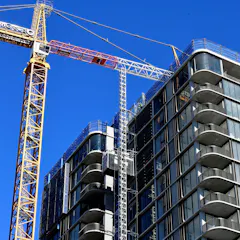
Orders to fix serious defects, even up to ten years after completion, and to delay the occupation certificate developers need to sell apartments until they’re fixed, gives regulators real teeth.
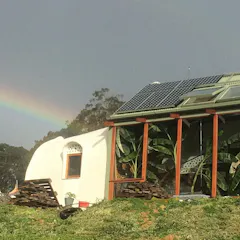
Earth-covered houses are not only highly fire-resistant, but sustainable features such as off-grid power and water supplies could also be life-saving in a bushfire.

People die protecting homes. They are wrong to believe their homes will protect them.
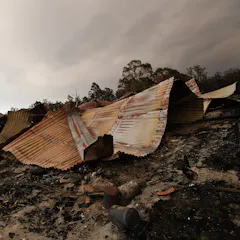
If the aim is to minimise the number of buildings damaged or destroyed in extreme fire events, Australia’s building regulations are clearly inadequate. But that’s not their aim.

Governments and regulators assume compliance with building regulations will restore public confidence. But complying with the National Construction Code won’t fix many common defects.
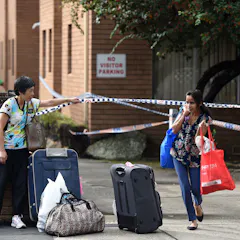
The difficulty of finding out about building defects creates an information deficit that threatens public confidence and stability in the apartment market. NSW has begun work on a solution.

The public inquiry into Grenfell makes its first report – but those responsible for the circumstances leading up to the fire are yet to face the consequences.

The failure of regulators to take decisive action against errant companies is an unintended consequence of the design of ‘responsive regulation’.
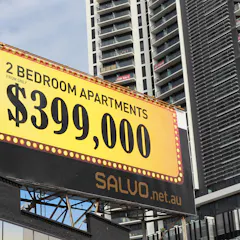
Unsafe apartments are being evacuated as confidence plummets – even the author of a report commissioned by building ministers wouldn’t buy a new apartment. What will it take for governments to act?

The delay in adopting a national approach to building industry reform, based on a report received more than a year ago, typifies official neglect of the impacts of uncertainty on the affected people.
Top contributors
-

Adjunct Professor of Architecture, University of Technology Sydney
-
Associate Professor in Property, Construction and Project Management, RMIT University
-
Director, Glowpear, Board member, ISDRS, Vice President, AHA and Senior Lecturer in Industrial Design, RMIT University
-
Associate Dean, School of Property, Construction and Project Management, RMIT University
-
Professor of Journalism, Middlesex University
-
Professor, Centre for Urban Research, School of Global, Urban and Social Studies, RMIT University
-
Professor, Emerging Technologies Research Lab, Monash University, Monash University
-
Director, Blockchain R&D Lab, Curtin University, Curtin University
-
Erika Bartak is a Friend of The Conversation.
PhD Candidate (& ESD Consultant), Melbourne School of Design, The University of Melbourne
-
Professor, City Futures Research Centre, Faculty of the Built Environment, UNSW
-
Professor of Urban Planning, Faculty of Architecture, Building and Planning, The University of Melbourne
-
Associate Professor in Property, The University of Melbourne
-
Emeritus Professor, College of Human and Social Futures, University of Newcastle, Australia, University of Newcastle
-
Senior Industry Fellow, Environment and Planning, RMIT University
-
Associate Deputy Vice Chancellor in Research & Innovation, RMIT University