
The construction industry crisis didn’t happen overnight. Authorities have been on notice for years to fix the problems that now have the industry itself calling for better regulation.
Articles on Building regulations
Displaying 21 - 34 of 34 articles
Regulations that are meant to protect residents from building failures and fires have been found wanting. All governments must take responsibility for fixing the defective regime they created.
Grenfell Tower fire is the kind of tragedy that changes the built environment forever, through new building rules and safety measures.
Estimated costs for Victoria alone range from hundreds of millions to as much as $1.6 billion If work to rectify buildings fitted with combustible cladding isn’t well handled.

Fires and building failures highlighted serious gaps in Australian building regulations. But recent revisions and recommendations still fall short of preparing our buildings for climate change.

Years of regulatory failure are having direct impacts on the hip pockets of the many Australians who bought defective houses or apartments. It’s turning into a multibillion-dollar disaster.
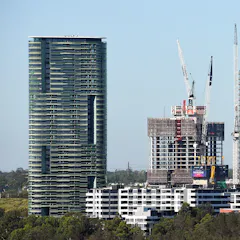
Under the new code, buildings are hardly likely to differ measurably from their fault-ridden older siblings and can still fall short of a six-star rating. It’s possible they may have no stars!
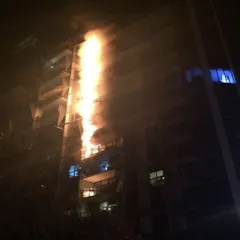
Architects, certifiers and engineers who work as consultants to builders are on notice about potential liability for the use of flammable cladding, but governments are also culpable for their actions.
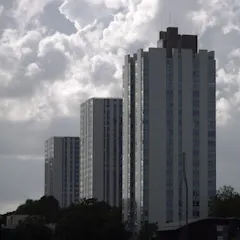
Grenfell was a ‘catastrophic regulatory failure’, and reform is still needed – but above all, tenants must be empowered to make their homes safe.
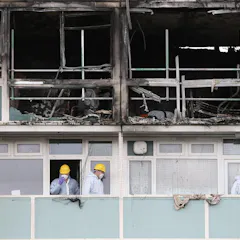
A former BBC special correspondent looks at why fundamental lessons weren’t learnt after the deadly Lakanal Fire that he investigated in 2009.

The rise in temporary use of urban space requires a looser planning vision that can draw on this new type of city-making to inform longer-term developments.
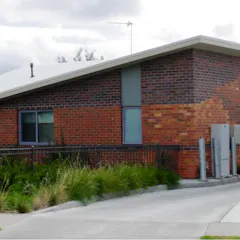
Emerging research challenges the idea that sustainable housing is unaffordable. It shows sustainability and good design can be affordable when analyses include social, health and wellbeing benefits.
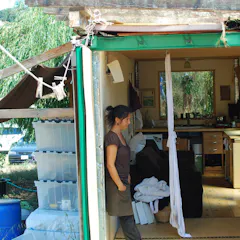
Have you thought about usable space, re-engineering, structural integrity, contamination, insulation and comfort? If not, you need to before jumping into building a home from shipping containers.
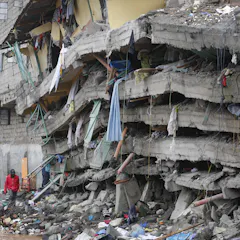
Building better, inclusive cities involves enabling the wise use of public land and taxes to ensure that high-quality housing and amenities are provided for all at a lower cost.
Top contributors
-

Adjunct Professor of Architecture, University of Technology Sydney
-
Associate Professor in Property, Construction and Project Management, RMIT University
-
Director, Glowpear, Board member, ISDRS, Vice President, AHA and Senior Lecturer in Industrial Design, RMIT University
-
Associate Dean, School of Property, Construction and Project Management, RMIT University
-
Professor of Journalism, Middlesex University
-
Professor, Centre for Urban Research, School of Global, Urban and Social Studies, RMIT University
-
Professor, Emerging Technologies Research Lab, Monash University, Monash University
-
Director, Blockchain R&D Lab, Curtin University, Curtin University
-
Erika Bartak is a Friend of The Conversation.
PhD Candidate (& ESD Consultant), Melbourne School of Design, The University of Melbourne
-
Professor, City Futures Research Centre, Faculty of the Built Environment, UNSW
-
Professor of Urban Planning, Faculty of Architecture, Building and Planning, The University of Melbourne
-
Associate Professor in Property, The University of Melbourne
-
Emeritus Professor, College of Human and Social Futures, University of Newcastle, Australia, University of Newcastle
-
Senior Industry Fellow, Environment and Planning, RMIT University
-
Associate Deputy Vice Chancellor in Research & Innovation, RMIT University