

There is a deeper side to the brain which weaves your memories, goals, beliefs and emotions into a continuous sense of self.
Articles on Cognitive neuroscience
Displaying 1 - 20 of 37 articles
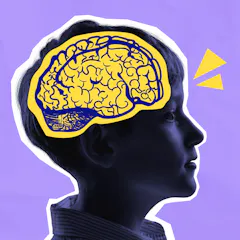
From putting your phone away to getting better at ‘chunking’, a neuroscience researcher explains how to make your memory better.

Your mind goes blank in the supermarket. What was it you meant to buy? Here’s what’s going on in your brain and when you need to see your GP.

My study shows people can recall more detailed childhood memories if they ‘reinhabit’ the body they had as a child.

Black Friday is a psychological event, carefully designed to take advantage of how your brain makes decisions. But you can stay one step ahead this sales season.

Real ‘split brain’ patients have existed since the 1940s.

Brain-training games may have cognitive benefits, but other challenging activities are proven to help our brains function at their best.

People with aphantasia can’t imagine seeing things in their mind. People with ‘deep aphantasia’ may have no inner voice, either, and different real-world visual experiences.
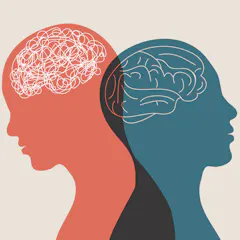
Combining psychotherapy with medication can lead to more immediate and enduring results by boosting the brain’s neuroplasticity.
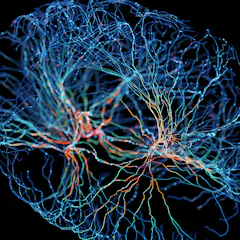
Glioblastoma is the most aggressive type of brain cancer, causing significant decline in cognitive function. New research suggests a common anti-seizure drug could help control tumor growth.

The European Union’s 10-year Human Brain Project is coming to a close. Whether this controversial 1 billion-euro project achieved its aims is unclear, but its online forum did foster collaboration.

Vaccine hesitancy is often met with one of two responses: Ridicule, or factual information. Both assume a failure of reason, but human behaviour is more complex than reason, so both responses fail.

New research shows the choices we make, and our perceptions of the world, are biased by our initial impressions.

If a friend seems to be immune to your spooky, ghost story this Halloween, ask them if they can see the story unfold in their mind’s eye.
Computational modeling can predict language therapy response in bilingual people with aphasia. In the future, this could help clinicians identify the best language for treatment.

In popular films and TV shows, poetry is typically used to express human feelings. This popular wisdom chimes with findings in cognitive neuroscience about how language works.
Consciousness is sometimes referred to as ‘the ghost’ in the machinery of our brain. Is it time we gave up the ghost to focus on the machine?

Cognitive neuroscientists use brain imaging and behavioral economic games to investigate people’s sense of fairness. They find it’s common to take care of yourself before looking out for others.

Research shows napping helps young children learn, as well as enhancing their emotional well-being.

The internet is awash with videos that claim to use ‘binaural beats’ to improve your focus or relieve stress. But while they can influence your brain, the touted mood-enhancing effects may not be.
Top contributors
-

Lecturer and Head of the Prediction and Decision-Making Lab, The University of Melbourne
-
Emeritus Professor of Psychology, UCL
-
Hon Professor of Neuropsychology, Cardiff University
-
Scientist at the Rotman Research Institute, Baycrest Health Sciences, and Assistant Professor, University of Toronto
-
Professor of Electrical and Computer Engineering, Oklahoma State University
-
Research Fellow, Department of Cognitive Science, Macquarie University
-
Postdoctoral Research Fellow, The University of Melbourne
-
Research Scientist in Cognitive Science, Arizona State University
-
Professor of Psychology, The University of Melbourne
-
Postdoctoral Research Fellow, Vanderbilt University
-
Professor of Psychological and Brain Sciences, UMass Amherst
-
Robinson Fellow, University of Sydney
-
Professor of Cognitive Neuroscience, Bangor University
-
Research Fellow, RMIT University
-
Emeritus Robert Reford Professor and Professor of Medicine, McGill University