
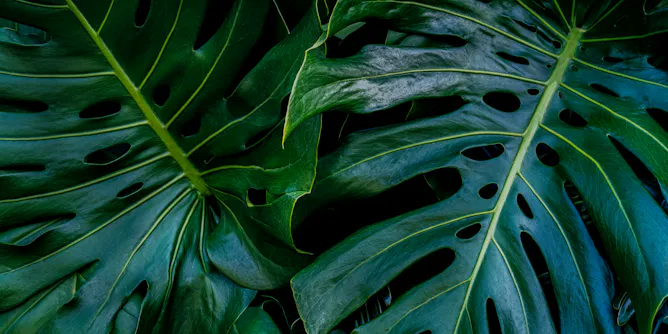
The large, iconic leaves of monstera can now be found everywhere in popular culture – from fabric prints and earrings to tattoos and mugs. What makes monstera special and how do you keep one healthy?
Articles on Botany
Displaying 41 - 60 of 123 articles
Many beloved wildflowers bloom in early spring, while trees are still bare and the flowers have access to sunlight. Climate change is throwing trees and wildflowers out of sync.
They’re beautiful in bloom, but Callery pear trees crowd out native plants and turn productive open land into woody thickets.

New research finds that some common houseplants take in nutrients from outside the soil.
Millions of years before dinosaur footsteps first set tremors through the Earth, this flowering plant family was already thriving – and you can still find them in gardens today.

Carefully squeezing plant leaves can reveal how much water they contain – and touch could reveal many other hard-to-measure properties of plants.
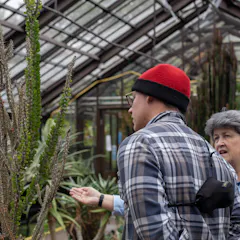
Botany is disappearing from university modules in the UK.
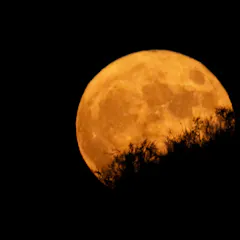
Take note, future colonisers: you may be able to grow stuff in certain places on the Moon.
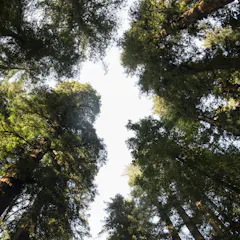
New research shows that coast redwood trees have a surprising adaptation that helps them thrive in both wet and dry environments.
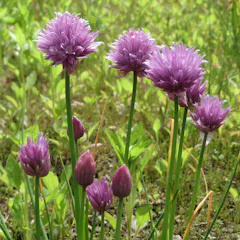
Plants need light to feed themselves, so they grow in ways that help them collect as much of it as they can. Sometimes that’s straight up, but not always.
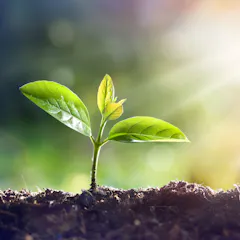
David Attenborough’s new BBC documentary The Green Planet shows plants are stranger than they first appear.

Eucalyptusdom is a testament to the utilitarian and cultural life of a remarkable tree.
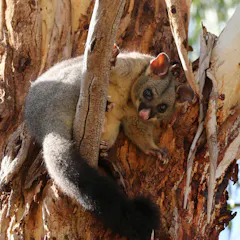
When a plant is stressed, it mobilises its resources and often converts its starch reserves back to sugar. As soon as this happens, the stressed plant becomes sweeter than its healthier neighbours.
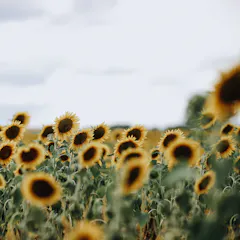
The phenomenon is called heliotropism, and sunflowers are most famous for it. But why do they track the sun? And how?
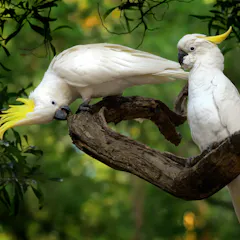
Spring is rapidly approaching and many birds are hunting for the best nesting sites. Competition is fierce — especially for species that nest in tree hollows.

It’s no coincidence that more books about trees are popping up. There is an air of desperation in new books by Peter Wohllben, Janine Burke and others.

Many threatened plant species aren’t being targeted for conservation. Identifying which are closest to being lost forever is the first step to protect them.
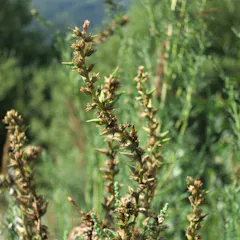
New research found colour played a major role skewing researcher bias — pretty, vibrant flowers get more scientific attention than dull plants, regardless of their ecological significance.
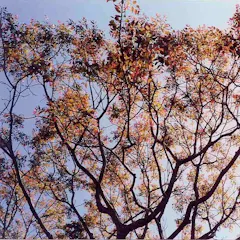
Native deciduous trees are rare in Australia, which means many of the red, yellow and brown leaves we associate with autumn come from introduced species.
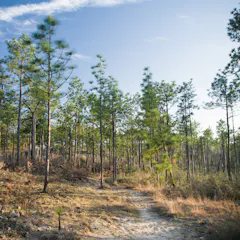
We may think of plants as passive life forms, but they can cooperate, share resources, send one another warnings, and distance themselves from their communities when survival depends on it.
Top contributors
-

Senior Research Associate, School of Agriculture, Food and Ecosystem Sciences, The University of Melbourne
-
Assistant Professor of Plant Evolutionary Biology, University of Tennessee
-
e-Flora Coordinator, South African National Biodiversity Institute
-
Vice President of Academic Affairs and Dean of the College, Grinnell College
-
Professeur, Biologie et Biochimie végétales, IUF, Université de Lorraine
-
Lecturer and Researcher in Plant Humanities, UNSW
-
Founder of Msit No’kmaq
-
PhD Candidate, Social Justice Education, Ontario Institute for Studies in Education, University of Toronto
-
Lecturer in Environment and Sustainability, Keele University
-
Chair of ARC Centre of Excellence for Quantum Biotechnology, The University of Queensland
-
Associate Professor in Environmental Science, Western Sydney University
-
Research Associate, North Carolina State University
-
Professor of Biological Sciences, University of Maryland, Baltimore County
-
Associate Professor of Biology, Columbus State University
-
Postdoctoral research fellow, Australian National University