
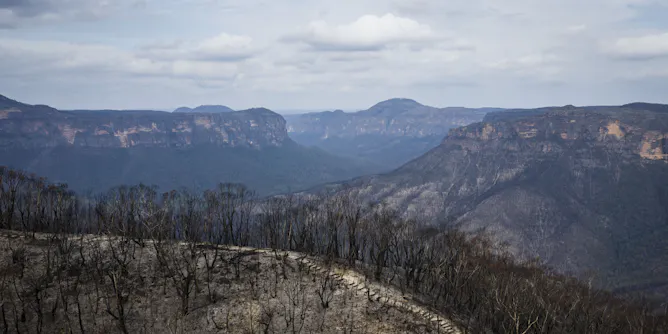
Heavy rains after the Black Summer megafires drove rapid regrowth of plants. But these signs of recovery can hide the true story.
Articles on Black Summer fires
Displaying 1 - 20 of 39 articles
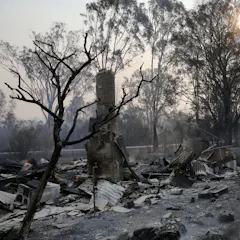
The study found poorer communities, renters and women carried the heaviest burdens long after the Black Summer fires were put out.
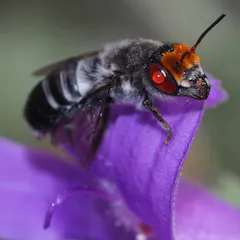
A researcher left 1,000 artificial bee nests in a forest devastated by bushfire … and then began an anxious wait.
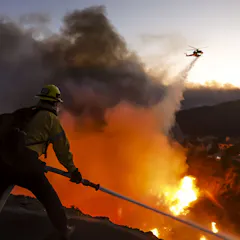
Fire seasons on both sides of the Pacific overlap for seven weeks a year – and changes in Australia’s climate are driving the problem.

As bushfire seasons grow longer and more intense, Australia needs new weapons in its firefighting arsenal.
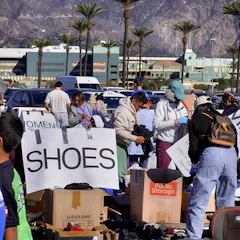
All told, donors gave more than US$397 million to support recovery from the ‘black summer’ bushfire disaster.
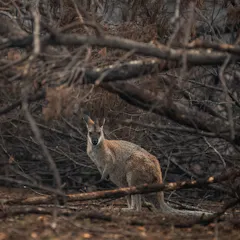
Frequent fuel-reduction burning appears to prime ecosystems for major disruption when the next wildfire hits.
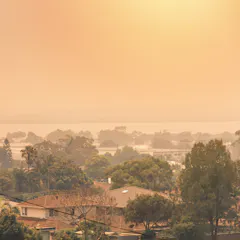
New international research reveals climate change increased the proportion of wildfire smoke-related human deaths tenfold between the 1960s and 2010s. Here’s what that means for Australia.
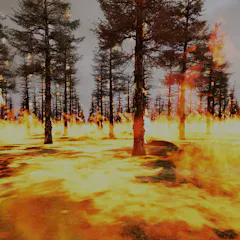
iFire allows firefighters and emergency responders to virtually teleport into a burning landscape and train for the real thing.
Earth’s climate has become dangerously unstable, and it’s only a matter of time before somewhere in Australia erupts in uncontrollable fire.
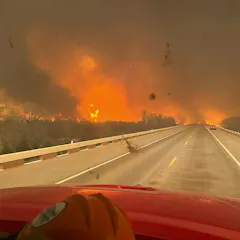
An analysis of 88 million wildfire observations over the past 21 years shows a strong increase in the frequency and intensity of the most extreme fires around the world.

There’s a strong case to be made for private landholders to conduct their own cool burns, for dual purposes of reducing fuel load and restoring the ecology.

Are wombats the accidental heroes of the Australian bush? After the Black Summer bushfires, we set up 56 cameras to capture animal activity in areas with and without wombat burrows to find out.
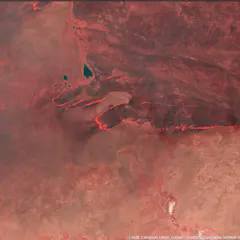
The 2023 megafires burnt more than 84 million hectares of desert and savannah in northern Australia. That’s larger than the whole of NSW, or more than three times size of the UK.
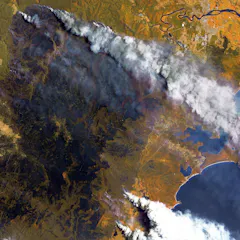
We compiled maps of bushfires and prescribed burns in southern Australia from 1980 to 2021 to see how fire activity is changing habitat for 129 threatened species such as mountain pygmy possums.

We think of laughing kookaburras as common in Australia and their call certainly lets us know when they’re about. But several factors are driving down their numbers.
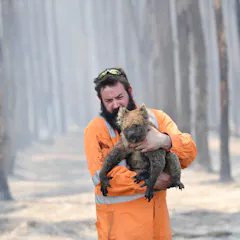
Marsupial rescue, rehabilitation and release statistics from New South Wales and Kangaroo Island during Black Summer fires reveal poor survival rates, despite the courageous efforts of volunteers.
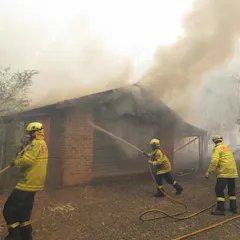
Buildings can be engineered to resist bushfires, but we can’t engineer the many aspects of human behaviour and decision-making that will still put lives at risk.

We sampled 118 rivers and creeks before and after the Black Summer bushfires, searching for platypus DNA. Here’s what we found.

We used satellite data to create global maps of where and how fires are burning. Fire season lasts two weeks longer than it used to and fires are more intense. But there are regional differences.
Top contributors
-

Research Fellow in Environmental Science, University of Tasmania
-
Professor of Pyrogeography and Fire Science, University of Tasmania
-
Associate Professor in Quantitative Ecology, The University of Melbourne
-
Lecturer, School of Environment and Science, Griffith University
-
Professor Emeritus in Terrestrial Ecology, University of Sydney
-
Postdoctoral research fellow, Charles Darwin University
-
Research fellow in Ecology and Conservation Science, The University of Melbourne
-
Professor in Conservation Science, School of the Environment, The University of Queensland
-
Professor in Ecology, Charles Sturt University
-
Associate Professor, Hawkesbury Institute for the Environment, Western Sydney University
-
PhD Candidate in Ecology, Charles Sturt University
-
Lecturer in Communications and Media, University of Notre Dame Australia
-
Indigenous Chair of Biodiversity & Environmental Science, Curtin University
-
Senior Research Fellow, The University of Melbourne
-
Scientific Programmer and Data Analyst, CSIRO