
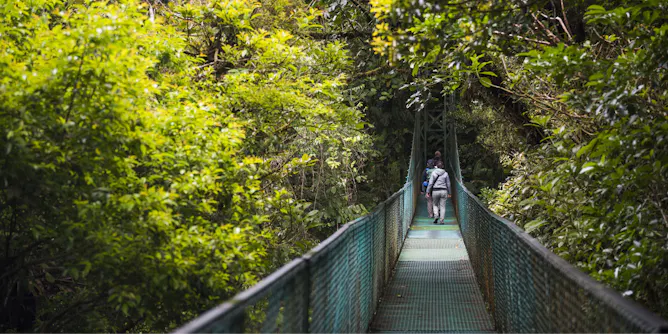
Tourism revenues account for almost 10% of Costa Rica’s gross domestic product. New research shows that charismatic wildlife is necessary but not sufficient to attract ecotourists.
Articles on Birds
Displaying 241 - 260 of 646 articles

Birds are master navigators, negotiating journeys of thousands miles each year.
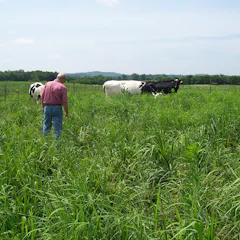
Growing native grasses as cattle forage is an example of working lands conservation – balancing human use of the land with conservation goals.
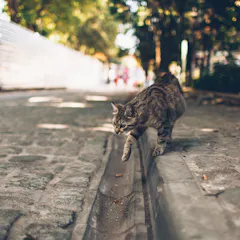
A new study shows that when free-ranging cats are more than a few blocks from forested areas in cities, such as parks, they’re more likely to prey on rats than on native wildlife.
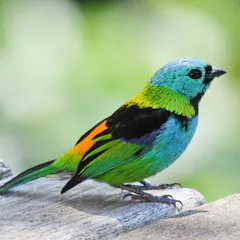
We compared 4,500 species of songbird to finally confirm what Darwin suspected.
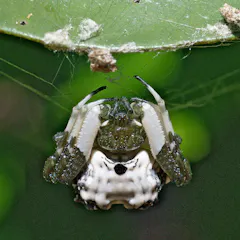
Many animals have evolved very entertaining – if not impolite – strategies for evolutionary success.
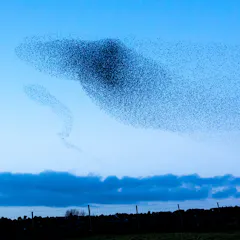
These coordinated movements of a flock of starlings follow no plan or leader. Scientists used to think the animals must communicate via ESP to create these fast-moving blobs.
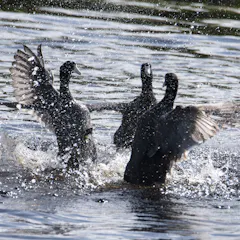
Birds will shriek and dive at each other over food, territory or mates, but only a small number of species sport actual weapons. The reason: Flying matters more for their survival than fighting.
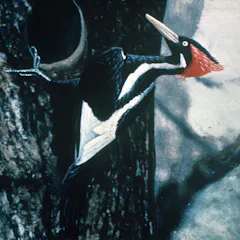
There are no more ivory-billed woodpeckers or Bachman’s Warblers on Earth, but they’ve left an echo behind.

It was the first time a bird has removed a tracking device, and the second time a bird species showed cooperative ‘rescue’ behaviour.

These are poignant cries of a disappearing landscape – the creaking calls of gang-gangs, buzzing bowerbirds and the mournful cry of the far eastern curlew.

New research finds the last 250 years has seen more than 100 million hectares of bird habitat destroyed on mainland Australia – that’s 15% of Australia’s landmass.

It may not be extinct, but our research suggests the buff-breasted button-quail may only be hanging on by a thread, at best.
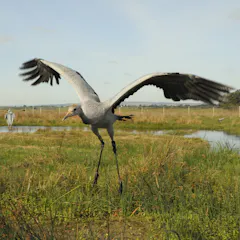
These wetland birds were eradicated in the 17th century, but breeding pairs returned in 1979.
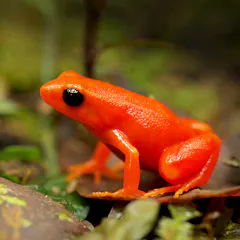
While species are and will be affected everywhere by climate change, those already living in a warm climate will reach their tolerance threshold faster.
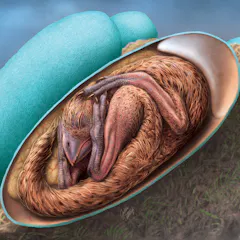
Baby Yingliang is a perfectly preserved oviraptorosaur embryo, a species where findings reveal the connections between dinosaurs and birds.
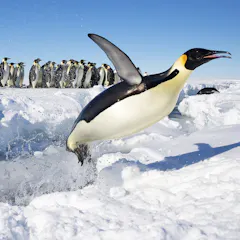
How did penguins end up with so few bones – and become lightning-fast swimmers?
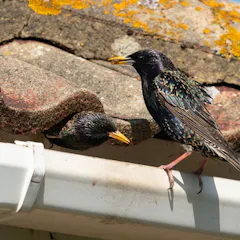
Homes for bees and birds are going to be built into new houses to help support struggling species.
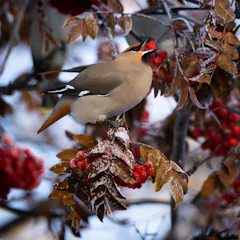
Forests around the world will need to shift their ranges to adapt to climate change. But many trees and plants rely on animals to spread their seeds widely, and those partners are declining.
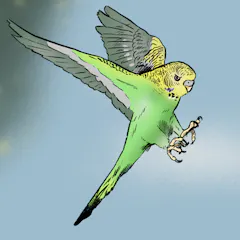
After 150 years of selective breeding in captivity, the domestic budgie would now be almost unrecognisable to its wild cousin. So who would win in the unlikely event of a fight?
Top contributors
-

Professor of Avian Behavioural Ecology, Macquarie University
-
Professor of Conservation and Sustainable Livelihoods, Charles Darwin University
-
Emeritus Professor in Animal Behaviour, University of New England
-
Professor of Conservation Biology, Charles Darwin University
-
Postdoctoral Fellow, Australian National University
-
Senior Research Scientist, South Australian Museum; Flinders University
-
Professor in Conservation Science, School of the Environment, The University of Queensland
-
Researcher, School of Life and Environmental Sciences, Deakin University
-
Distinguished Professor of Ecology, Fenner School of Environment and Society, Australian National University
-
Associate Professor, FitzPatrick Institute of African Ornithology, University of Cape Town
-
Adjunct Lecturer/ Ecologist, University of New England
-
Professor of Environmental Management, The University of Queensland
-
Associate Professor in Vertebrate Palaeontology, Flinders University
-
Reader in Ecology and Conservation Biology, Manchester Metropolitan University
-
Professor of Evolutionary and Conservation Biology, Australian National University