

Tracking species relationships isn’t easy. Yet analysing 422 bird species across 1,410 locations offers far deeper insight, revealing the true depth of the evolutionary history at stake.
Articles on Songbirds
Displaying 1 - 20 of 58 articles
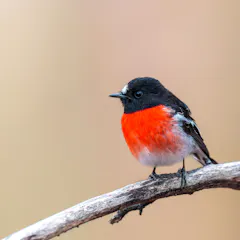
Research suggests all of the world’s songbirds can be traced back to Australia.
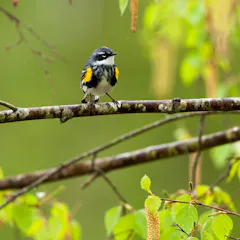
Tiny geolocators measure light levels and atmospheric pressure to reveal the migrations of small songbirds – including the yellow-rumped warbler, also known as a butter-butt – in unprecedented detail.
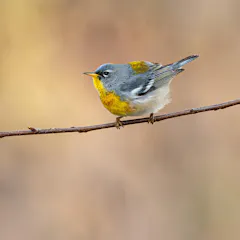
Males aren’t the only angry birds defending their territory. A clever test finds which songbirds step up to fight off intruders and the role monogamy plays.

Farming areas that use lots of fertilizers and pesticides stood out for the swift and accelerating decline of their bird populations.

Protecting places that are likely to remain cool and moist as global temperatures rise can save wildlife of all kinds, but first we have to find them.
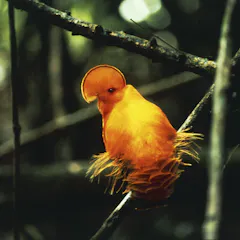
A study using more than 90,000 scientific observations shows Earth is getting too hot for many tropical birds.
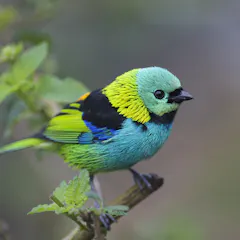
A secret under-layer explains why songbirds’ colourful feathers look so damn good.

Mountain chickadees follow systematic grammarlike rules to share important information, stringing together syllables like words in a sentence.
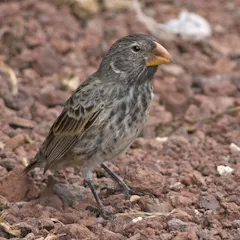
Researchers have discovered that massive beaks and strong bites hinder the velocity of beak movement in songbirds. The musical differences that result may have consequences for evolution.

To listen deeply to nature is to become aware of behaviours, relationships and patterns of interaction between multiple species – and to learn from what we hear.
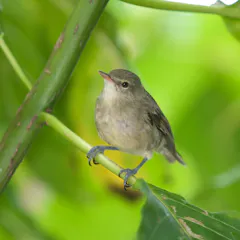
New research examines the link between extreme weather and divorce in a small monogamous tropical songbird, the Seychelles warbler. Concerningly, extreme rain and dry spells increased divorce rates.
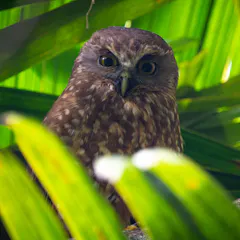
The sad case of the Norfolk Island morepork shows we need a way to control or eradicate invasive rodents without killing native species.

These tiny songbirds have extraordinary memories for the tens of thousands of spots where they hide food. But that doesn’t help when heavy snow blocks their access.
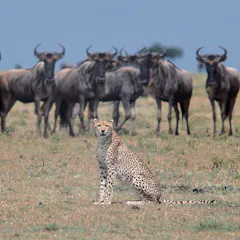
False alarms are common in prey animals, but what causes them and how can they be avoided?
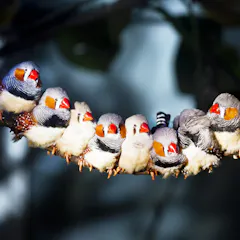
Birdsong plays a vital social role in the lives of these gregarious finches.
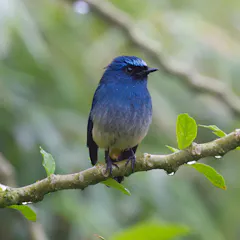
Birds species vary greatly in the way they handle heat – an important finding for predicting vulnerability to global warming.
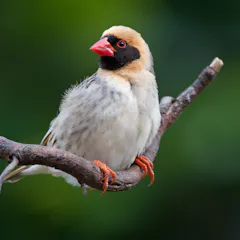
The pet trade threatens to decimate some species – and dull nature’s colour palette.

Noise created by the oil industry impacts songbirds. Research found that constant noises, like those produced by oil wells, are less disruptive than the shorter bursts of noise produced by drilling.
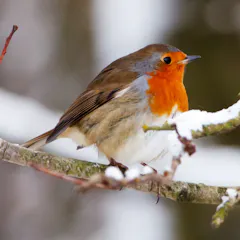
Migrating birds use both their view of the stars and their internal magnetic compasses to find their way over thousands of miles.
Top contributors
-

Professor of Avian Behavioural Ecology, Macquarie University
-
Research Affiliate, Sydney Conservatorium of Music, University of Sydney
-
Research Fellow, The University of Melbourne
-
Professor of Animal Behaviour, Bangor University
-
Emeritus Professor in Animal Behaviour, University of New England
-
Postdoctoral research fellow, Vanderbilt University
-
Assistant Professor of Biological Sciences, Vanderbilt University
-
Ph.D. Candidate in Biological Sciences, Vanderbilt University
-
Associate Professor, Biology, Ecology and Conservation, St. George's University
-
Lab manager and researcher, University of Guelph
-
Postdoctoral Fellow studying ornithology and conservation biology, University of Alberta
-
Senior Lecturer in Zoology, Bangor University
-
Professor of Ethno-ornithology, University of Oxford
-
Associate Professor, Member of the Royal Society of Canada's College of New Scholars, Artists and Scientists, University of Guelph
-
Professor of Applied Ecology, Newcastle University