
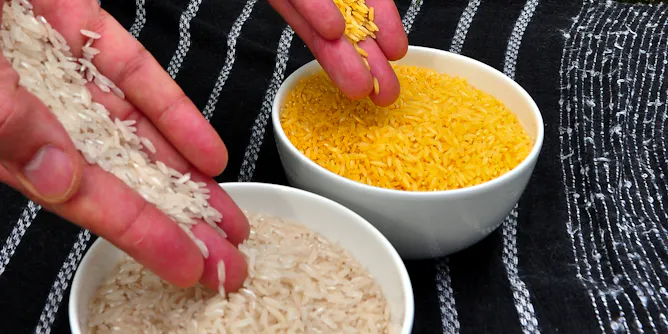
Golden Rice – a controversial genetically modified product designed to combat malnutrition – has been approved as safe in the Philippines. But key questions remain unanswered.
Articles on Biotechnology
Displaying 41 - 60 of 105 articles
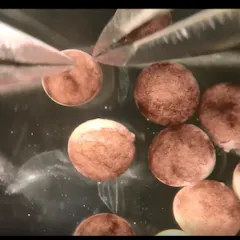
Xenobots have been called the world’s first “living robots”. They are made entirely of living tissue, and can be programmed to move towards a certain object.

Bigger penalties for pirating plants could help encourage growers to develop new varieties.
Synthetic biology lets us explore places where evolution has never gone, to help meet humanity’s food needs in a future shaped by climate change.

Governments fail to imagine how worst-case scenarios can come about – much less plan for them. But there are things we can do.

He has inspired generations of Indonesians. Through his work, he changed many lives, including mine.
A growing international divide over cutting-edge medical research could worsen predatory practices, medical tourism and health inequality.
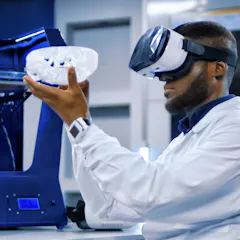
Most universities focus on teaching basic sciences with little reference to commercialisation of ideas and new technologies.
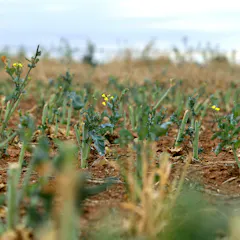
South Australia has lifted its moratorium on GM crops, while Tasmania has extended its ban. But the question should no longer be a simple binary of being “for” or “against” GM technology.
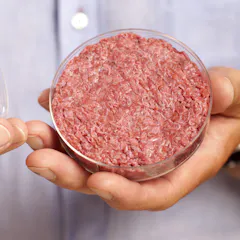
Surveys suggest fewer than half of Americans are looking forward to lab-grown meat. A moral psychologist examines common objections and why for the most part they’re not logical.

A guide to the battle for the future of farming.
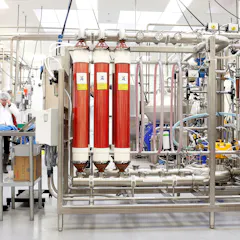
Despite many claims, nobody knows for sure how the environmental footprint of lab-grown meat compares to livestock. An animal scientist says the issue is not black and white.

Cultured meat comes from cells in a lab, not muscles in an animal. While regulatory and technological aspects are being worked out, less is known about whether people are up for eating this stuff.

One way to make sensors small is to make them out of something that’s incredibly small in the first place, such as DNA.

In 2003 the Human Genome Project “cracked the code of life”, yet parts of our DNA remained unidentified. A new study fills out our genetic blueprint by using a nanotechnology-based technique.

If Mary Shelley wrote the book today, Victor would surely be a synthetic biologist. But those fiddling with living things in 2018 have hopefully learned from her cautionary tale.
Yes emerging technologies can pose risks - but regulation must focus on outcomes of the technology, not the technology itself.
Research institutes and “centres of excellence” exist around the world to draw talent and to share resources - all with the aim of solving important problems.

One big challenge for gene therapies is delivering DNA or RNA safely to cells inside patients’ bodies. New nanoparticles could be an improvement over the current standard – repurposed viruses.
Biologists’ growing reliance on computers advances the field – but comes with new risks. The first step toward improved cyberbiosecurity is increasing awareness of possible threats.
Top contributors
-

Associate Professor and ARC Future Fellow, The University of Western Australia
-
President, Royal Society of New South Wales
-
Assistant Professor of Philosophy, UMass Lowell
-
Laureate Professor Emeritus, The Peter Doherty Institute for Infection and Immunity
-
Professor of Microbiology, Ladoke Akintola University of Technology, Ogbomoso
-
Doctoral Student in Biochemistry, University of Washington
-
Ph.D. Student in Bioengineering, Researcher at the Center for Sensorimotor Neural Engineering, University of Washington
-
Professor - Emerging Technologies (Stem Cells) at The University of Melbourne and Group Leader - Stem Cell Ethics & Policy at the Murdoch Children's Research Institute, The University of Melbourne
-
Associate Professor in Biophysics, University of Pretoria
-
Professor of Advanced Technology Transitions, Arizona State University
-
Senior scientist in plant biotech, Queensland University of Technology
-
Ph.D. Candidate, Duke University Program in Ecology, Duke University
-
Associate Professor of Public Policy and Women's Studies, University of Michigan
-
Professor, Abell Chair in Synthetic Biology, Colorado State University
-
Senior lecturer, University of Twente