
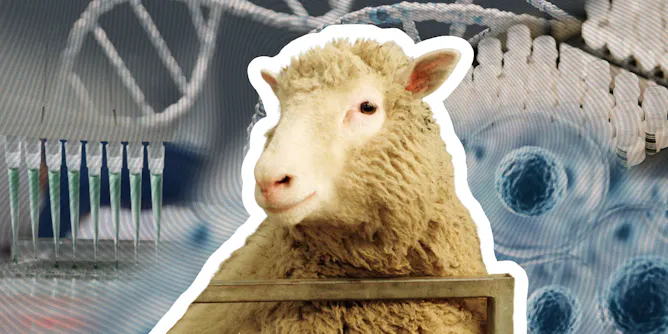
Today, cloning is not a technology that can simply “copy and paste” living things. But it’s brought advances in several fields of science.
Articles on biotech
Displaying all articles

Biotech firms are using climate goals opportunistically in an attempt to force through the deregulation of genetically modified crops.
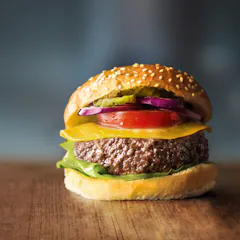
Growing meat in vats could help us prepare for climate change - and curb the environmental damage done by traditional meat. But only if we can scale it up.
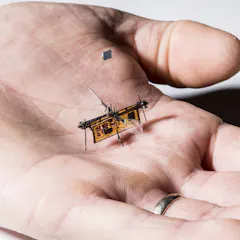
Robots a fraction of a millimetre small could swim around your eye or bloodstream for medical treatments in the future.
To continue the fast-paced collaborative research and innovation we have seen during the pandemic, here are five ways universities can support health research that responds to societal needs.
COVID-19 tests rely on a process developed at a biotech company co-founded by a Canadian. Canada’s current testing expertise needs to be channelled to prepare for the next wave, and the next pandemic.
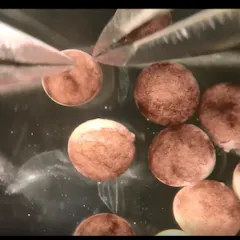
Xenobots have been called the world’s first “living robots”. They are made entirely of living tissue, and can be programmed to move towards a certain object.
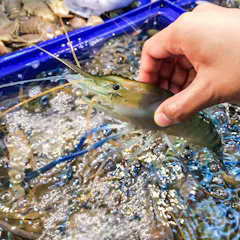
Entire populations of prawn ‘super-females’ are now being commercially distributed. The science behind this continues to advance and could have a far-reaching impact on both humans and animals.

One big challenge for gene therapies is delivering DNA or RNA safely to cells inside patients’ bodies. New nanoparticles could be an improvement over the current standard – repurposed viruses.

By 2030, the Blue Economy will be worth $3 trillion. And the UK is well placed to capture a slice of this lucrative market, if it meets the challenges involved with innovation and ambition.

Do androids smell electric roses?
From spinach that can detect explosives to vegetarian meat, biological technology has the potential to change the world.
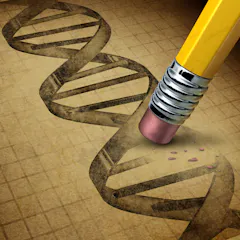
A recent closed meeting about building synthetic genomes raised suspicions about just what scientists were planning, away from the public eye.

Monsanto an other biotech companies got caught short in the 1990s. But since then, the GM argument has been moving in their direction.
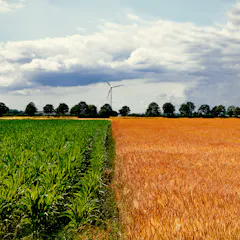
Why are half of European Union members opting out of GMO crops? Hint: it’s not about food and environmental safety.
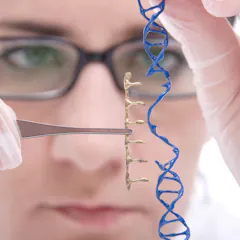
A toddler from London has had gene therapy for leukaemia and it seems to have worked. But why have breakthroughs taken so long?

Clinton, who named drug companies among her enemies in this week’s debate, is pushing populist-inspired policies that could hamper the flow of new medicines.

New EU rules on GM attempt to unblock logjam that has hung over the technology in the region for most of this century. To work, anti-GM member states and Big Biotech will need to cooperate.
Top contributors
-

Emeritus Fellow in Plant Biochemistry, University of Westminster
-
Ph.D. Candidate in Chemical Biology, Harvard University
-
Postdoctoral Researcher, Universitat de Vic – Universitat Central de Catalunya
-
Doctoral Student in Biochemistry, University of Washington
-
Adjunct associate, Lancaster University
-
Visiting Professor of Biotechnology, King's College London
-
Postdoctoral Researcher, GenØk - Centre for Biosafety
-
Lecturer in Law, Queen's University Belfast
-
Principal and Vice Chancellor, Heriot-Watt University
-
Scientific Director of the Kidscan Childrens Cancer Research Charity, University of Salford
-
Lecturer in Political Ecology and Environmental Justice, Brunel University of London
-
Academic Specialist & Senior Lecturer in Cancer Sciences & Digital Health | Superstar of STEM | Science Communicator, The University of Melbourne
-
Research Fellow in Political Agroecology, Université Libre de Bruxelles (ULB)
-
Assistant Professor, Department of Medicine, McMaster University
-
Honorary Senior Fellow, Department of War Studies, King's College London