

If Spider-Man were real, he could help scientists revolutionize healthcare. Since he’s not, researchers develop creative ways to produce spider silk to study.
Articles on Biomaterials
Displaying 1 - 20 of 21 articles

Some medical conditions involve cartilage tissue loss, which is why skin grafting is vital. Lab-grown cartilage could be the way forward for human tissue repair and reducing animal testing.

Placentas contain a rich amount of nutrients and stem cells, but there’s a difference between eating it at home for wellness and using it in the clinic to improve wound healing.
A physicist explains that the short answer is both … and neither.
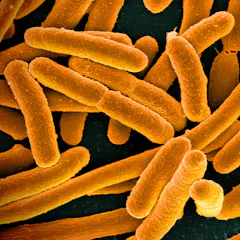
Certain strains of E. coli tucked in a gel can crowd out the microbes that cause urinary tract infections.
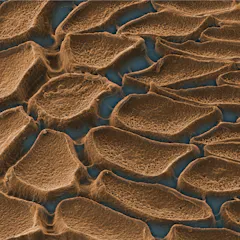
Researchers can use powerful microscopes to capture the tiny teeth in squid suckers.
For decades, construction companies have used fireproofing chemicals associated with risks to human health and the environment. We need safer alternatives.
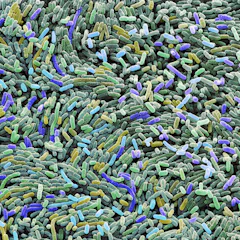
The walls of your house could someday be built with living bacteria. Synthetic biologists are engineering microbes into living materials that are cheap and sustainable.

A biomedical engineer explains how human-made materials inserted in the body hold hope to repair painful injuries more efficiently than bone grafts.

Most of my work takes place in the lab. But recently I became involved with an organisation which allows me to connect with the very people who could one day benefit from my research.
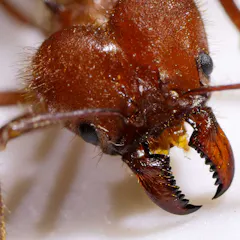
Many small animals make their teeth and claws from a smooth blend of proteins and heavy elements. These materials can form very sharp tools that make it possible to cut tough substances using tiny muscles.
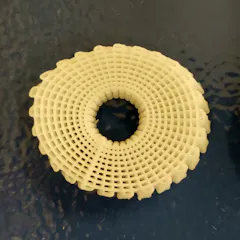
A cutting edge new research project is developing Lego-like bricks made from biomaterials to replace bone fragments in shattered limbs.
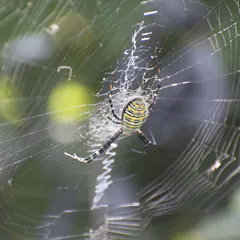
The glue that gives spider webs their stickiness is a form of spider silk protein. Researchers can imagine cool uses for a synthetic version – but had to wait for the tricky glue gene to be sequenced.
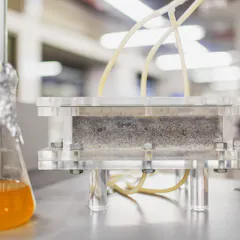
Some of the things we discard - like urine - can actually be useful resources.

Advanced materials that seem like they come from Star Trek are becoming reality today.

How do a frog’s tongue and saliva work together to be sticky enough to lift 1.4 times the animal’s body weight? Painstaking lab work found their spit switches between two distinct phases to nab prey.
Making a material impact – how auxetic materials could make sports stars safer.

Theoretical physicists are caricatured in the popular imagination as only involved in abstruse and difficult-to-imagine topics. But some of these theoretical physicists are involved in something closer…
Cocoa, rice and vegetable waste could soon be turned into environmentally-friendly plastic. American Chemical Society scientists…
Researchers have produced a material able to mimmic the shock-absorbing and lubricating characteristics of cartilage. Previously…
Top contributors
-

Senior Lecturer: Water Quality Engineering, University of Cape Town
-
Professor of Mechanical Engineering and Biology, Adjunct Professor of Physics, Georgia Institute of Technology
-
Professor of Applied Mathematical Physics, University of Southampton
-
PhD Student in Biomechanics, Georgia Institute of Technology
-
Professor of Smart Materials and Structures, Sheffield Hallam University
-
Professor and Canada Research Chair in Quantum Materials Discovery, University of Winnipeg
-
PhD student, School of Engineering, RMIT University
-
University of Manchester
-
Associate Professor, School of Sciences, RMIT University
-
Lecturer in Medical Mechatronics, University of Manchester
-
Lecturer in Solid Mechanics and Bioengineer, University of Manchester
-
Associate Professor, School of Engineering, RMIT University
-
Postdoctoral Research Associate in Synthetic Biology, Rice University
-
Assistant Professor (Lecturer), Department of Pharmacy and Pharmacology, University of Bath
-
Research Professor in Physics, University of Oregon