

Overseas research says putting the clock forward hurts the financial markets. But not in Australia, according to a real-world study along the Queensland-NSW border.
Articles on Behavioural economics
Displaying 61 - 80 of 115 articles

Nudges were meant to be a good alternative to regulations, but it may be time to regulate nudges.

We don’t actually know how NDIS participants weigh their personal goals and then make choices about achieving them through services, supports, therapies and interventions.

A new study claiming to debunk this core part of behavioural economics suggests we really need a new and improved model for loss aversion.

Sin taxes won’t be enough to deal with the obesity epidemic, but innovation just might be.

Obesity is not a rational choice. But there is scope for governments to get involved and improve our options.

A psychological tendency to gamble rather than accept certain losses, may lead to a surge in support for a harder Brexit.

While disaster insurance would go a long way in averting losses, demand for cover is still lower than expected.

There may be altruistic reasons for companies to adopt ‘pay as you want’ pricing, but research shows it can lead to an increase in revenue.

When we lust for riches, fear being left behind and identify strongly with some moral cause all at once, reason and willpower don’t really stand a chance.

Research shows that corporate wellness programs don’t really work. If companies want to boost employee health they should consider designing the workplace to encourage the right behaviour.

Treasury modelling suggests that limiting negative gearing will lead to small change in prices. But behavioural economics shows it all depends on how the policy is framed.

After two Nobel prize wins for behavioral economists, the burgeoning field has demonstrated its importance in shaping effective economic and government policy.

Will you buy the new iPhone straight away?
Or do you buy your smartphone based on its cost-benefits? Either way Apple might be using your own psychology against you.

Governments gently cajoling people towards better life choices is only one side of the nudge theory.
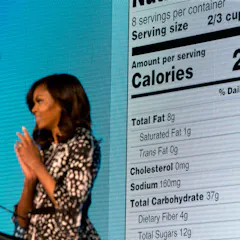
Government initiatives to prod people to make better decisions got a lot of attention after Richard Thaler won a Nobel in economics for his working on nudging.

People aren’t the perfectly rational, number-crunching risk-takers that traditional theory suggests. Research shows a whole variety of factors feed into risk-taking.

His work on behavioural economics helps us better understand why people make bad financial decisions.

The success of the plastic bag ban announced by Australia’s big two supermarkets will hinge on whether they can persuade customers to change an engrained behaviour - without annoying them.

Behavioural economics is severely limited in its approach to inequality. Fortunately, other psychological approaches are better suited.
Top contributors
-

Professor of Economics, Tasmanian Behavioural Lab, University of Tasmania
-
Associate Professor in Economics, RMIT University
-
Scientia Professor of Economics, UNSW
-
The University of Queensland
-
Professor of Marketing and Consumer Behaviour, Queensland University of Technology
-
Professor of Cognitive Psychology and Director of the Institute for Climate Risk and Response, UNSW
-
Professor of Behavioural Economics, Tasmanian Behavioural Lab, University of Tasmania
-
Associate Professor of Marketing, University of Technology Sydney
-
Professor of Economics, University of Technology Sydney
-
Visiting Fellow, Crawford School of Public Policy, Australian National University
-
Professor of AI and Public Policy, University of Salford
-
Senior lecturer, Canberra School of Government, University of Canberra
-
Professor of Economics and Behavioural Science, University of Stirling
-
Associate Professor of Behavioural Economics , Newcastle Business School, University of Newcastle
-
Lecturer (Assistant Professor), Queensland University of Technology