

If we do pay our kids for their chores, do we risk creating kids who care more about money than doing good deeds for their own sake?
Articles on Behavioural economics
Displaying 1 - 20 of 115 articles

A better deal on your private health insurance may be just a phone call away. What have you got to lose?

The RBA will be hoping Australians respond to this rate rise in three ways: spending less, saving more and not asking for big wage rises.
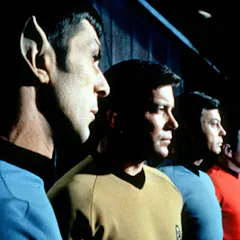
From societies without money to profiteering aliens, the world of Star Trek has more to say about economics than you might think.
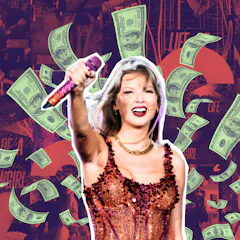
The album was released in dozens of different formats. Other artists have done this before, but rarely at this scale or with such an intense response from fans.

An £8 billion spending spree would show up in the UK’s economic data.

The choices people make in the dating and job markets can have a big impact on society. So, do Australians believe everyone has equal access?
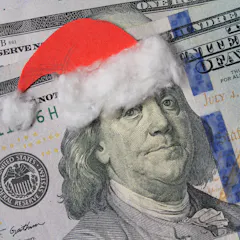
An economist swears by this technique.

Avoiding bad financial news is a common human trait – but it can have serious consequences for money management.

White people that sweep into developing countries to “save” people of colour are widely derided, including by donors. Does this translate to less charity donations?
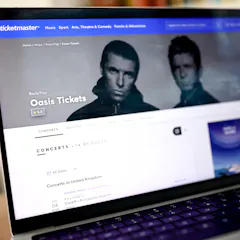
It’s a question of supply and demand – but does that make it fair?

Understanding how you spend money can help you choose the right budgeting technique.

Far from setting us up to fail, an ambitious budget could be better at keeping us on track.

The new game, which is ranking highly on Steam, involves repeatedly clicking a banana in the hope of maybe – eventually – getting a rare ‘skin’ to trade for real money. And that’s it.

Management jobs are proliferating much faster than other roles. But behavioural research shows the extra box-ticking can leave employees feeling stressed, patronised and demotivated.

We are easy prey for drip pricing, the practice of incrementally disclosing unavoidable additional fees, squeezing our wallets and feeling unfair.

Behavioural economics is a discipline that seems blind to empathy. Robodebt showed what it could do.

Do competitive, market-like interactions encourage immoral behaviour? A study of 18,000 people in 45 experiments shows there’s no simple answer.

Instead of simply applauding nudges, journalists should critically assess when and why governments use this tool.

So far, we are not getting carried away about inflation.
Top contributors
-

Professor of Economics, Tasmanian Behavioural Lab, University of Tasmania
-
Associate Professor in Economics, RMIT University
-
Scientia Professor of Economics, UNSW
-
The University of Queensland
-
Professor of Marketing and Consumer Behaviour, Queensland University of Technology
-
Professor of Cognitive Psychology and Director of the Institute for Climate Risk and Response, UNSW
-
Professor of Behavioural Economics, Tasmanian Behavioural Lab, University of Tasmania
-
Associate Professor of Marketing, University of Technology Sydney
-
Professor of Economics, University of Technology Sydney
-
Visiting Fellow, Crawford School of Public Policy, Australian National University
-
Professor of AI and Public Policy, University of Salford
-
Senior lecturer, Canberra School of Government, University of Canberra
-
Professor of Economics and Behavioural Science, University of Stirling
-
Associate Professor of Behavioural Economics , Newcastle Business School, University of Newcastle
-
Lecturer (Assistant Professor), Queensland University of Technology