

Here’s some good environmental news – local governments and local actions have slashed the plastic on our beaches. Incentives, awareness and access are the key.
Articles on Behaviour change
Displaying 21 - 40 of 44 articles

In 2000, fossil fuels were 80% of total energy consumption. In 2019, they were 81%. Renewables are simply not growing fast enough. It’s time to talk about cutting energy consumption.

Research shows people want government to restrict excess consumption through regulations, not just to rely on citizens to make better choices.

Researchers looked at the most popular YouTube fitness videos and the types of behavioural change techniques they used. Here’s what they found.

The new SBS documentary is not easy to watch. But it is a big chance to reset the conversation about domestic violence.

The restrictions put in place during the COVID-19 pandemic have led to a boom in online fitness opportunities. Here’s what to look for in online classes.

Underlying social and structural causes of behaviour - such as poverty and gender disparities - are often ignored. But these are potential drivers of HIV infection among young people.

Changing social norms in a short amount of time is difficult, and a one-size-fits all policy is unlikely to have the desired effect.

Promote new habits, find out why people engage with the wildlife trade and don’t make it seem more widespread than it really is.

From eating less meat to foregoing flying, individual obligations make up our understanding of how to fight climate change, letting polluters off the hook and stifling real change.

How people lose weight when they’re doing it on their own.

Changing people’s behaviour is a huge challenge, but it is critical for good health and a sustainable planet.

The government’s new exercise campaign encourages us to get 30 minutes of physical activity a day. But while ads can get us to change our attitudes, they’re unlikely to change our behaviour.

How do you help a country get over plastic? By creating awareness and minor inconveniences and by providing lots of reminders.

Frontotemporal dementia typically affects people under 65 and is about more than memory loss – this is what to look out for.

Hedonism has a complex relationship with binge drinking – part cause, part solution. Here’s why.
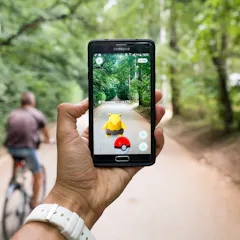
The minds of Pokemon trainers have been manipulated using basic behavioural science.

If you use a tablet device to keep a child quiet at the dining table or other event then you could be limiting their social skills. That could have an impact on the way they behave later in life.
The average Australian spends more than five hours watching YouTube every month. With such high viewership, it’s no surprise that interest groups are reaching out with YouTube to try to change people’s…

Britain’s housing stock is old and leaky. The vast majority fails to meet modern energy efficiency standards, is responsible for over a quarter of the nation’s greenhouse gas emissions, and is often very…
Top contributors
-

Marine Social Scientist, The University of Queensland
-
Professor of Environmental Psychology, University of Bath
-
Lecturer in Environmental Geography, Birkbeck, University of London; King's College London
-
Behavioural Scientist, CSIRO
-
Lecturer, School of Agriculture and Food Science & Centre for Biodiversity and Conservation Science, The University of Queensland
-
Social Marketer & Market Researcher, Queensland University of Technology
-
Director, BehaviourWorks, Monash Sustainable Development Institute, Monash University
-
Research Fellow in Behaviour Change, Monash University
-
Associate Professor in Psychological Sciences, The University of Melbourne
-
Associate professor, University of Sydney
-
Researcher, Digital Wellbeing, Western Sydney University
-
Lecturer, Tilburg University
-
Lecturer/Research Fellow in Psychology, Flinders University
-
Honorary Professor, University of Wollongong
-
Senior Lecturer, Health Sciences, Brunel University of London