
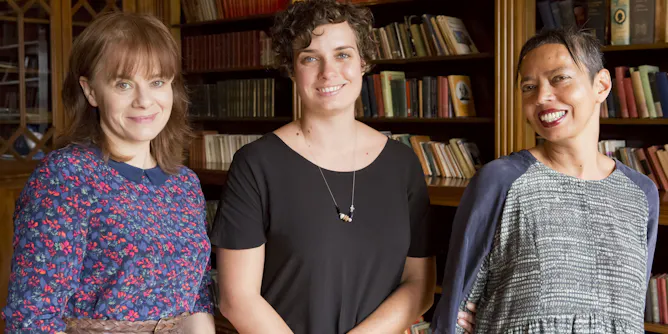
So, the Stella Count is in for 2013. These are annual statistics collected by the Stella Prize that measure the number of books by women that get reviewed in major publications and the number of books…
Articles on Australian literature
Displaying 301 - 320 of 333 articles
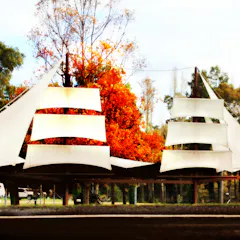
“We knew it in words, yet kept it secret,” says Frances, the young sister-in-law of Patrick Logan, the eponymous – and notoriously cruel – commandant of Moreton Bay penal colony in Jessica Anderson’s ground-breaking…
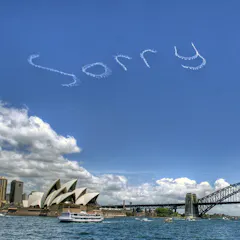
The time has now come for the nation to turn a new page in Australia’s history by righting the wrongs of the past and so moving forward with confidence to the future. – Prime Minister Kevin Rudd’s apology…
There should be no hard and fast rules concerning book reviewing. That’s because reviewing constitutes a worthy genre in its own right, one that should not be limited by guidelines or mandates. Criticism…
… further from the far, safe place where I began, the green lands of my father’s farm, further from the last inhabited outpost of the known world, further from speech even, into the sighing grasslands…
Book reviewers and the editors of periodicals that commission them are used to sour assessments of their worth, but Professor John Dale’s article on The Conversation yesterday is in a class of its own…
Gerald Murnane’s most recent novel, A Million Windows, might be read as a meditation on the relation between sound and silence. At the heart of the novel, though only revealed at the end, is a secret that…
The Saturday Paper publishes anonymous book reviews and, occasionally, reviews by identified critics. That anonymity was a much-discussed feature when the paper launched in March, and the debate continues…
Crime novel covers are often plastered with endorsements: “A terrific read,” “A real page-turner,” or “Author Y is the next Author X.” It’s far less common to read quotes such as the following from Fairfax…
A 34-year-old British-born writer has won Australia’s most prestigious literary prize. Evie Wyld’s All the Birds, Singing was named as the unexpected winner of the 2014 Miles Franklin Award tonight. The…
Randolph Stow’s To the Islands (1958) is an astonishing novel, a work of poetic skill and political subtlety – and one that is rarely mentioned today. Its omission from Australian literary syllabuses and…
Five years ago, in the midst of the rancorous parallel importation debate the Productivity Commission undertook a thorough examination of book prices in Australia compared to comparable prices in the US…
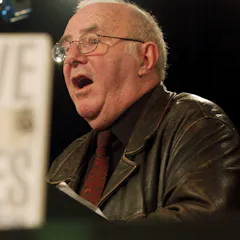
Death is a funny thing. It creeps up on us all, or surprises us if we are unlucky (or lucky, depending on the circumstances). For a writer, especially a self-confessed solipsist such as Clive James, the…
Should Australians be as familiar with David Williamson as with Shakespeare? Should we measure our Jane Austen with sufficient doses of Miles Franklin? Britain has recently revised the GCSE (General Certificate…
Last year I re-read Johnno, David Malouf’s 1975 novel, with a group of students. I was intrigued to find out how young men and women living in Brisbane today would relate to a novel that has cast such…

If you had to argue for the merits of one Australian book, one piece of writing, what would it be? Welcome back to our occasional series in which our authors make the case for a work of their choosing…
If you had to argue for the merits of one Australian book, one piece of writing, what would it be? Welcome back to our occasional series in which our authors make the case for a work of their choosing…
It is nearly 50 years since Australian writer Elizabeth Harrower’s previous novel The Watch Tower appeared. Why, after producing four novels between 1957 and 1966, did she stop writing? Or at least stop…
If you had to argue for the merits of one Australian book, one piece of writing, what would it be? Welcome back to our occasional series in which our authors make the case for a work of their choosing…
If you had to argue for the merits of one Australian book, one piece of writing, what would it be? Welcome to our occasional series in which our authors make the case for a work of their choosing. See…
Top contributors
-

Distinguished Professor Emerita of Creative Practice, Faculty of Arts and Design, University of Canberra
-
Professor, Chair of Australian Literature, The University of Western Australia
-
Professor in Politics and Journalism, University of Notre Dame Australia
-
Dean of Research (Creative), Adelaide University
-
Associate Professor in Literary Studies, RMIT University
-
Professor of English Literature, University of Southern Queensland
-
Senior Lecturer in English Literature, Charles Sturt University
-
Emeritus Professor of Creative Writing, The University of Melbourne
-
Director of Creative Writing, Macquarie University
-
Associate Professor of English, Australian National University
-
Associate Professor, Creative Writing and Literary Studies, Victoria University
-
Director of AustLit, Associate Professor in Digital Cultural Heritage, The University of Queensland
-
Professor of Writing and Literature, Deakin University
-
Associate Professor in Literary Studies, Monash University
-
Senior Lecturer, Creative Writing and English, Edith Cowan University