

This prize confirms Melissa Lucashenko’s status as one of Australia’s top writers of contemporary fiction.
Articles on Australian literature
Displaying 241 - 260 of 333 articles

Each novel in this list is profoundly empathetic, and deeply attuned to contemporary Australia.

Digital writers use innovative tools to tell new and complex stories. In contrast to e-books, their works depend on electronic code to exist.

Fifty years after her death, Australian writer Charmian Clift is experiencing a renaissance. With her forward-thinking columns, Clift’s voice rose above the crowd during post-war Australia.
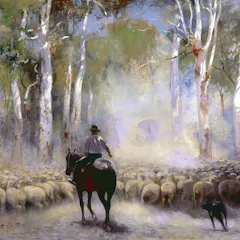
Ryan O'Neill’s book reimagines a classic Australian short story. He retells The Drover’s Wife 99 times in various forms, including a poem, an Amazon review, and even as a Cosmo quiz.
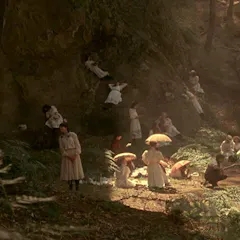
Gothic texts are not all bloodsucking vampires and howling werewolves. An Australian Gothic tradition took root alongside colonisation, influencing writers from Marcus Clarke to Alexis Wright.
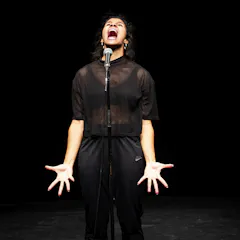
In a new adaptation of the classic Australian novel, the story of masculinity and despair in the outback is told through a female voice.

At the centre of the novel Coach Fitz is Tom, an anti-hero whose unintentionally humorous voice drives the narrative. Tom is an awkward everyman, a naïve Don Quixote, a digressive Tristam Shandy.

The omniscient narrator is alive and well in fiction. Kim Scott’s most recent novel uses a collective narrative voice that encompasses the landscape as well as the human.
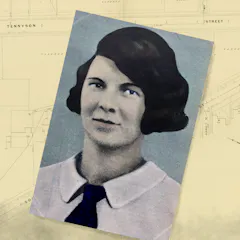
True crime-related storytelling has shrugged off its former low-brow baggage. Two recent Australian books show how victims’ stories can be told sensitively and humanely.
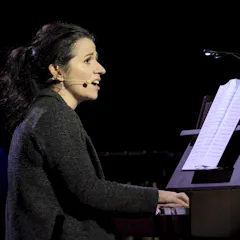
It is rare to have a new production of an Australian opera - a vivid new performance of The Children’s Bach was refreshing to see.
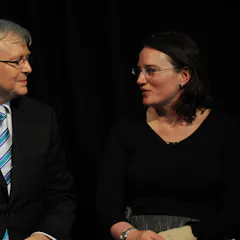
In her fragmentary family memoir, Cynthia Banham interweaves narratives of war and migration with her own traumatic plane crash - ultimately reclaiming her identity in the process.
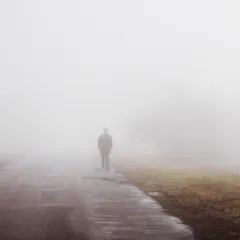
Stephanie Bishop’s latest novel demonstrates a sophisticated approach to the relationship between time and narrative: novelists and aspiring writers would do well to look closely at her achievement.
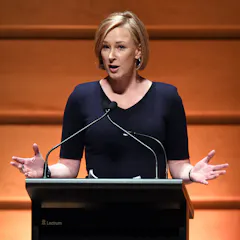
Part memoir, part investigation, Leigh Sales’s recent book Any Ordinary Day provides rare insight into the journalistic craft.
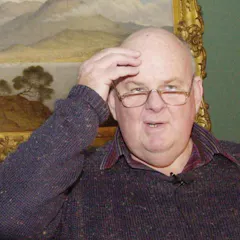
Les Murray’s signature style was a potent mix of ordinary language, specialist vocabulary, and eccentric syntax. His poetry made us see things anew.
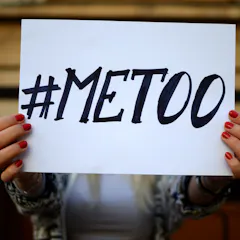
A new anthology collects the voices of 35 contributors on #MeToo in Australia. The book wades into all the difficult areas, from sexual assault to the culture that enables it.
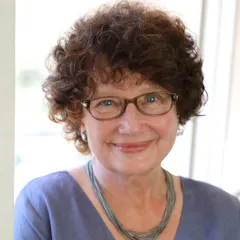
Debut memoir The Erratics possesses a rare honesty, exploding socially sanctioned ideas about mothers and families.

The six books shortlisted for this year’s Stella prize cover diverse subject matter and make risky aesthetic choices; they are serious and thoroughly unsentimental.
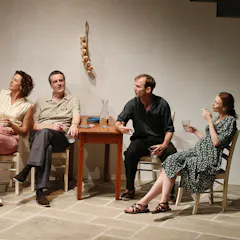
A new play tells the story of George Johnston and Charmian Clift’s time on the Greek island of Hydra, which ultimately led to the novel My Brother Jack - but not without sacrifices.
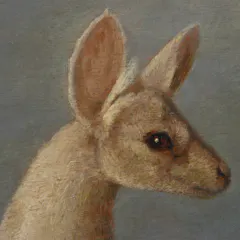
Kangaroos are a national icon, but Australian authors seem determined to kill them off.
Top contributors
-

Distinguished Professor Emerita of Creative Practice, Faculty of Arts and Design, University of Canberra
-
Professor, Chair of Australian Literature, The University of Western Australia
-
Professor in Politics and Journalism, University of Notre Dame Australia
-
Dean of Research (Creative), Adelaide University
-
Associate Professor in Literary Studies, RMIT University
-
Professor of English Literature, University of Southern Queensland
-
Senior Lecturer in English Literature, Charles Sturt University
-
Emeritus Professor of Creative Writing, The University of Melbourne
-
Director of Creative Writing, Macquarie University
-
Associate Professor of English, Australian National University
-
Associate Professor, Creative Writing and Literary Studies, Victoria University
-
Director of AustLit, Associate Professor in Digital Cultural Heritage, The University of Queensland
-
Professor of Writing and Literature, Deakin University
-
Associate Professor in Literary Studies, Monash University
-
Senior Lecturer, Creative Writing and English, Edith Cowan University