

Scientists can be under-appreciated in Australian culture. Here are eight great fictional scientists to get you thinking about labs, test tubes and bold experiments.
Articles on Australian literature
Displaying 261 - 280 of 333 articles
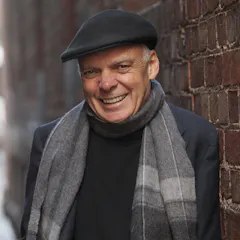
The final instalment to the Rosie Project trilogy points to greater awareness about neurological differences such as autism.
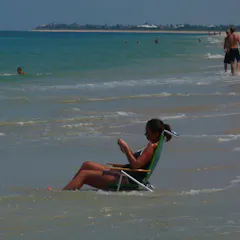
While tourism campaigns often portray the beach as an idyllic, isolated haven, many of our beach stories depict it as a darker, more complex place. Here are ten worth reading.
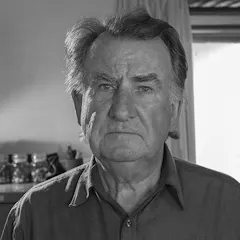
This award to a long neglected writer shows that there is still a place in Australian life for works of art that challenge us to think.

Kim Scott, whose novel Taboo is shortlisted for the 2018 Miles Franklin award, circles around colonial violence in his work.
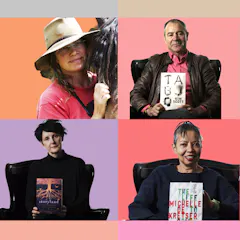
For many years, the Miles Franklin award was a bastion of monoculture. But this year’s stories are a diverse reflection of Australia.

Behrouz Boochani wrote his memoir of incarceration on Manus Island one text message at a time. Translating this work of ‘horrific surrealism’ from Farsi to English was a profoundly philosophical experience.
Australia’s rich tradition of crime fiction is little known – early tales told of bushrangers and convicts, one hero was a mining engineer turned amateur detective – but it reveals a range of national myths and fantasies.

A new room will open at the NSW State LIbrary today, furnished with objects from Donald and Myfanwy Horne’s study. Their daughter, Julia, reflects here on a writing partnership and the room that fostered it.
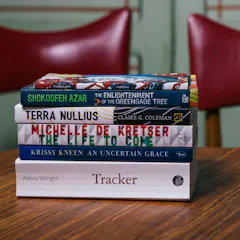
As major publishers chase bestselling books, small ones are leading the way in publishing Australian literary fiction. And of late, they have been sweeping our major literary awards.
A Stella winner is a book that challenges its readers; it attempts to do a bit of work in the world. And this year’s shortlist doesn’t disappoint.
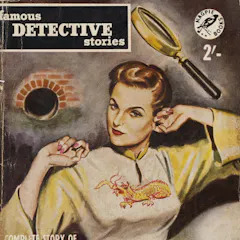
Once typecast as ‘bad’ or ‘good’ in true crime tales, women are now more likely to be presented as complex figures in them. And many more women are writing true crime themselves.
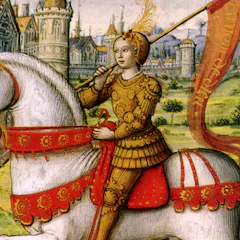
Forget Wonder Woman and Batman. The Maid of Orléans - an uneducated, teenage girl who led armies to victory - is a hero for our times.
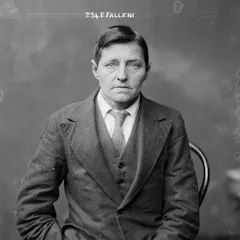
An Italian-born-woman-turned-Sydney-dwelling-man, Eugenia Falleni was convicted of murder in 1920. Researching a novel about Falleni left this author literally, and figuratively, at sea.
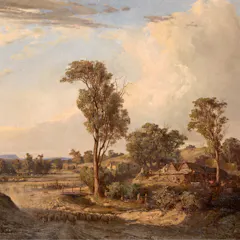
White settlers and authors once saw the bush as an alien, despairing place. But writers from Tim Winton to Rachael Treasure now portray the land in complex and optimistic ways.
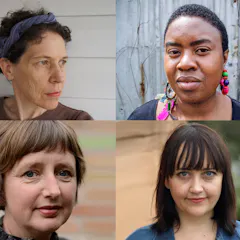
All six books nominated for the Stella Prize - to be announced tonight - engage the brain, and the heart. These are books that matter because they show us how to live in desperate times.
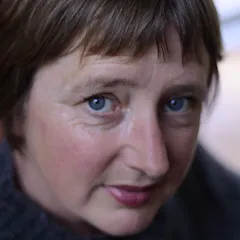
The Australian writer Georgia Blain, who died last week, wrote extraordinary portraits of family relationships, in luminous prose, with devastating insight. And when she became ill, she wrote about her cancer.
A recent attempt to broaden the Stella Count by measuring the diversity of writers reviewed proved to be a hard ask. Is the bigger problem here the whiteness of our publishing industry?
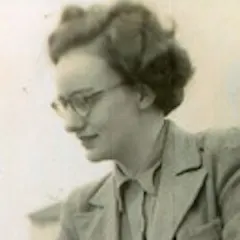
Judith Wright was possibly our greatest poet and a passionate social activist. But a new biography suggests that in writing her family memoirs, Wright avoided evidence that her settler forebears likely participated in the murder of Aborigines.
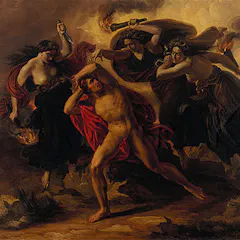
The tale of a married woman who joins her lover in Paris, The Beauties and Furies is a modernist classic. Like Joyce’s Ulysses, the action is concentrated in one city, but dreams are nightmarish in this city of night, not light.
Top contributors
-

Distinguished Professor Emerita of Creative Practice, Faculty of Arts and Design, University of Canberra
-
Professor, Chair of Australian Literature, The University of Western Australia
-
Professor in Politics and Journalism, University of Notre Dame Australia
-
Dean of Research (Creative), Adelaide University
-
Associate Professor in Literary Studies, RMIT University
-
Professor of English Literature, University of Southern Queensland
-
Senior Lecturer in English Literature, Charles Sturt University
-
Emeritus Professor of Creative Writing, The University of Melbourne
-
Director of Creative Writing, Macquarie University
-
Associate Professor of English, Australian National University
-
Associate Professor, Creative Writing and Literary Studies, Victoria University
-
Director of AustLit, Associate Professor in Digital Cultural Heritage, The University of Queensland
-
Professor of Writing and Literature, Deakin University
-
Associate Professor in Literary Studies, Monash University
-
Senior Lecturer, Creative Writing and English, Edith Cowan University