
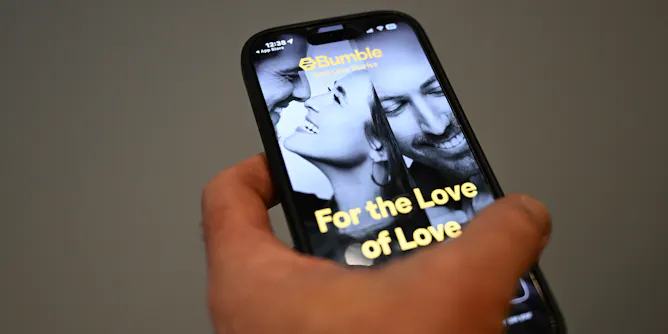
Before the end of the year, dating app Bumble will be getting rid of the swipe and introducing an AI powered dating assistant.
Articles on Artificial intelligence (AI)
Displaying 321 - 340 of 2835 articles
Urban design depends heavily on human judgment and field-based understanding.

Large index-tracking funds could soon gain automatic exposure to AI giants as companies such as OpenAI edge toward public markets.

An AI accent manipulation tool may be “cool” technology, but it is arguably also a form of discrimination against workers whose voices are being altered.

More ‘natural’ collaboration between scientists and computers won’t necessarily be more effective.

Nations are concerned that adversaries will gain the advantage.

Some gardeners at this year’s Chelsea Flower Show have faced controversy for their use of AI.

Anthropic developed an AI interviewer it claims can help social scientists conduct research at scale. But AI models lack the human qualities that make qualitative research unique.
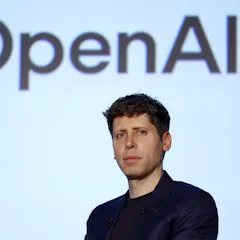
OpenAI now has a clear path to take its next big step in the AI race.

It’s a relatively new legal tactic and not yet tested in court.

AI infractions could result in a year-long ban from the arXiv system, which is an essential communication channel in many fields of research.

The Academy has decided to ban AI actors and scripts from the Oscars. But machine learning systems are actually used in cinema more often than most people realise.

Tracking hate speech online is challenging even when terms are explicit. Coded speech is harder to detect – but pairing AI tools with human research teams can help.

Many companies today overpromise what they can do with AI. They should learn from efforts to combat greenwashing and tighten standards.

This federal budget recognises AI can’t transform Australia’s economy if we don’t have the local tech, tools and expertise to implement it.

Cubans are using AI image generators to imagine US intervention in their country. The results look straight out of the 1890s.

Large language models can uphold falsehoods they or human users state, despite being presented with evidence to the contrary.

Dataland will be a ‘living museum’. But behind its futuristic facade and the fleeting cultural landscapes hosted inside, the museum has much deeper historical roots.

What should we call the words that this ultramodern technology produces? For clues, a professor looks to some of the world’s earliest authors.

There’s a difference between using a tool to assist you, and using one to replace cognitive effort.
Top contributors
-

Professor of AI, Research Group Leader, UNSW
-
Professorial Fellow, University of Canberra
-
Associate Professor of Visual Communication & Digital Media, RMIT University
-
Adjunct Senior Lecturer, Applied Ethics and CyberSecurity, Griffith University
-
Professor of Information Systems, Michigan State University
-
Adjunct Lecturer in Public Policy, Harvard Kennedy School; University of Toronto
-
Professor in Robotics, Queensland University of Technology
-
Professor of Philosophy and Director of Applied Ethics Center, UMass Boston
-
Senior Research Fellow in AI Accountability, Queensland University of Technology
-
Professor in Business Information Systems, University of Sydney
-
Director of Sydney Executive Plus, Business School, University of Sydney
-
PhD in machine ethics, University of Canterbury
-
Senior Lecturer, School of Engineering, Australian National University
-
Professor in Computational Intelligence, Australian Catholic University
-
Professor of Information Technology and Organisation, University of Sydney