

Why have so few atrocities ever been recognised as the ‘crime of crimes’?
Articles on Armenian genocide
Displaying 1 - 20 of 23 articles

The closure of a popular radio station in Istanbul is one of the latest assaults on press freedom in Turkey.
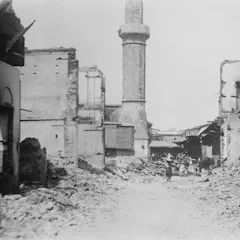
Recent studies on mass violence have turned the spotlight on the resilience of targeted individuals and communities.
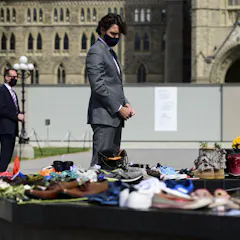
Canada has officially recognized eight genocides that have happened around the world. It has not done the same for its own treatment of Indigenous children who they sent to Indian Residential Schools.
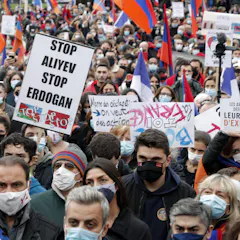
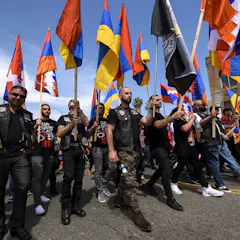
A new ceasefire is unlikely to stop clashes between the warring expat communities around the world.
As Armenian Genocide Remembrance Day is marked around the globe, a historian examines the little-known players in the long-running fight in the US Congress to pass a bill acknowledging the Genocide.
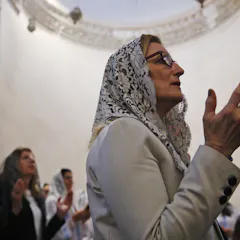
The percentage of Christians in Turkey declined from nearly 25% in 1914 to less than 0.5% today. Their future looks even more uncertain in today’s political climate.
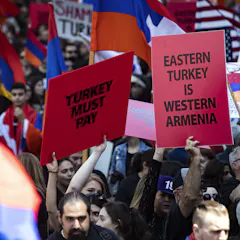
A recent vote in the US House of Representatives recognised the Armenian massacre of 1915 as a genocide in a significant moment for the Armenian diaspora.
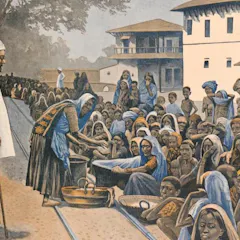
For International Day of Charity on Sept. 5, a history of how the Christian Herald mobilized Americans in the late 19th century to give millions for the relief of global suffering.
Extreme, dehumanizing language like the words used by President Trump to describe Baltimore can escalate into destructive outcomes, writes a scholar of hostage negotiation.

The certificate gave a new form of international protection to stateless Russian and Armenian refugees.

Very little is known about suicide and suicide attempts during modern genocides – but we do know there is an aftermath of suicide among victims.
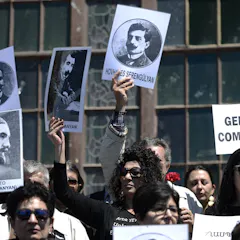
Wherever past atrocities are denied, truth must be spoken to power.
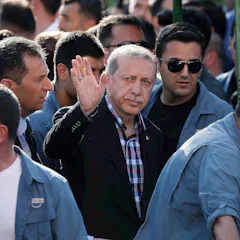
A scholar who grew up in Turkey explains the important role Turkey’s academics play and why, following the recent coup, the government went after them.
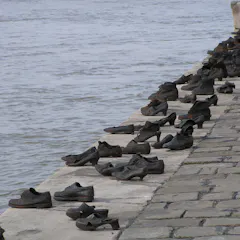
It’s not just a nation’s memory of itself, but what it does to citizens who disagree that reveals its ethical compass.
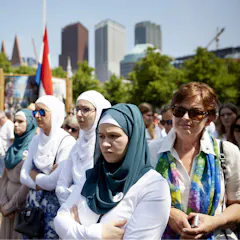
Genocide has occurred throughout history, from the very beginnings of the social organisation of human communities until the present. But working out what do about it is no easy task.

On the 100th anniversary of the Armenian genocide, we asked scholars to reflect on the significance of Armenian insistence on remembering and Turkey’s insistence that the genocide never happened.
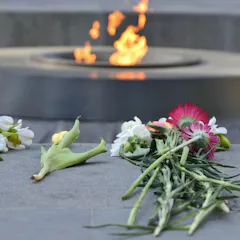
A century on, the murder of 1.5m Armenians by the Ottoman Empire must be recognised as genocide.
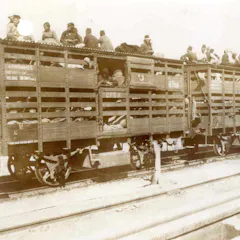
In 1915 and 1916, the Ottoman Armenians were destroyed as an organised community and more than one million of their number were killed – just as the Allies’ failed invasion of Gallipoli took place.

Feature films and television shows notoriously play fast-and-loose with the facts. When prologues proclaim “Based on a True Story,” they’re gracefully implying that what follows is mostly fiction. Awards…
Top contributors
-

Senior Lecturer in Politics, University of Stirling
-
Visiting Professor of Film, Brown University
-
ANU Visiting Professor, Politics and International Relations, Australian National University
-
Professor of Philosophy, Lebanon Valley College
-
Professor of Law and Humanities, Queen Mary University of London
-
Professor of Economic History, University of Manchester
-
Lecturer, Department of Social and Political Sciences, Philosophy, and Anthropology, University of Exeter
-
Professorial Lecturer, American University School of International Service
-
Lecturer, Genocide Studies, University of Technology Sydney
-
Robert & Florence McDonnell Professor of East European Studies, Stanford University
-
Senior Research Fellow, Tampere Peace Research Institute, Tampere University
-
Distinguished Professor of Anthropology; Director, Center for the Study of Genocide and Human Rights, Rutgers University - Newark
-
Fatma Müge Göçek is a Friend of The Conversation.
Professor of Sociology and Women's Studies, University of Michigan
-
Professor of Political Science, Kennesaw State University
-
Ph.D., School of Public and International Affairs, Virginia Tech