
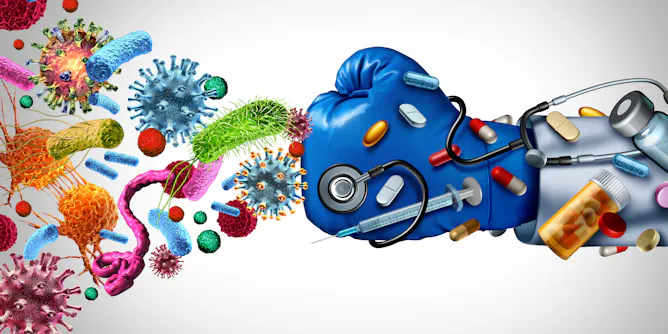
Antibiotics transformed health care for the better, but their diminishing effectiveness may soon be its undoing. Researchers are studying ways to fight back against resistance.
Articles on Antibiotic misuse
Displaying all articles
Resistance to antimicrobial drugs is a major global health challenge, so dealing with neglected tropical diseases is vital.

Antibiotics have been around for less than a century. But as resistant bacteria become increasingly difficult to treat, we risk a greater number of deaths from infections.
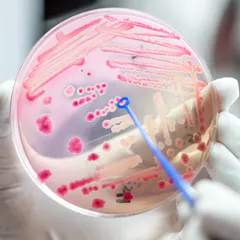
We asked 7 global experts in microbiology and biochemistry if we are headed towards a future with no antimicrobial agents.

The challenge of antimicrobial resistance is global, but low- and medium-income countries like Nigeria face particular challenges.

Antibiotic resistance has contributed to millions of deaths worldwide. Research suggests that any bacteria can develop antibiotic tolerance, and possibly resistance, when pushed to their limits.

Antimicrobial resistance kills around 700,000 people worldwide annually. It is a top-ten global health threat.
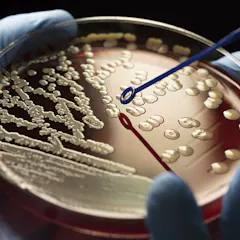
If no action is taken to address antibiotic resistance, infections from multidrug-resistant bacteria could cause 10 million deaths each year by 2050.

The presence of antibiotics in the environment poses a threat to global public health, food safety and human existence.

We are seeing the end of modern medicine slowly being played out due to antibiotic resistance. But we can act together to alter the situation.

The overuse of antibiotics puts vulnerable patients and society at risk.

New reports that stopping antibiotics when you feel better is better for you could do more harm than good. But it has reopened the debate on how long antibiotics should be used.
Top contributors
-

Dean of the College of Science, Professor of Biochemistry, Rochester Institute of Technology
-
Professor of Infectious Diseases, University of Cape Town
-
Catedrático de Microbiología. Miembro de la Sociedad Española de Microbiología, Universidad de Salamanca
-
Consultant Microbiologist, Beaumont Hospital, Dublin, Ireland and Professor and Head of Department, Clinical Microbiology, RCSI University of Medicine and Health Sciences
-
Ph.D. Candidate in Microbiology, Cornell University
-
Professor Emeritus in Global Health & Humanitarian Affairs, University of Manchester
-
Professor of Biocchemistry and Biomedical Sciences, McMaster University
-
Distinguished Research Professor of Microbiology, University of Dayton
-
Reader Respiratory Care, Edge Hill University
-
Clinical Microbiologist, Nile University of Nigeria
-
Professor of Infectious Diseases, Monash University
-
HDR Candidate, Flinders University
-
Pesquisadora de Pós-doutorado, Escola de Administração de Empresas de São Paulo da Fundação Getúlio Vargas (FGV/EAESP)
-
Honorary Professorial Fellow, medical microbiology, The University of Melbourne
-
Associate Professor of Pharmaceutical Sciences, Universitas Andalas