
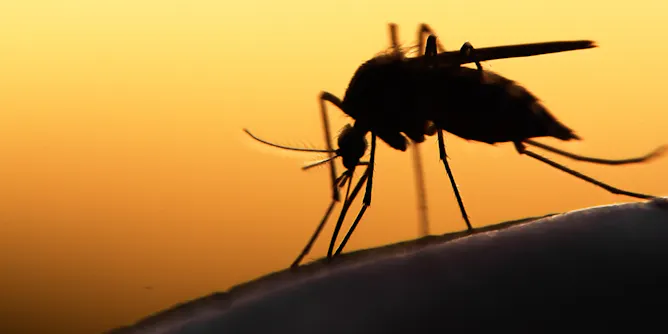
There are lots of tall tales about mosquitoes and how malaria is transmitted. Here are sturdy facts on the disease.
Articles on Anti-malarial treatments
Displaying 21 - 40 of 40 articles

Doxycycline is an antibiotic drug that kills a wide, weird and wonderful range of bugs that are often difficult to treat with other antibiotics.
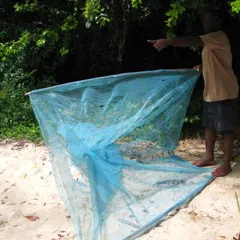
The simple use of a net intended to curb malaria by fishers has become a classic conservation problem.

Firms with a focus on the domestic and regional market have an incentive to distribute their medicines effectively. Local production can create a win-win situation for health and employment.
Scientists have discovered a second new compound that could eventually be developed into a medicine to help eradicate malaria.
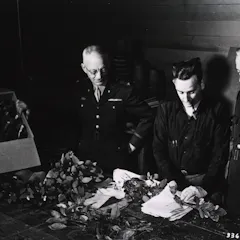
Mefloquine was one of around 250,000 chemical compounds tested for malaria-killing activity in the 1960s by the United States military who needed to protect troops from malaria in the tropics.
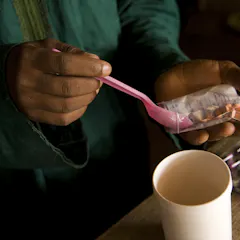
Despite tests which rapidly test for malaria being around for several years, overtreatment of malarial drugs still takes place in Africa.
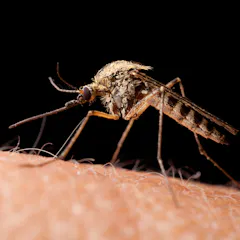
Resistance to a commonly used antimalarial medication, Atovaquone, can’t spread to the general human population, a new research found.
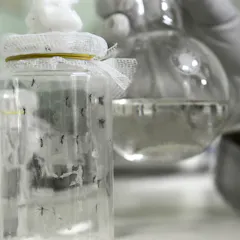
Across the world scientists are trying to find a new drug that the malaria carrying parasite will struggle to develop a resistance to.
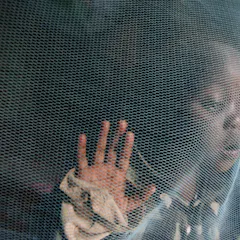
Several countries within southern Africa are on the brink of eliminating malaria. But there are several challenges ahead.

The drug partly responsible for more than halving the rate of malaria over the last 30 years and which won this year’s Nobel Prize for Physiology or Medicine has a long history of use.

Tu Youyou sifted through 2,000 ancient herbal remedies to develop a drug that now treats hundreds of millions of people a year.
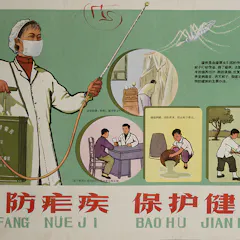
The 2015 Nobel Prize for Medicine went partly for research done during the Chinese Cultural Revolution based on traditional Chinese medicine. Here’s the story of Project 523.
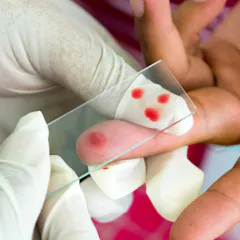
A new drug that stops the malaria parasite in its tracks, and could be delivered in a single dose, has researchers excited about treatment prospects for the disease.
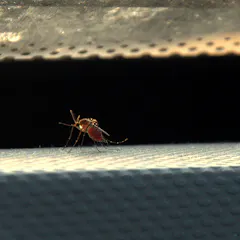
Scientists in France have found how the genes of the malaria parasite adapt to become resistant to artemisinin, one of the most effective remaining antimalarial drugs. Their discovery exposes a serious…
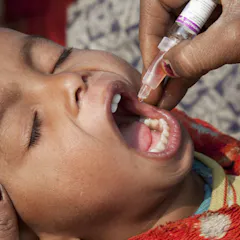
Several vaccines for malaria have been developed over the past few decades, but none offer complete protection. Now, for the first time, US researchers have developed a vaccine that protects 100% of those…

Cerebral malaria, or malaria of the brain, means being deeply unconscious with perpetual cycles of seizures and spasms. It can cause death, or often disability. About 600,000 people suffer this terrible…

About half of the world’s population are at risk of contracting malaria. In 2011, there were 26m reported cases and more than 100,000 deaths. Children are especially vulnerable though the disease is both…
Immature malaria parasites are 100 times less sensitive to artemisinin-based drugs than older parasites, a new study has…
A new class of antimalarial drug has been discovered, using spiroindolones to block a pump within the malaria parasites face…
Top contributors
-

Chief Research Officer, Kenya Medical Research Institute
-
Associate Professor, The University of Melbourne
-
PhD Candidate , Medical Parasitologist, Kenya Medical Research Institute
-
Project Manager, Cambridge Africa, Anglia Ruskin University
-
Professor of Chemistry and Biochemistry and President-Elect of the International Society for Antiviral Research, University of Maryland, Baltimore County
-
Assistant Professor of Computer Science, Dartmouth College
-
University of Oxford
-
Postdoctoral Researcher, Harvard University
-
Former President of the Indonesian Academy of Sciences, Professor of Biochemistry and Molecular Biology, and Principal Scientist, Eijkman Institute for Molecular Biology
-
UP ISMC: Project Manager and Coordinator, University of Pretoria
-
Research Chair, Integrated Vector Management in the Vector Control Cluster, Centre for Sustainable Malaria Control, University of Pretoria
-
Professor, Department of Chemical Engineering and Director of Institute of Applied Materials, University of Pretoria
-
Assistant Professor of Chinese, Emory University
-
Emeritus professor, Durham University
-
Professor at the Centre of Excellence for Pharmaceutical Sciences, North-West University