
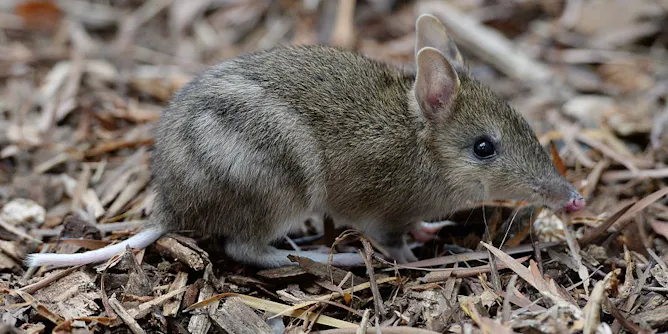
Humans have had a complex relationship with this marsupial, known for its pointy snout, thin tail and large hind feet.
Articles on Parasites
Displaying 1 - 20 of 191 articles

Tsetse flies move between a broad range of animals. They connect wildlife, livestock and humans in complex transmission networks.

Ordered kingfish sashimi recently? A parasite can infect some fish, yet they still look and taste the same when raw.

The honeybee-killing Varroa mite is marching across the country, as two experts explain.
Explosive diarrhea has been spreading across the US, and the parasite that causes the disease has already sickened thousands – and counting.
After screwworm cases were reported in Texas and New Mexico, Colorado is taking preventive measures against the pest.

One in three people worldwide carry a brain-dwelling parasite. Should that keep us awake at night? And are you at risk if you don’t have a cat?
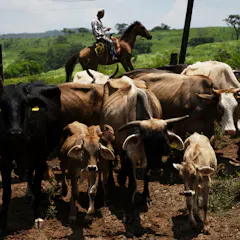
The tightly integrated North American beef market, under pressure from drought and the spread of the screwworm, could get further roiled by trade uncertainty.

Long overlooked because of their size, giant viruses are now redefining the frontiers of microbiology.
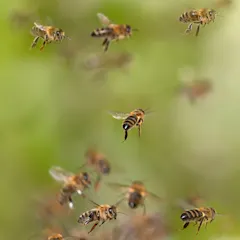
Ahead of world bee day on May 20, the author looks at how other animals rely on bees for food and shelter and even transport.
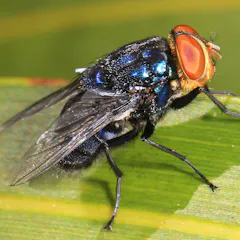
The New World screwworm parasite can infest livestock, pets and even humans.
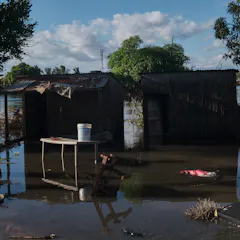
Flooding alters the environment in ways that favour malaria transmission.

Ivermectin has been proposed as a treatment for a number of diseases. Here’s what the science actually says.

Citizen science allows us to discover how invasive flatworms travel from garden to garden… surprisingly, on the backs of dogs and cats!
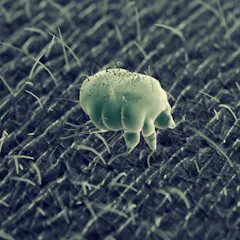
An expert answers your questions about the rising cases and effective treatments.
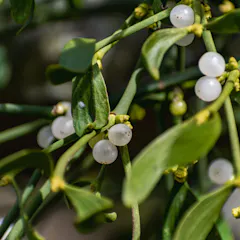
A warming climate and a winter-visitor bird are giving mistletoe a helping hand.
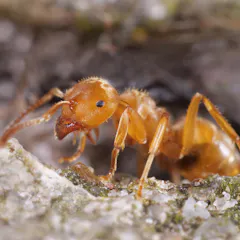
Starting a colony is a dangerous enterprise - so some ants find creative and brutal techniques to take over other queens’ work.
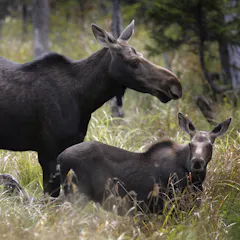
White-tailed deer host these brain worms, but they don’t actually get the disease, which makes it harder for biologists to monitor its prevalence.
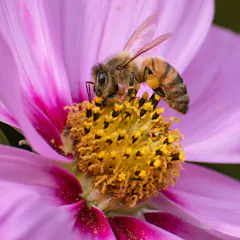
The tropi mite spreads faster, kills colonies more quickly, and is harder to control with existing methods.
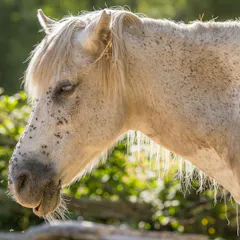
From sand flies to ticks, climate change is helping exotic parasites hitch a ride into the UK. Here’s what that means for pets – and people.
Top contributors
-

Lecturer in Parasitology and Evolutionary Biology, University of New England
-
Associate Professor and Clinical Academic Gastroenterologist, Western Sydney University
-
Professor of Interdisciplinary Parasitology, University of Nottingham
-
Clinical Associate Professor, School of Medical Science & Sydney Infectious Diseases Institute; Principal Hospital Scientist, University of Sydney
-
ARC Early Career Research Fellow, Social Insect Ecology, Macquarie University
-
Professor of Microbiology and Immunology, Indiana University
-
Reader in Ecological Genetics, Liverpool John Moores University
-
Professeur, UMR ISYEB (Institut de Systématique, Évolution, Biodiversité), Muséum national d’histoire naturelle (MNHN)
-
Honorary Professor, Federation University Australia
-
Senior Lecturer in Pharmaceutical Sciences, RMIT University
-
Professor in Evolutionary Biology, Macquarie University
-
Research Fellow, Malaria biochemistry, Monash University
-
Professor of Biology, Wilfrid Laurier University
-
Director of the Jenner Institute, University of Oxford
-
Professor of Protozoology, University of Bristol