
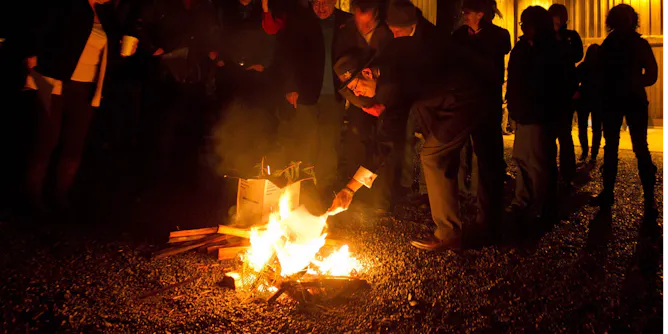
Section 141 of the act was used to surveil and intimidate Indigenous leaders and weaken Indigenous political organizing.
Articles on Anti-Indigenous racism
Displaying 1 - 20 of 22 articles

Two years ago, the College of Physicians and Surgeons of Manitoba apologized and accepted responsibility for failing to fairly treat Indigenous patients. But has it made any difference?

Being bullied because of some aspect of who a person is — known as identity-based or bias-based bullying — is extremely harmful to kids’ sense of belonging at school.
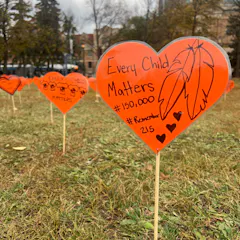
When universities declare commitments to reconciliation, these commitments must accompany changes necessary to ensure Indigenous students are truly welcomed and celebrated on campuses.

The Canadian Medical Association’s apology for harms to Indigenous Peoples is an opportunity to reflect on the gap between apologies and the work of true repair necessary for reconciliation.

The election of Wab Kinew’s NDP in 2023 represents a powerful rejection of the racial politics of recent Conservative governments led by Heather Stefanson and her predecessor, Brian Pallister.
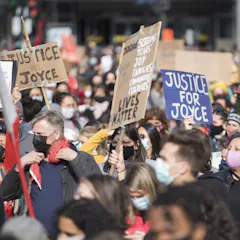
Cultural awareness training for health-care workers places focus on individual biases rather than tackling the systemic problems that negatively impact Indigenous patients.

The final Indiana Jones movie is coming out June 30. The fifth in a series over 42 years, many of its ideas are taken from 19th-century orientalist and racist archaeology.
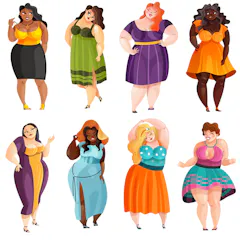
As the use of Ozempic, a drug for diabetes, slams into the mainstream as a weight-loss method, will the drug’s use impact our concept of fatness? And how does fatness intersect with race and class?

You can love a country and still hold it to account. I love Canada. But I won’t stand for the anthem at a sporting event or elsewhere, especially not when my kids are watching.

Strip searching is a police practice that evokes racial and sexual trauma, and it’s also ineffective. It’s finally time to talk about ending this oppressive police practice.

Indigenous filmmakers are changing the world by telling their own stories in their own ways.
In recent years, some prominent people have been called out for falsely claiming Indigenous identity. Why would someone falsely claim an identity? And what does it mean to be Indigenous?
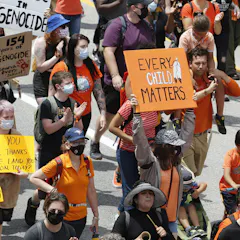
It is important for people who are part of educational institutions to honour the year-round significance of the new National Day for Truth and Reconciliation on Sept. 30.
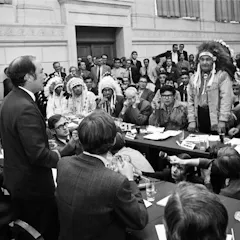
How did a national leader whose animating political spirit was protecting human rights come to adopt a passive acceptance of Canada’s worst face of colonialism?
Indigenous land defenders: Don’t Call Me Resilient EP 6 transcript.

In this episode of our podcast, we take a look at Indigenous land rights and the people on the frontlines of these battles.
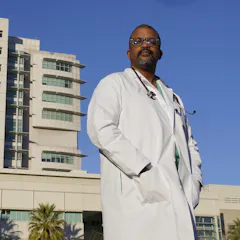
Transcript of Don’t Call Me Resilient, Episode 5: Black health matters
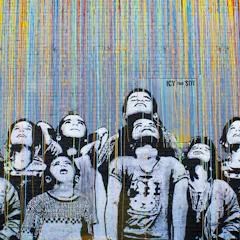
Carl James and Kulsoom Anwer discuss the injustices and inequalities in the Canadian education system.
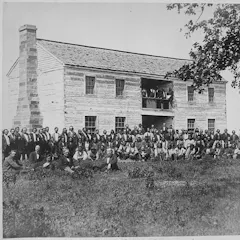
The Supreme Court’s July 9 ruling that half of Oklahoma belongs to the Muscogee Nation confirms what Indigenous people already knew: North America is ‘Indian Country.’
Top contributors
-

Director, Centre for Human Rights Research and Distinguished Professor, History and Women's and Gender Studies, University of Manitoba
-
PhD Candidate, Socio-Legal Studies, York University, Canada
-
DMD Candidate, Faculty of Dental Medicine and Oral Health Sciences, McGill University
-
Professor, Jean Augustine Chair in Education, Community & Diaspora, York University, Canada
-
Assistant Professor of Race, Ethnicity, and Indigenous Studies, Colorado College
-
PhD Candidate, part-time professor, Faculty of Education, L’Université d’Ottawa/University of Ottawa
-
Professor, Faculty of Law, Thompson Rivers University
-
Professeure agrégée, Département de médecine familiale et de médecine d'urgence, Chercheuse à VITAM, centre de recherche en santé durable, Université Laval
-
Assistant Professor of Family Medicine, McGill University
-
Professor Emeritus, Politics and International Studies, University of Regina
-
Research associate, Centre for Refugee Studies, York University, Canada
-
Associate Professor of Sociology, University of Lethbridge
-
Assistant Professor, Critical Disability Studies, Carleton University
-
Director of Education, Outreach, and Public Programming, National Centre for Truth and Reconciliation, University of Manitoba
-
Professor and Department Head, Department of History, University of Regina