
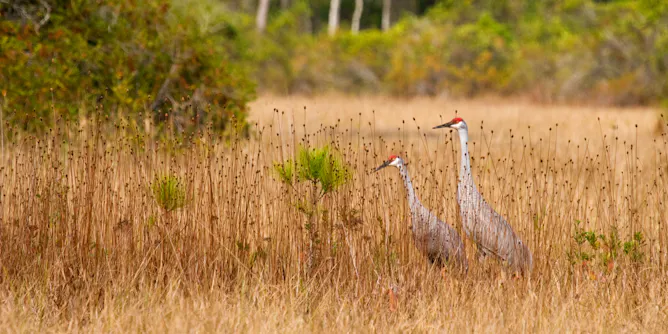
Are our brains wired to favour growth over environmentally rational decisions?
Articles on Anthropocene
Displaying 61 - 80 of 135 articles
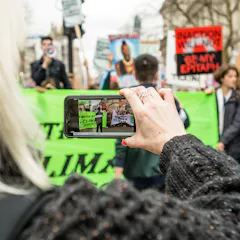
Researchers examined how youth on three continents think about digital technology today and conducted an experiment to learn what youth said after living without their phones for a week.
Grade 4 student Charlene seemed chronically off-task – until an educator noticed she was, in fact, the sole student pursuing the question, ‘Was the oil boom bad for our wildlife?’

The first step is admitting we have a problem, but what should come next to protect the planet?
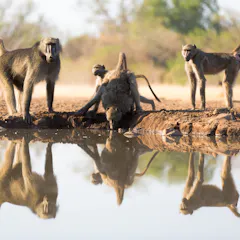
New research suggests that even ecologically flexible baboons could be at significant risk of habitat loss and endangerment from anthropogenic climate change.

Understanding the evolutionary roots of what draws us to delusions of legacy and distractions of leisure will help us address the environmental challenges of the 21st century.
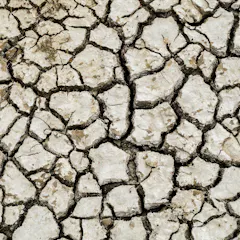
Humankind already has the knowledge to make sustainable and socially just ways of living on this planet possible. But new types of design and economics are needed for anything to change.
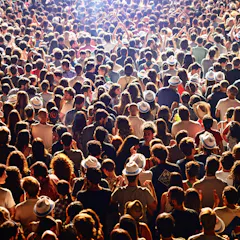
A psychologist explains why we should accept that we will never live in the Anthropocene.

Many people associate Henry David Thoreau with solitude in the outdoors. But Thoreau understood in the mid-1800s that there was no such thing as nature separate from humans.

No records of the size of Native American populations before 1492 and the arrival of Europeans survive. A new study has found answers.

Our research shows that, millions of years from now, fossilised chicken bones will mark the era of human domination.
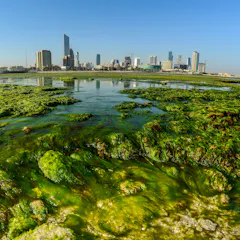
As we enter the age of the Anthropocene, there is a growing recognition of different kinds of ‘un-real’ storytelling.
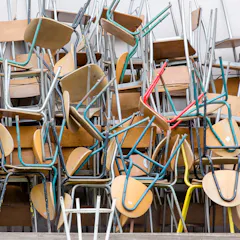
Our love affair with the chair has horrible consequences.
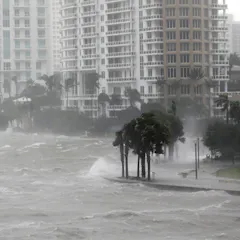
Infrastructure systems – roads, water treatment systems, power grid – can’t be built the same ways as in the past. What’s a better roadmap for the future?
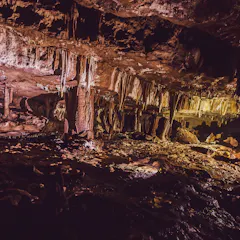
2018 brought the announcement of a new geologic age that covers the last 4,200 years. How do scientists divide up Earth’s timeline and what do these demarcations mean?
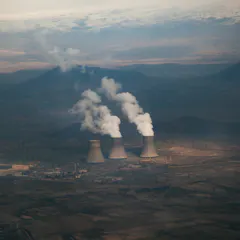
When it comes to the geological record, airbrushing out humans’ impact on the environment makes little sense.
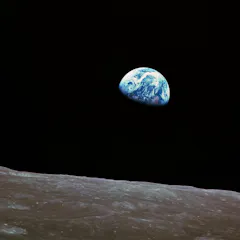
The Whole Earth Catalog was a blueprint for sustainability that envisioned humans living in balance with nature. Its creative spirit was welcomed in a year riven by war, assassinations and riots.

New findings from the Chagos Islands are a perfect parable for the Anthropocene.
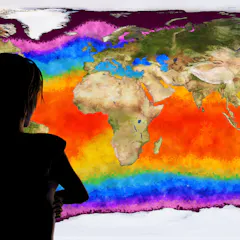
It’s time to admit the age of pristine nature is over. In its place is humanity and planet-shaping technologies, from gene editing to climate engineering. Earth Day in a Synthetic Age.

When present in the lowest atmospheric layer, ozone becomes a concern for human and plant health.
Top contributors
-

Professor of Palaeobiology, University of Leicester
-
Professor of Earth System Science, UCL
-
Professor of Palaeobiology, University of Leicester
-
Professor of Global Change Science at University of Leeds, UCL
-
Professor of Geography and Environmental Systems, University of Maryland, Baltimore County
-
Assistant researcher, University of Sydney
-
Honorary Professor, Department of Geology, University of Leicester
-
Adjunct professor, UNSW
-
Principal Lecturer in Psychology, University of Brighton
-
Emeritus Professor of Life Sciences, Arizona State University
-
Allan and Helaine Shiff Curator of Climate Change, Royal Ontario Museum and Assistant Professor, Ecology and Evolutionary Biology, University of Toronto
-
Associate professor, Global Change Institute, University of the Witwatersrand
-
Adjunct Professor of Society & Environment, University of Technology Sydney
-
Honorary Professor, Archaeology, The University of Queensland
-
Professor of Environmental Studies, Affiliate Faculty in Religious Studies, University of California, Santa Barbara