
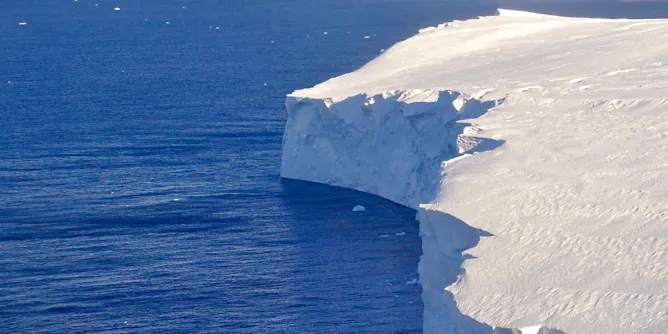
Thwaites Glacier’s ice shelf appears to be splintering, and scientists fear it could give way in the next few years. A polar scientist takes us on a tour under the ice to explain the forces at work.
Articles on Antarctica warming
Displaying 21 - 30 of 30 articles
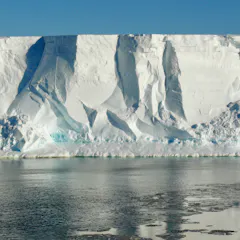
A high-tech expedition to sample the ocean under Antarctica’s Ross Ice Shelf confirms what the earliest explorers thought: everywhere we look we find microbes, scavenging any energy source available.
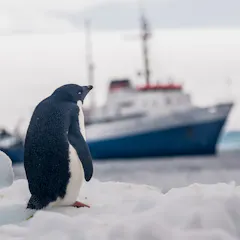
Soot from research bases and sightseeing cruises is melting millions of tonnes of Antarctic snow every summer
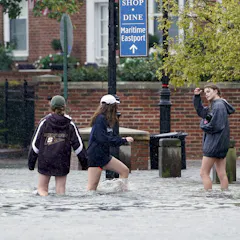
Climate change is making ocean levels rise in two ways. It’s a problem that will endure even after the world stabilizes and slashes greenhouse gas pollution.
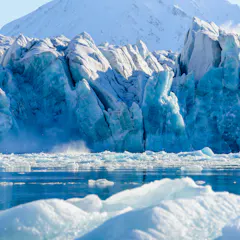
A new modelling approach improves projections of Antarctica’s future ice loss. It shows a low-emissions scenario would avoid the collapse of West Antarctica’s ice sheet and limit sea-level rise.
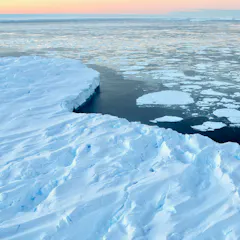
If the world is to adapt to sea level rise with minimal cost, we must address the uncertainty surrounding Antarctica’s melting ice sheet. This requires significant investment in scientific capacity.
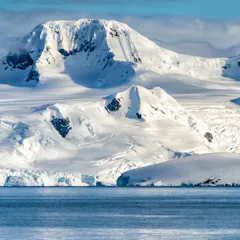
When Antarctica’s land-based ice melts, the land bounces up slightly as the weight of the ice lifts. This affects sea levels across the world, but not enough to offset sea-level rise.
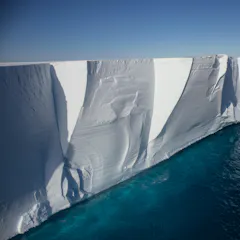
In a new study, we found that a third of Antarctica’s ice shelves could collapse at 4°C of global warming.
The report by the World Meteorological Organisation shows that with large and rapid emissions cuts, we can still avoid the most severe climate change. But worryingly, we also have time to make it far worse.

Latest research explores how a warming ocean circulates underneath Antarctica’s floating ice shelves and how this contributes to future sea level rise.
Top contributors
-

Director of the ARC Centre of Excellence for Our Future Oceans and Scientia Professor in Oceanography, UNSW
-
ARC Future Fellow & Associate Professor, Mechanical Engineering, The University of Melbourne
-
Professor of Glaciology, Te Herenga Waka — Victoria University of Wellington
-
Principal Scientist, Australian Antarctic Division
-
Senior Research Associate in Physical Oceanography, University of Tasmania
-
ARC DECRA Senior Research Fellow, Institute for Marine and Antarctic Studies, University of Tasmania
-
Postdoctoral Research Fellow, School of Earth, Atmospheric and Life Sciences, University of Wollongong
-
Professor in Glaciology, University of Otago
-
CSIRO Fellow, CSIRO
-
Environmental Data Scientist, GNS Science
-
Senior Lecturer in Atmospheric Science, Climate Change Research Centre, UNSW
-
PhD candidate, University of Tasmania
-
Director Environmental Informatics Hub, Monash University
-
Professor in Ocean Physics, University of Auckland, Waipapa Taumata Rau; Earth Sciences New Zealand
-
Senior Research Fellow in Antarctic and island conservation science, Queensland University of Technology